
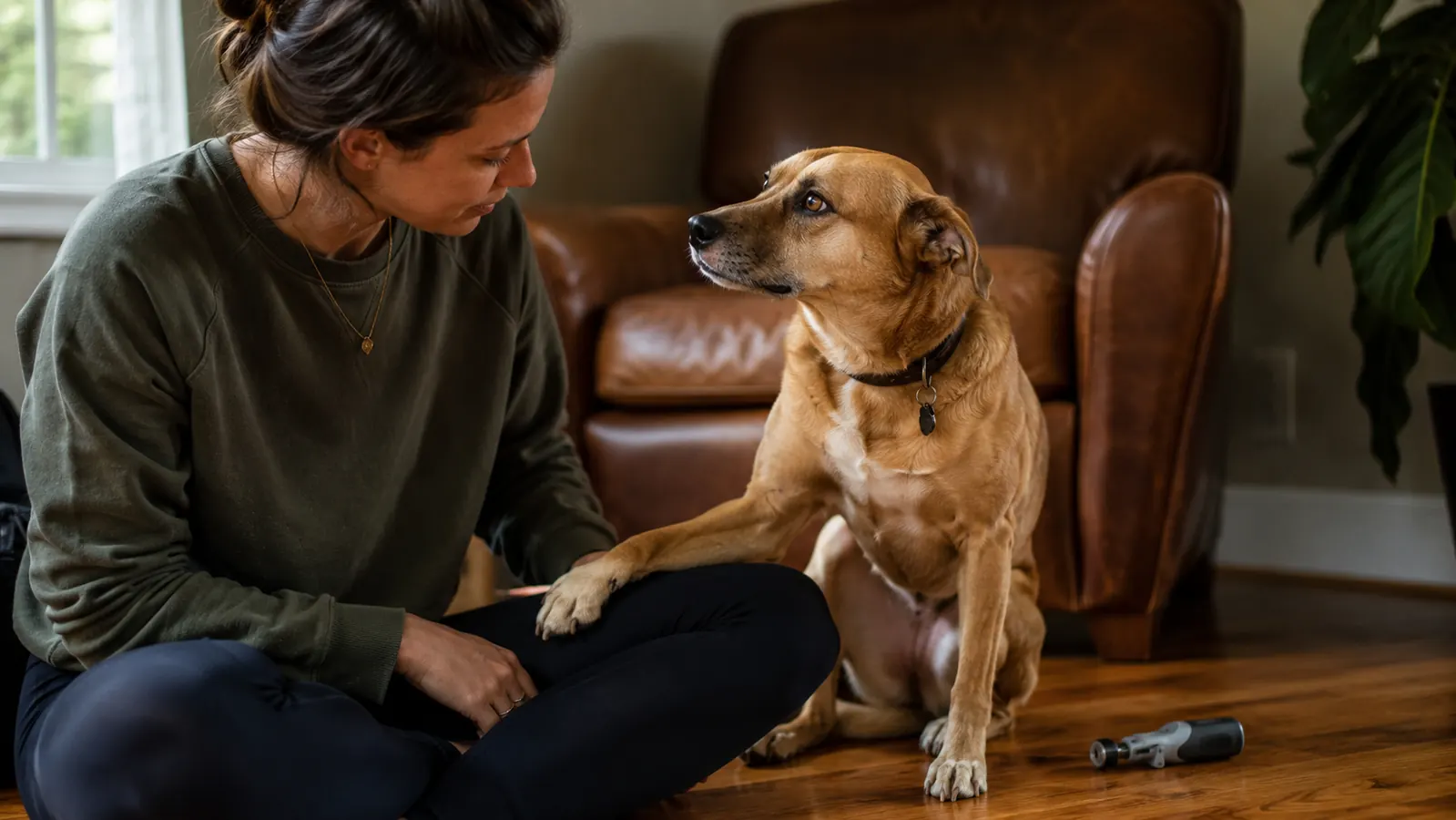
I want to save you the 20-minute Amazon rabbit hole. You have been staring at this listing, reading the word "whisper-quiet" for the third time, and wondering whether any electric nail grinder actually works on a dog that bolts at the sound of a cereal box being opened. I tested the Casfuy nail grinder on three animals over eight weeks: Biscuit, a four-year-old golden retriever mix who tolerates almost anything; Remy, a two-year-old rescue terrier mix who is convinced clippers are a personal attack; and Dolce, an eight-year-old domestic shorthair cat with strong opinions about everything. Here is what I actually found, including the things the product listing will never tell you.
The Quick Verdict
A genuinely good grinder at an honest price, but the noise on high speed and the learning curve are real hurdles most reviewers skip over.
Amazon Check Today's Price →Tired of your dog treating nail clippers like a horror movie prop? The Casfuy grinder is the quietest option under $25 we have found.
With over 100,000 reviews and a rechargeable battery, it is the most practical starting point for switching away from clippers. Current price is listed on Amazon.
Amazon Check Today's Price on Amazon →How I Tested It Across Three Very Different Temperaments
The first two weeks were pure desensitization. I turned the grinder on in the same room while the pets ate, never pointing it at them, just letting it run. Biscuit ignored it by day three. Remy required a full two weeks of counter-conditioning with high-value treats before he would stay in the room with it running. Dolce stared at it for about 45 seconds, decided it was beneath her, and went back to napping. That behavioral setup phase is not optional, and the product box does not mention it once. If you skip it with a nervous dog, you will get one bad session and a pet who associates the grinder with dread for months.
Once each animal was comfortable near the running device, I moved into actual grinding: low speed first, short contact time, heavy reward after each paw. I tracked session length, how many nails I completed per session, and whether behavior improved or regressed week over week. I also paid attention to heat buildup on the grinding port, battery drain rate, and dust scatter, because those details matter once you are doing this weekly.
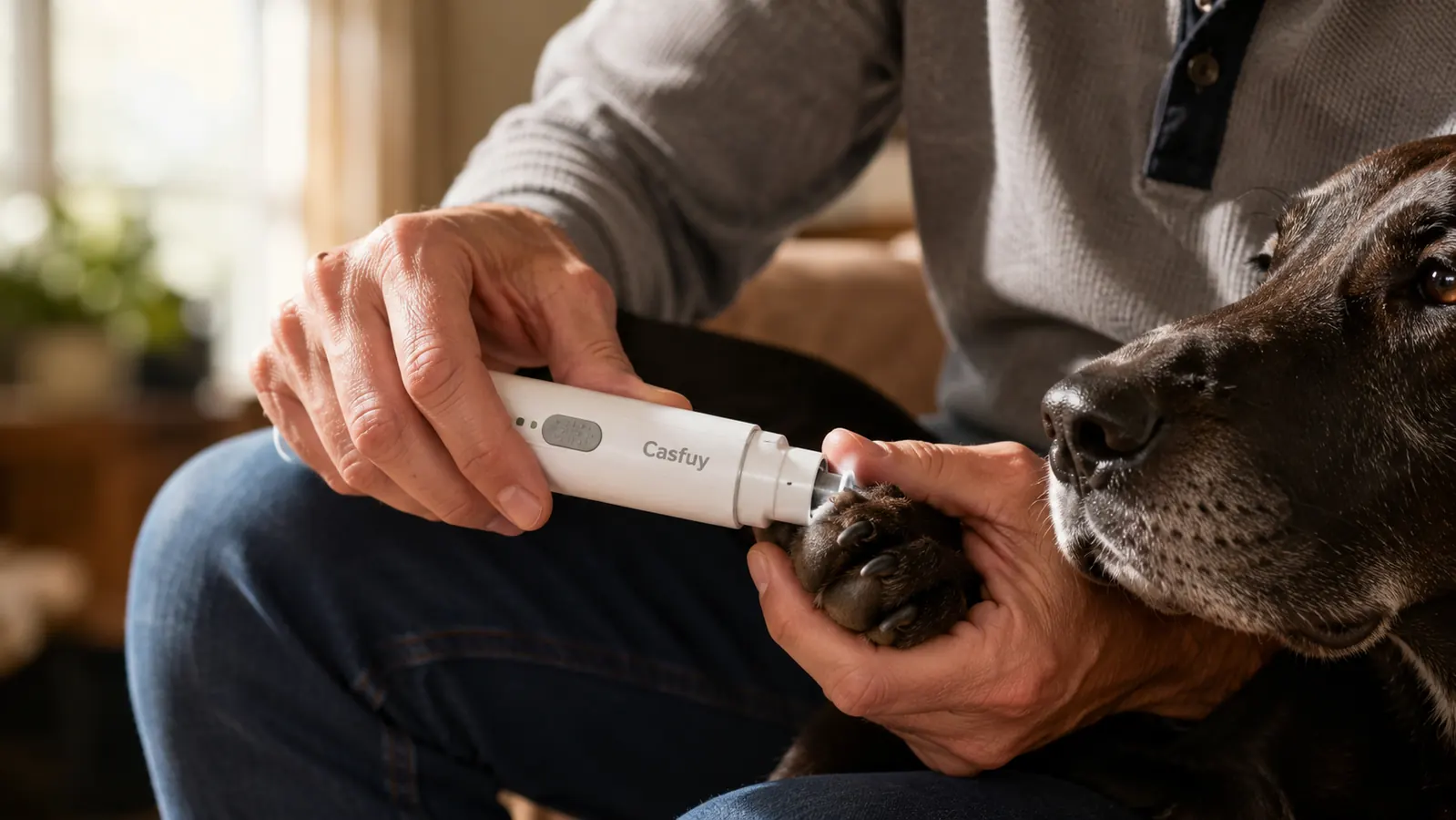
One logistics note: I used the medium-diameter port for Biscuit and Remy, and the small port for Dolce. The grinder ships with the port already installed and one additional size included. Switching is a simple twist-off, but the instructions sheet is a single folded card with diagrams so small I needed my phone flashlight to read them.
The Noise Question: Is 'Whisper-Quiet' Actually True?
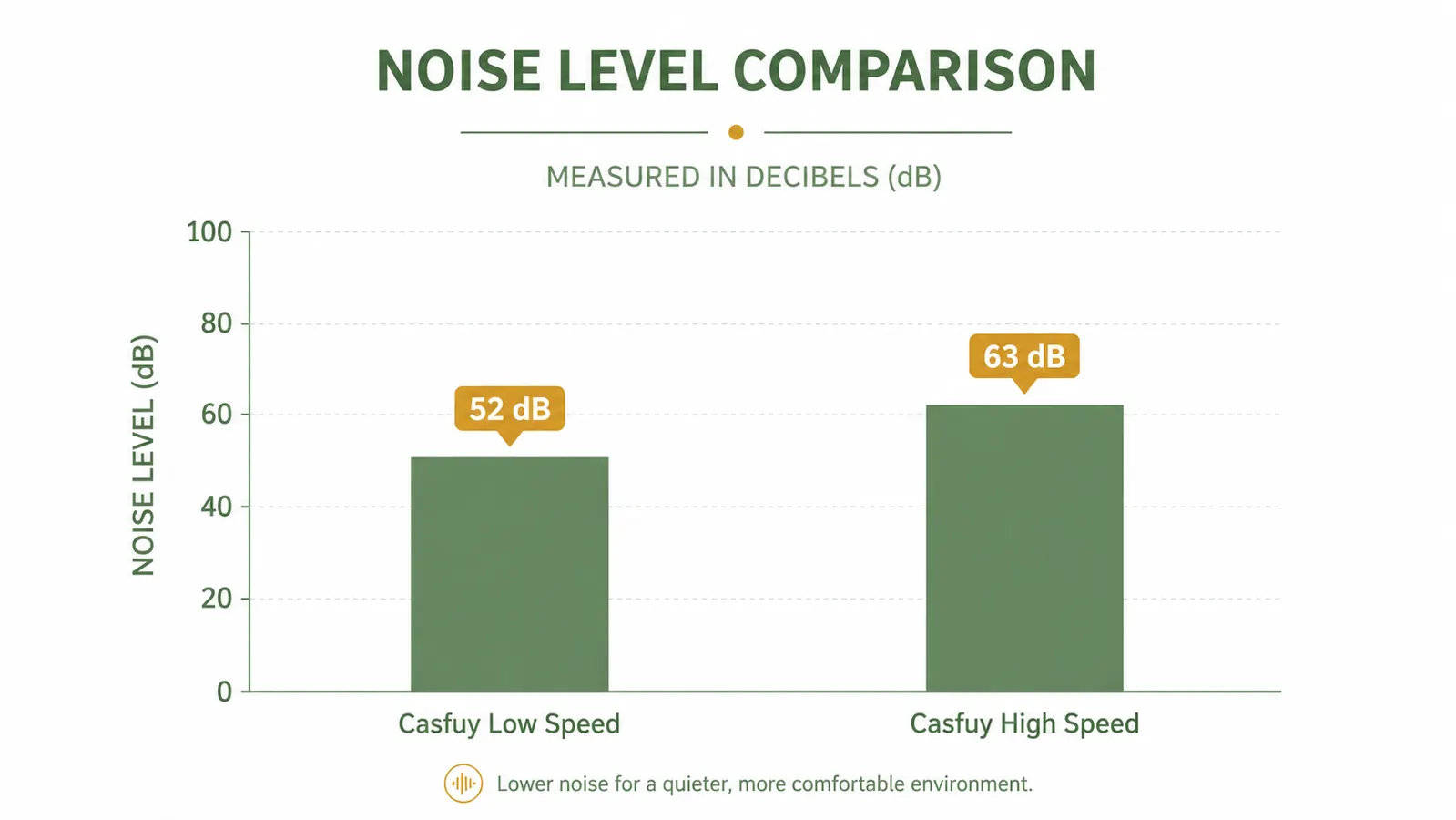
Short answer: on low speed, yes. On high speed, no. I measured the sound level with a basic decibel meter from about six inches away, the same distance as a dog's ear during a session. Low speed registered around 52 decibels, which is roughly the hum of a refrigerator. That qualifies as quiet. High speed came in at approximately 63 decibels, closer to a normal conversation in a crowded room. Not loud by human standards, but dogs hear at roughly four times our frequency range, so 63 decibels on high speed is more stimulating to them than it sounds to you.
For Biscuit, high speed was fine after the first couple of sessions. For Remy, I stayed on low speed for the entire eight weeks. Low speed grinds more slowly and requires more passes, but it is the practical setting for any dog with noise sensitivity. The listing calls the product "whisper-quiet" without specifying speed, which is a selective truth. If you have a nervous dog, budget for the slower low-speed approach and do not expect high speed to be part of your early routine.
Battery Life and Charging: What the Spec Sheet Glosses Over
The listing says the battery lasts about two hours of use. For weekly grooming sessions of 10 to 15 minutes each, that translates to roughly eight to twelve sessions per charge. In practice, I charged mine every six to seven sessions to stay comfortable. The charging port is a micro-USB, which is convenient since you likely have a cable in a drawer somewhere. Full charge from near-empty took about 90 minutes.
Where this matters: the indicator light. There is a single LED that glows red while charging and turns off when full. There is no low-battery warning. The motor just starts to feel slightly less forceful near the end of a charge, and if you are not paying attention, you might not notice until it stalls mid-session. A stall mid-session on a nervous dog is a setback. I got in the habit of charging the night before every grooming day rather than relying on the indicator, and that solved the problem completely.
The motor stalled on me once near the end of a charge, right in the middle of Remy's second paw. We lost three weeks of trust-building in about four seconds. Charge it the night before, every time.
The Learning Curve Nobody Mentions
Grinding nails is not the same as clipping them. With clippers, you make one cut and move on. With a grinder, you hold contact for one to two seconds, lift off, check the nail, and repeat. Hold too long in one spot and heat builds up in the nail, which is uncomfortable and can cause the dog to pull away sharply. Hold too briefly and you make no progress. There is a rhythm to it that took me about three sessions to internalize, and it is not explained in the product materials at all.
The sandpaper band also wears out faster than you might expect on harder nails. Biscuit has thick, dark nails, and I noticed the band losing abrasive texture after about six weeks of weekly sessions. Replacement bands are inexpensive and available, but the grinder does not ship with extras. Factor that into your cost picture.
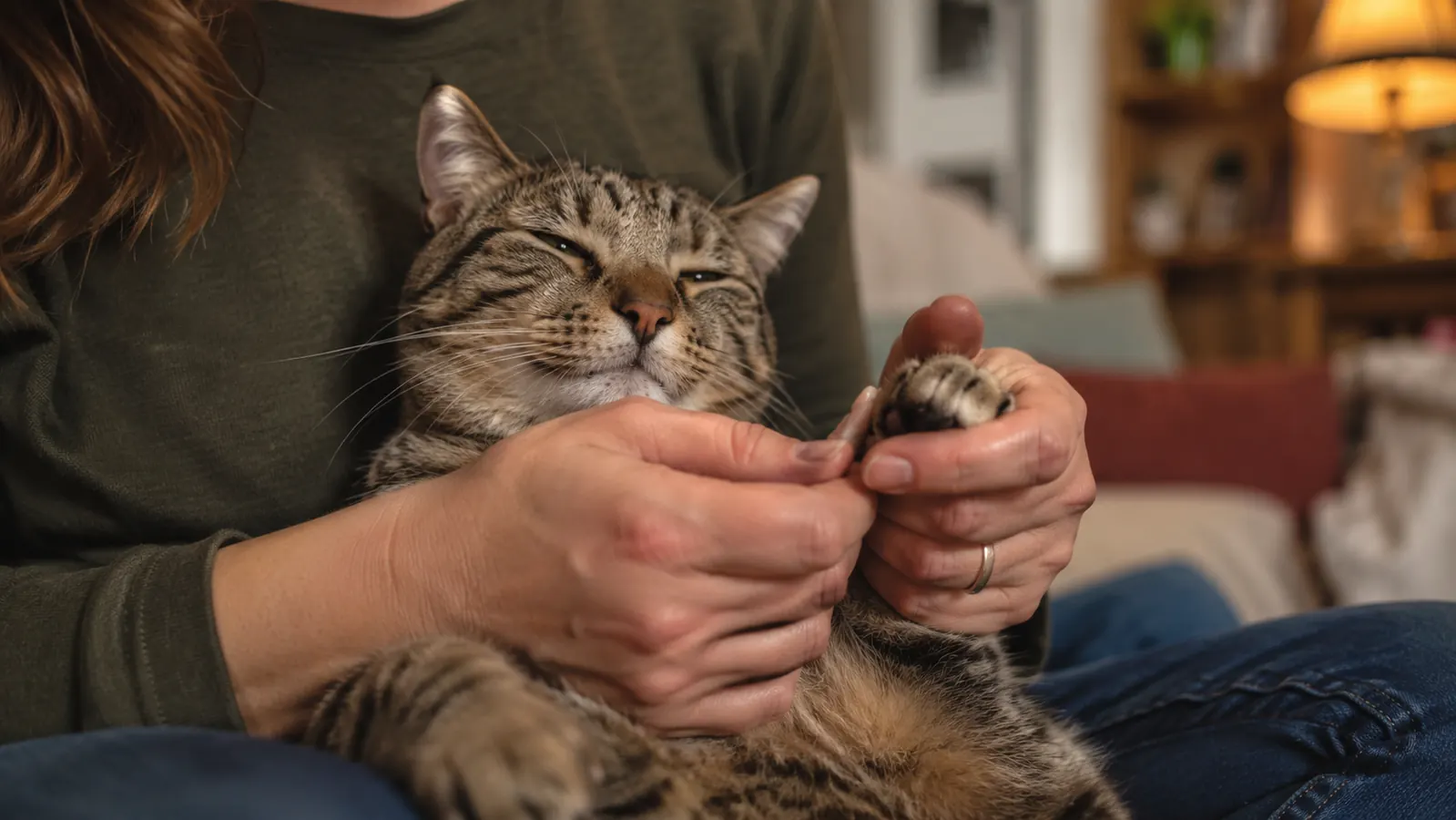
For Dolce, the cat, the learning curve was the opposite problem: cat nails are thinner and more translucent, so it is easier to see the quick and easier to accidentally grind too far if you get comfortable and rush. I used low speed only on her and kept sessions to two nails at a time, rewarding heavily between. By week four she tolerated all four paws in one sitting, which I genuinely did not expect.
Where the Casfuy Actually Earns Its Keep
Once the groundwork is done, this grinder delivers. The nail finish is genuinely smoother than what clippers leave, which matters if your dog's nails scratch wood floors or snag on blankets. The grinding port does not slip sideways the way some budget grinders do, and the grip is wide enough to hold comfortably through a full session without hand fatigue.
The two-speed setup is more useful than it sounds. Low for nervous dogs and cats, high for dogs with thick nails who have already desensitized. Having the option on a sub-$25 grinder is not a given, and it makes this tool genuinely versatile across a multi-pet household.
The cord-free design also matters more than I expected. Being tethered to an outlet means you either groom on the floor near a plug or you use an extension cord, both of which create awkward logistics. The rechargeable format means I groom wherever the dog is most relaxed, which turned out to be a significant factor in Remy's progress. He is calmer on his own bed than anywhere else in the house, and I could go to him instead of dragging him to a grooming spot.
What I Liked
- Genuinely quiet on low speed, around 52 decibels at six inches
- Two-speed setup handles both anxious small dogs and thick-nailed large breeds
- Rechargeable micro-USB battery lasts six to eight weekly sessions per charge
- Smooth nail finish, noticeably better than clipper cuts for floor-scratching households
- Works on cats, not just dogs, with the small-diameter port
- Cord-free design lets you groom wherever the pet is most comfortable
Where It Falls Short
- High speed is not whisper-quiet, closer to 63 decibels at ear distance
- No low-battery indicator, the motor just slows down, risky mid-session
- Grinding bands wear faster on hard nails, no spare band included
- Instructions are a tiny-print single card, difficult to read without magnification
- Learning proper grinding technique takes several sessions, no guidance provided
- Desensitization phase (one to two weeks minimum) is not mentioned anywhere in the packaging
How It Compares to Just Sticking With Clippers
Clippers are faster per nail on a cooperative dog, full stop. If you have a dog who does not mind clippers, there is no efficiency argument for switching. The grinder becomes the better tool in three situations: the dog has had a bad clipper experience and now associates the tool with pain; the nails are very dark and you cannot see the quick so you are guessing with every cut; or the dog's nails crack and splinter under clip pressure, which happens more in older dogs or certain breeds.
Remy hit all three of those criteria, which is why the grinder made sense for him. Biscuit honestly did fine with clippers, and I switched her to the grinder mostly for the smoother finish. If you are on the fence and your dog is clip-tolerant, you can read more about the full comparison on our nail grinder vs nail clippers page where we break down the tradeoffs side by side.
Who This Is For
This grinder is the right buy if your dog has had bad clipper experiences or visibly tenses when they come out; if you have a multi-pet household including cats; if your dog has dark nails that make the quick hard to see; or if you want smoother nail edges than clippers produce. It is also the right starting point if you have never used a grinder before and want a low-cost way to find out if the format works for your pet before investing in a more expensive model. The learning curve is real but manageable, and at this price the cost of learning is not painful if it turns out not to work for your dog's temperament. For anyone considering the switch, our breakdown of 10 reasons to switch from clippers to a grinder covers the full case.
Who Should Skip It
Skip this grinder if you have a very large, high-energy dog who needs quick high-speed grinding and is already fully comfortable with the process. At that point you have outgrown the entry-level tier and a more powerful grinder with a larger drum makes more sense. Also skip it if you are unwilling to invest two to four weeks of short daily desensitization sessions before expecting results. A grinder is not a drop-in replacement for clippers you can use on day one with a nervous pet. The tool is sound, but the patience required to introduce it properly is non-negotiable.
Ready to give your dog a nail routine they do not dread? Start here.
The Casfuy nail grinder is the most practical first grinder for anxious pets. Over 100,000 pet owners have used it. Check the current price and availability on Amazon before deciding.
Amazon Check Today's Price on Amazon →