
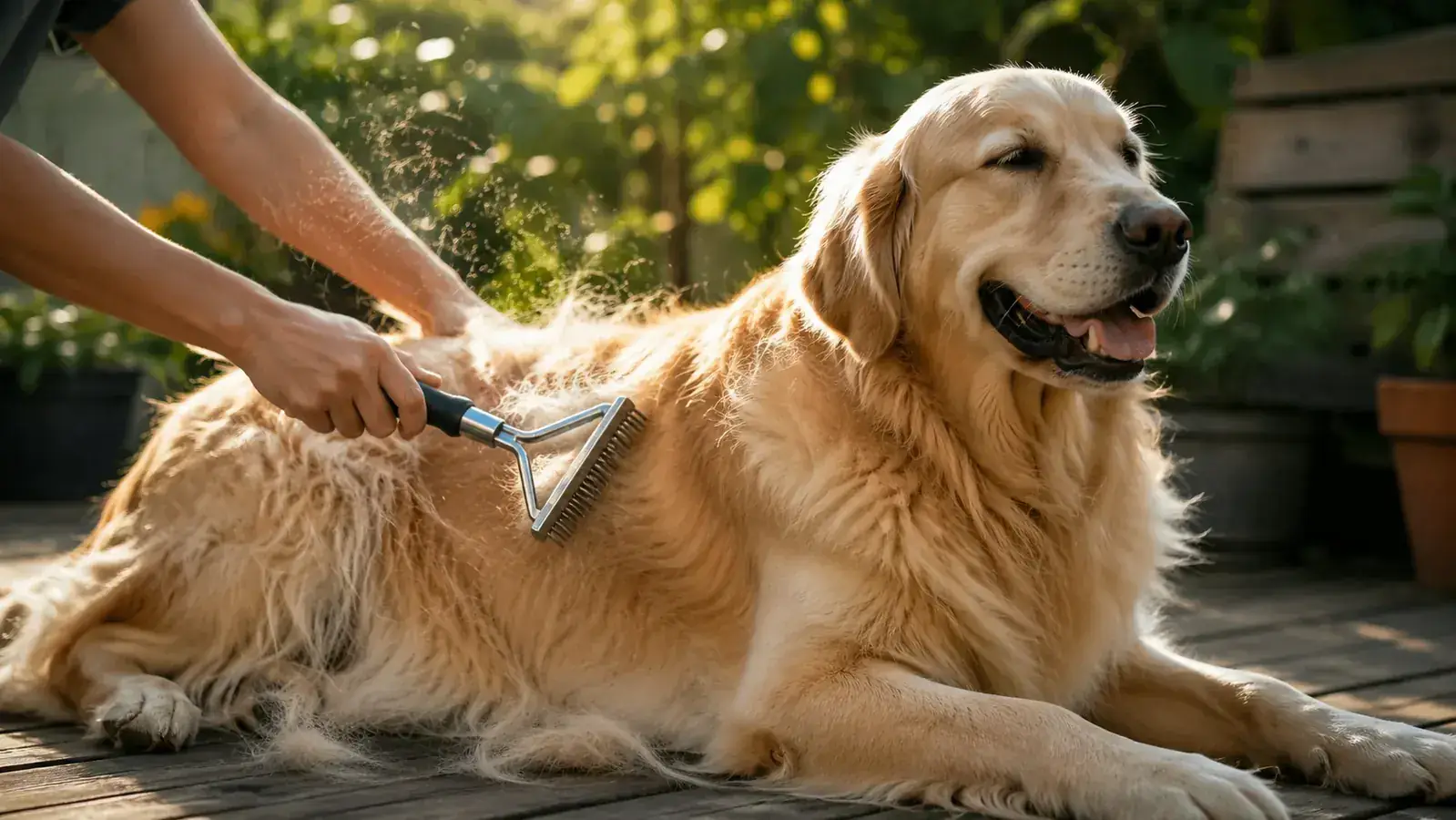
If you have a dog who sheds, you already know the feeling: you vacuum on Monday and by Wednesday the couch looks like it grew a second coat. You are not imagining it. The average double-coated dog loses somewhere between 50 and 100 hairs per minute during peak shed season. Multiply that by every room in your house and you start to understand why the lint roller industry is worth billions.
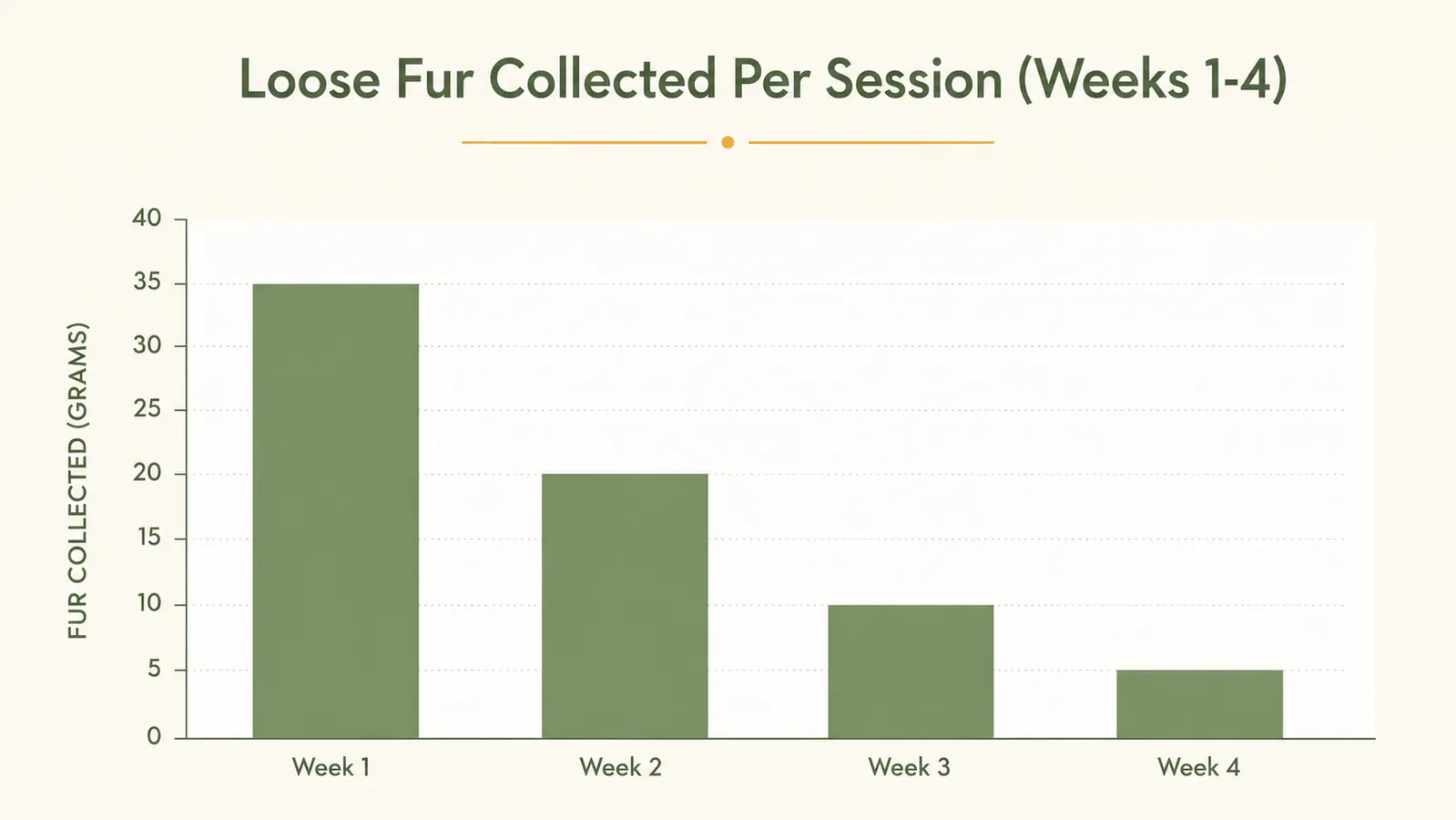
The good news is that most shedding is manageable with a consistent grooming routine, the right tool, and about 20 minutes once a week. My Golden Retriever, Biscuit, weighs 74 pounds and used to leave a visible fur trail from the kitchen to the couch every single day. After building a real routine around a double-sided deshedding rake, the amount of fur hitting the floor dropped by roughly 80 to 90 percent inside the first month. This guide walks you through exactly what that routine looks like, step by step.
Your furniture is wearing your dog's coat. Here is the tool that fixes that.
The Maxpower Planet double-sided grooming rake has a 9-row deshedding side for pulling undercoat and a 17-row dematting side for breaking up tangles. Over 57,000 pet owners use it. It costs less than a bag of dog food.
Amazon Check Today's Price on Amazon →Step 1: Pick the Right Day and Commit to It
The biggest reason grooming routines fall apart is not the wrong tool. It is the lack of a fixed schedule. When grooming is something you do 'when it gets bad,' it always gets bad before you get around to it. Pick one day of the week, write it down, and treat it like a recurring appointment. I do Sundays right after my own shower because the bathroom is already a mess and Biscuit has learned to expect it.
Consistency is what prevents the fur from building up into a thick mat problem. When you groom weekly, each session only takes 15 to 20 minutes. When you let it go three or four weeks, you are looking at 45 minutes of patient detangling before you even get to deshedding. The weekly habit pays off fast.
If your dog is currently between grooms and you are starting fresh, build in extra time for the first session. Do not try to power through a heavily matted coat in one sitting. Work in short passes, take breaks, and reward your dog generously throughout. A calm first experience makes every session after it easier.
Step 2: Start With a Quick All-Over Inspection
Before you pick up any tool, spend two minutes running your hands over your dog from nose to tail. You are looking for mats, hot spots, skin irritation, or any areas where the dog pulls away when touched. Note where the coat feels dense and where it feels thin. This tells you where the undercoat is packed in tight versus where the top coat is doing all the work.
The areas that tend to mat fastest are behind the ears, under the collar, in the armpits, and behind the rear legs where the legs meet the body. These spots get compressed by movement and moisture and they turn into knots faster than anywhere else. Flag them now so you can approach them carefully once you start grooming, rather than dragging a rake through without warning and scaring the dog.
Doing this inspection with your hands first also builds trust. Your dog learns that grooming starts with something comfortable before the tools come out. For anxious dogs, this two-minute ritual is the difference between a session that goes smoothly and one that ends with someone on the floor and no progress made.
Step 3: Use the Dematting Side First on Any Knots
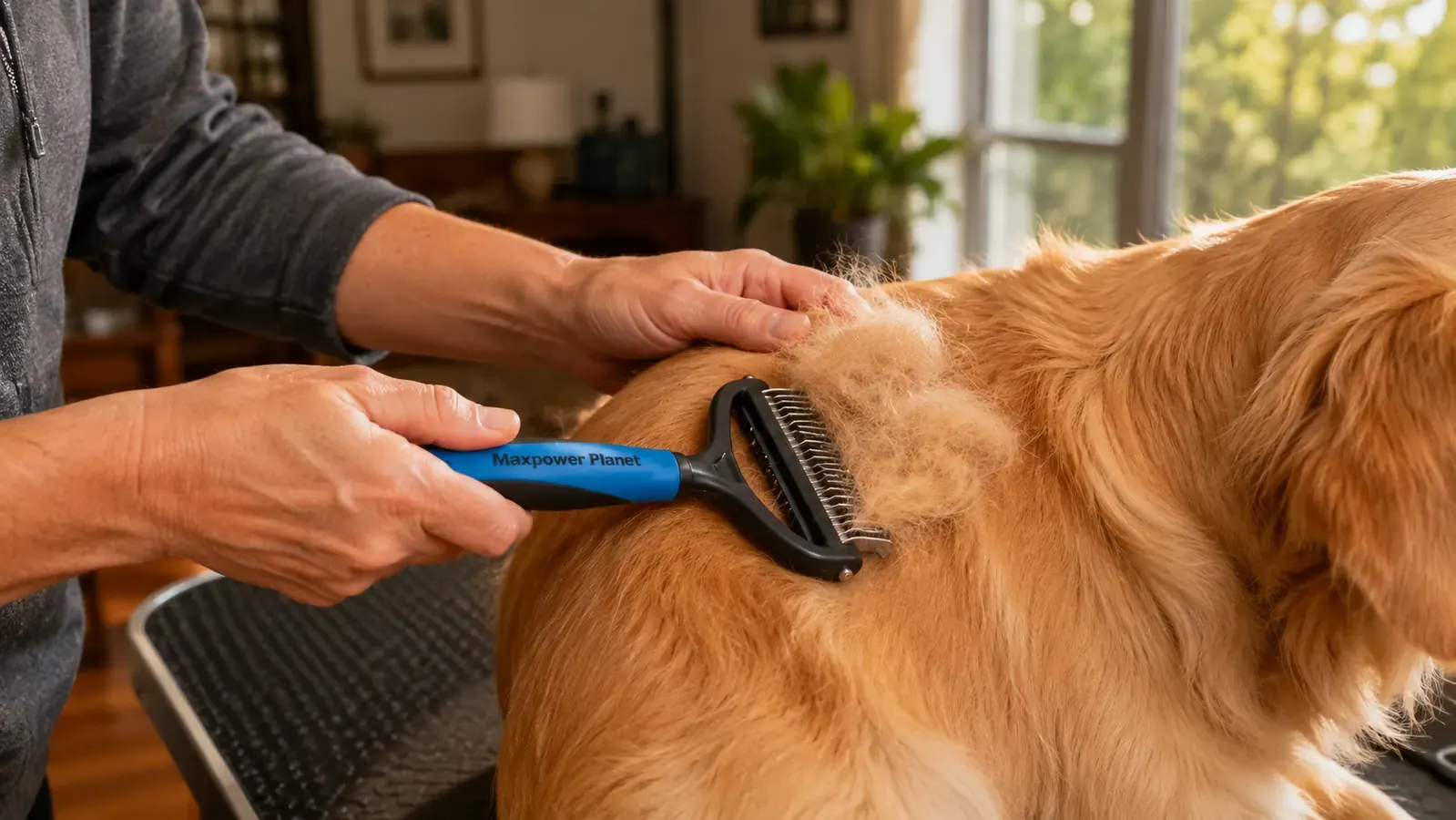
The Maxpower Planet rake has two sides. The side with 17 finer teeth is for dematting. The side with 9 wider-set, curved teeth is for deshedding and undercoat removal. Always use the dematting side first on any tangles you found during inspection. Trying to pull a deshedding comb through a knot pulls on the skin and hurts. The dog will not forget it.
Hold the mat at the root with your other hand to take the tension off the skin, then work the dematting teeth through the outer edge of the mat first. You are not trying to yank the whole thing out in one pass. Work from the edges inward, taking small bites of the knot at a time. On a bad mat, this might take three or four passes. That is fine. The goal is to break it up without pulling the dog.
Once the mat is broken and the area combs through freely, move on. Do not over-work a spot. The skin under a mat is sometimes already a little irritated from being compressed, and extra friction will make it worse. Clear it, move on, and give the dog a treat so they associate that part of the process with something good.
Step 4: Work Through the Coat Section by Section With the Deshedding Side
Once any mats are cleared, flip the rake to the 9-row deshedding side and start at the neck. Work in sections the width of the rake, moving in the direction of hair growth. Do not go against the grain. Going with the grain lets the curved teeth sink into the undercoat and pull it out cleanly. Going against the grain just tugs the top coat and irritates the skin.
Work your way back from the neck to the shoulders, down the back, over the hindquarters, and down each leg. Do both sides of the body before moving to the chest and belly. The belly and legs tend to have softer, finer coat that does not need as many passes. The back and hindquarters are where the bulk of the undercoat lives. Expect to pull the most fur there.
After each section, clear the teeth of collected fur. You can flick it out with your fingers or tap the rake against the inside of a trash bag. If you let too much fur build up in the rake, it stops grabbing new undercoat and you are just running a clogged tool across the coat without doing anything useful. Clearing the rake every two or three passes keeps it working at full efficiency.
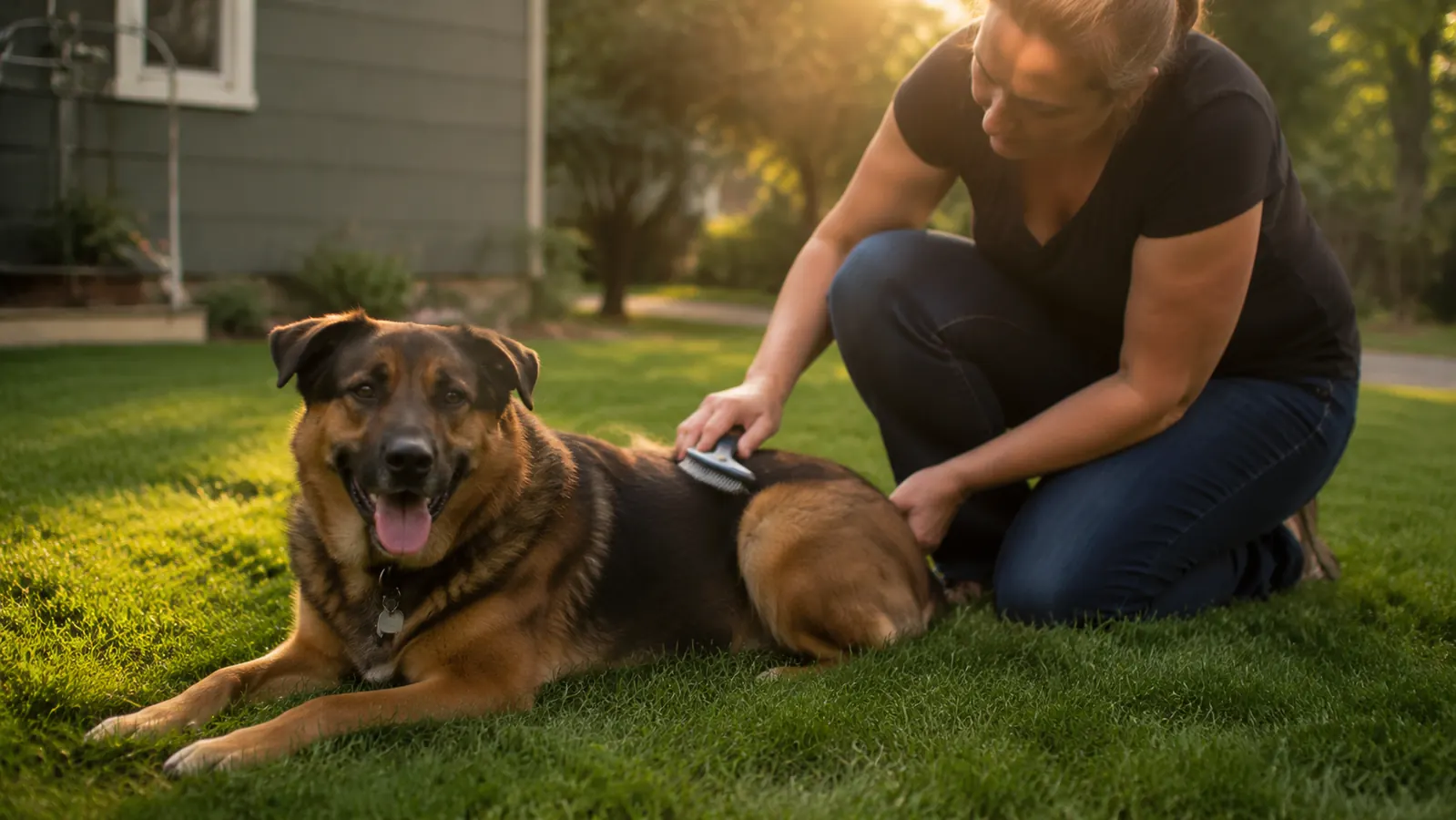
The first session I did this properly, I pulled enough fur off Biscuit to stuff a throw pillow. The floor stayed clean for four days straight. That had never happened before.
Step 5: Finish With a Light Pass and Reward the Dog
Once you have worked through the whole body, do one final light pass over the entire coat with the deshedding side, using lighter pressure than before. This picks up any remaining loose hairs that got stirred up during the main passes but did not fully release. It also smooths the coat back down so the dog does not leave looking like they were groomed by someone in a hurry.
After the rake, run your hands over the coat one more time. You are checking that it lays flat, that there are no new mats you missed, and that the skin looks healthy. If you see any redness, flaking, or patches where the coat looks thinned out more than expected, note those spots. Persistent patchy shedding can sometimes signal a nutrition or health issue worth mentioning to your vet.
End every session with a treat and some calm praise. Not wild excited praise that spikes the dog's energy, but the steady, warm kind that says 'that went well, you were good, we are done.' Dogs that get rewarded consistently at the end of grooming stop dreading it. Biscuit now walks to her grooming spot on her own on Sunday mornings. It took about six weeks of consistency to get there.
What Else Helps
A weekly grooming session with a good rake handles the bulk of shedding, but a few other factors either support or undermine your results. Nutrition is the biggest one. A diet low in omega-3 fatty acids produces a dry, brittle coat that sheds more than a well-nourished one. If your dog is already on a quality food and you are still seeing excessive shedding outside of normal seasonal blowouts, a fish oil supplement is worth trying. Look for one formulated for dogs with an EPA plus DHA combined dose that matches your dog's body weight.
Hydration matters too. A dehydrated dog sheds more than a well-hydrated one because the skin does not retain moisture as effectively. Make sure your dog always has fresh water and is actually drinking it, not just sniffing the bowl. Some dogs are more motivated to drink from a moving water source, which is worth knowing if your dog tends to ignore a standing bowl.
Bathing once every four to six weeks with a deshedding shampoo can also loosen undercoat before your grooming session and make the rake work even more effectively. Do not over-bathe. Washing too frequently strips the coat's natural oils and actually worsens shedding over time. Once a month is a good starting point for most double-coated breeds. And always groom after the bath, once the coat is fully dry, not while it is still damp. Wet undercoat clumps and the rake will not move through it cleanly.

If you want to go deeper on what to look for in a deshedding tool and how the Maxpower rake holds up over months of regular use, the full long-term review covers everything from the handle grip to how the teeth wear over time. And if you are debating between the Maxpower rake and the FURminator, the side-by-side comparison breaks down which one actually pulls more undercoat per pass and which is easier on the skin.
One tool, one weekly session, and your furniture stops wearing your dog's coat.
The Maxpower Planet grooming rake is the most straightforward deshedding tool I have used in years of dog ownership. The 9-row deshedding side grabs undercoat cleanly, the 17-row dematting side handles knots without pulling, and the whole thing costs less than a single groomer visit. It earns its place in the routine.
Amazon Check Today's Price on Amazon →