
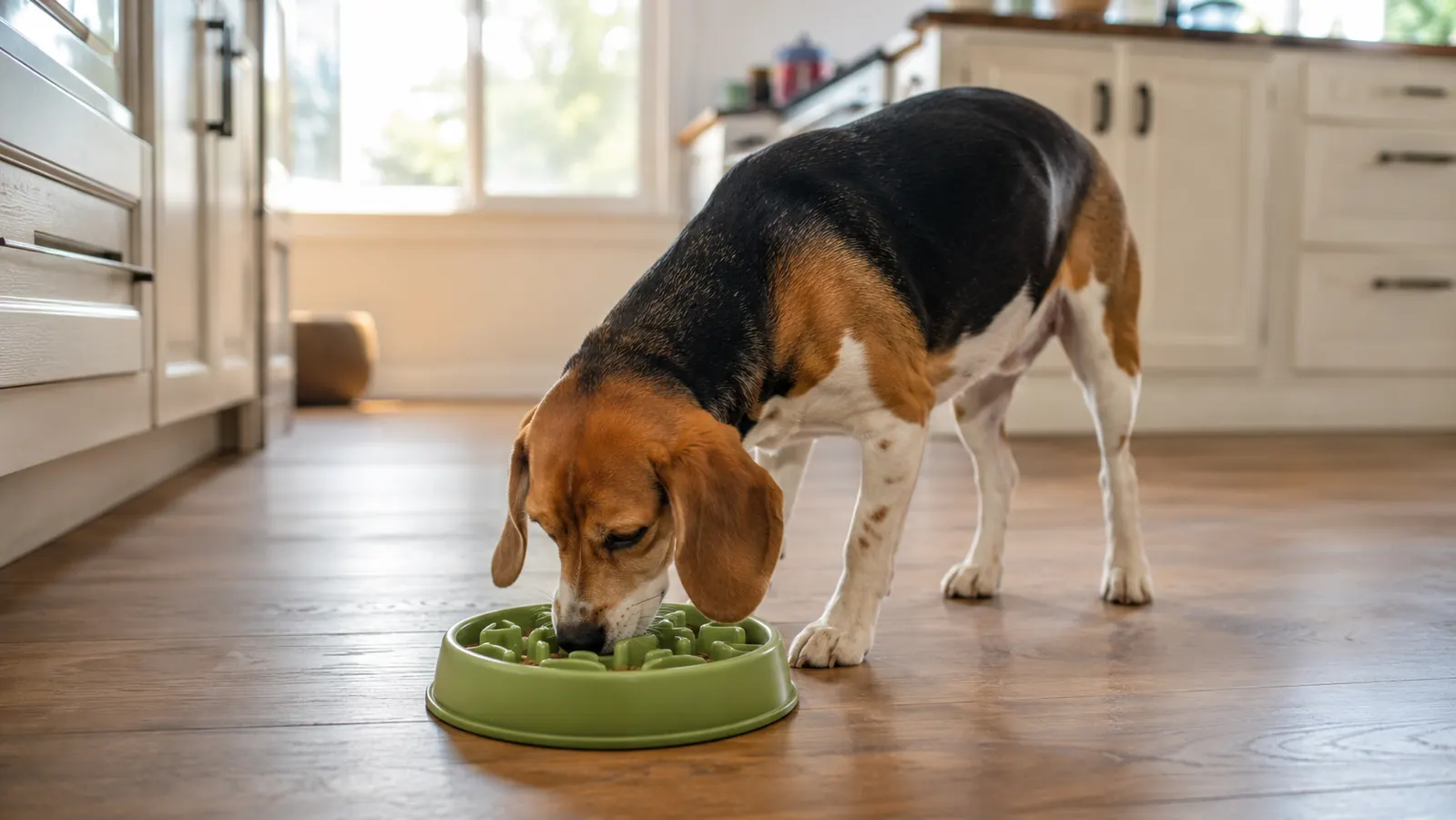
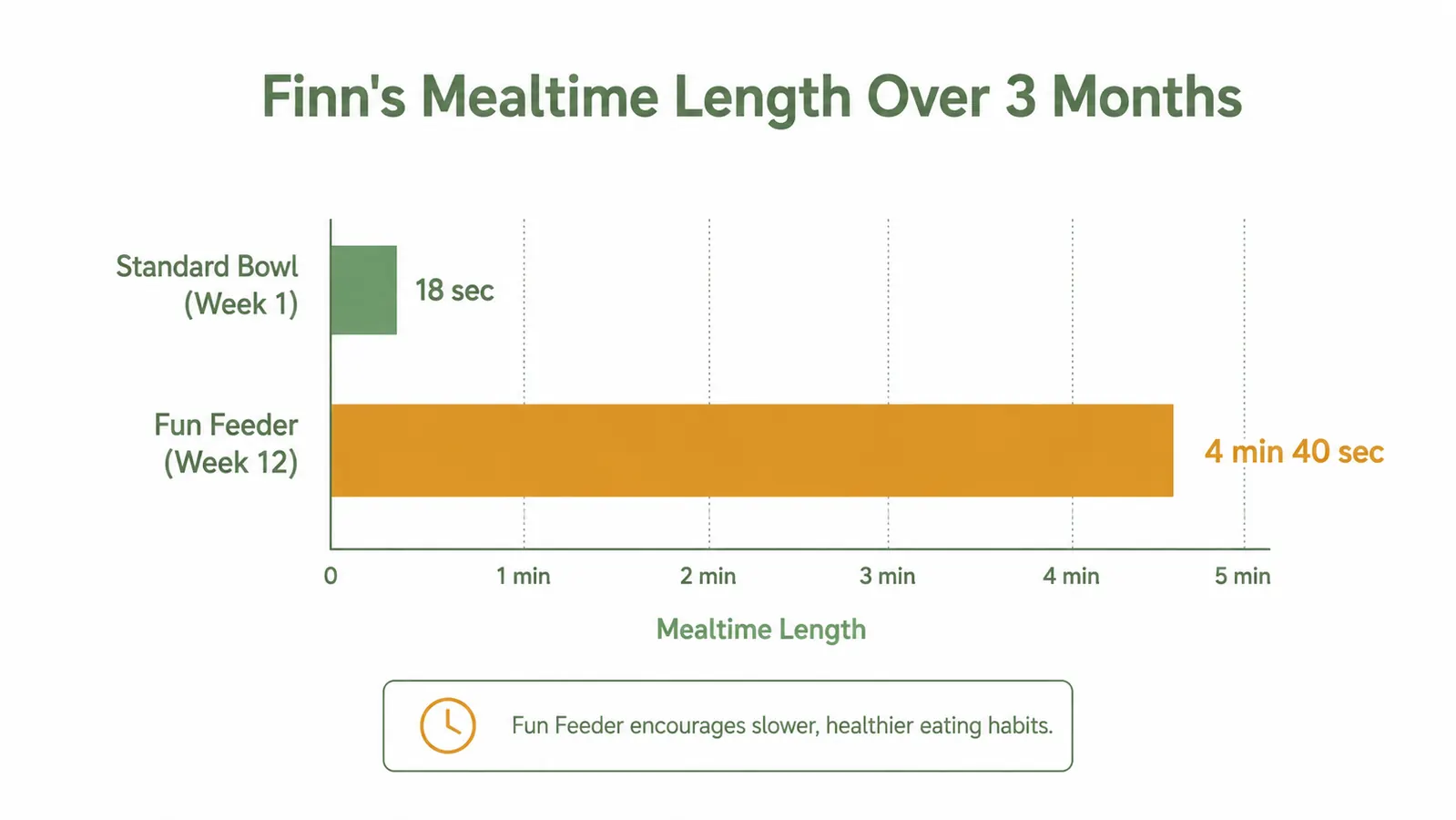
I started timing Finn's meals as a joke. Eighteen seconds. That was how long it took my five-year-old, 28-pound Beagle to empty a full cup of kibble from a standard stainless bowl. I would set it down, turn around to grab his water, and he would already be licking the bottom. By the time he hit three years old, the speed-eating had moved from funny to worrying. He was gulping air with every mouthful, bloating up like a little balloon after dinner, and occasionally bringing food back up within minutes of eating. My vet said slow feeders were worth trying before any other intervention. That was three months ago. I have been using the Outward Hound Fun Feeder Slo Bowl every single day since.
This is not a one-week impression. Ninety-plus meals on this thing. I know how it holds up in the dishwasher, how Finn adapted to it, what changed about his digestion, and where the design still falls short. If you have a dog who eats like a vacuum and you are trying to figure out whether a slow feeder bowl is worth the $10, here is everything I tracked.
The Quick Verdict
Genuinely slowed Finn from 18 seconds to over four minutes per meal, reduced post-dinner bloating noticeably, and held up to three months of daily dishwasher cycles without warping or cracking. The maze ridges trap small-kibble crumbs and take a bit of effort to clean by hand, but for under $10 this is one of the most effective changes I have made to Finn's feeding routine.
Amazon Check Today's Price →Your dog is swallowing air with every bite. This $10 bowl is the fix most vets recommend first.
The Outward Hound Fun Feeder Slo Bowl has over 134,000 Amazon reviews and a 4.6-star rating. If your dog gulps food and bloats after meals, this is the low-cost, low-effort place to start.
Amazon Check Today's Price on Amazon →How I've Used It: Three Months of Daily Meals With Finn
Finn eats twice a day, half a cup of kibble per meal. That is 180-plus feedings since I switched him to the Fun Feeder. For the first two weeks I ran both bowls side by side, alternating each meal, so I had a direct before-and-after on the same dog in the same kitchen. After week two I retired the standard bowl entirely. Finn gets the slow feeder at both breakfast and dinner, and I hand-wash it after every wet-food addition or toss it in the top rack of the dishwasher for regular kibble-only meals.
I kept a simple log in my phone's notes app: date, meal, approximate mealtime in minutes, and any post-meal symptoms (panting, visible belly distension, vomiting). Not scientific, but consistent. By week six the data pattern was clear enough that I stopped logging and just let the routine run. What I noticed matched what the log showed.
I chose the medium size with a 2-cup capacity. At 28 pounds, Finn is on the smaller end of medium, but the medium bowl gave him enough surface area to work through at multiple entry points rather than getting funneled into one corner. The orange color was what Amazon had in stock; Outward Hound also makes this in green, purple, and blue, and the color has zero effect on performance.
The Maze Design: How It Actually Slows a Dog Down
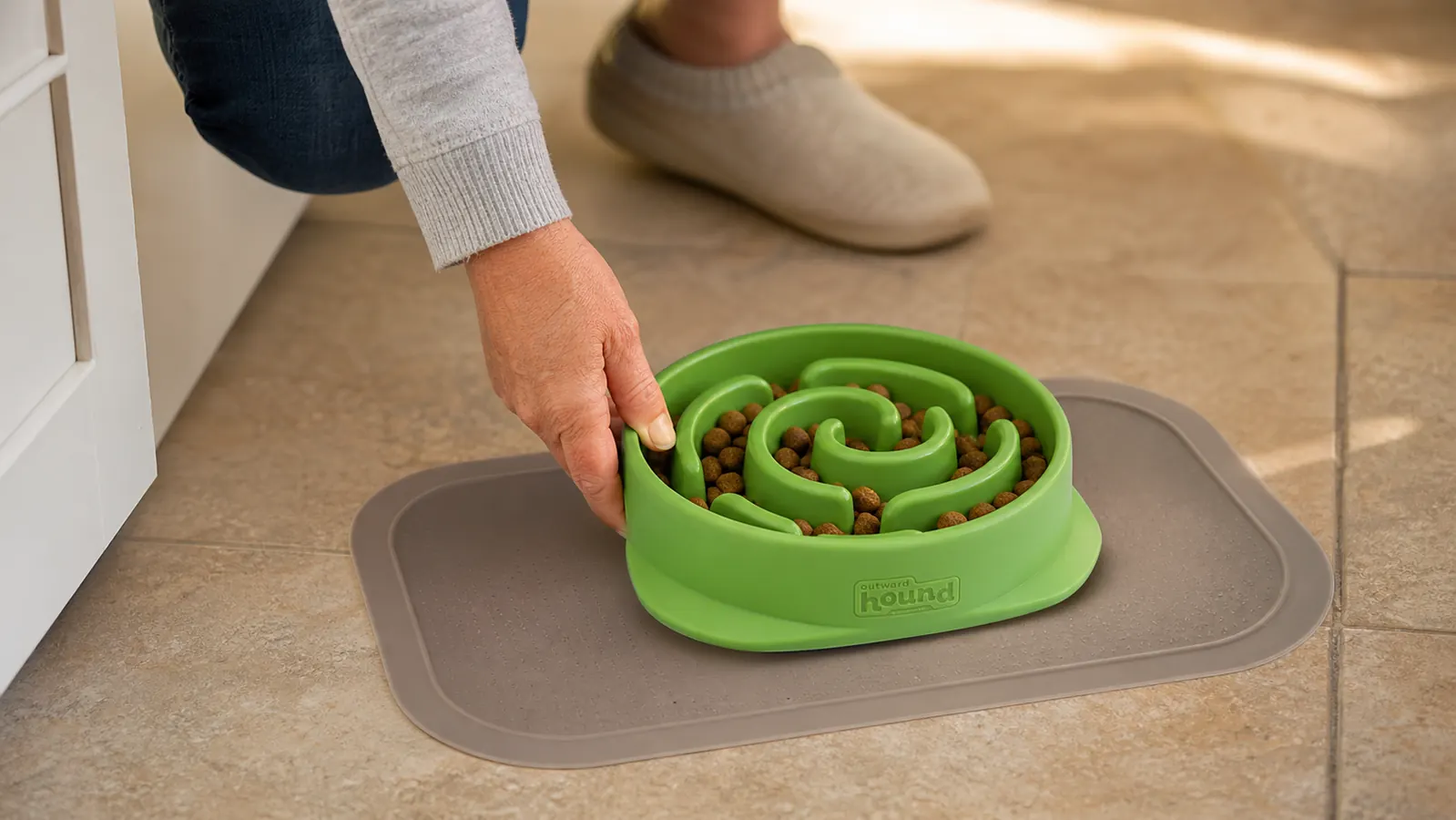
The Fun Feeder works through physical obstruction, not friction or suction. The bowl surface is covered in raised plastic ridges arranged in a maze pattern. Kibble pieces fall into the channels between ridges and cannot be scooped up in a single sweep of the tongue or a low-scooping snout like Finn's. He has to nose pieces out one or two at a time, work into corners, and occasionally back out of a dead end to find another route. It turns a meal into something closer to a puzzle.
In week one, Finn's mealtime went from 18 seconds to about one minute forty seconds. That sounds like a big jump but he was still frustrated and working aggressively at the maze. By week three he had settled into a slower, more methodical approach and meals were running between three and four minutes. By week eight, he was consistently hitting the four-to-five minute window, which is exactly where my vet said we wanted to be. The adaptation curve was real. He got better at using the bowl, and in getting better at it, he naturally slowed down rather than speeding up, because the bowl removed the option to rush.
One thing I did not expect: Finn stopped pacing after meals. He used to circle the kitchen for five to ten minutes post-dinner, which I now think was discomfort from swallowed air working through his digestive tract. That behavior dropped off around week four and by week six it was essentially gone. Whether that was the slow feeder, the reduced air intake, or both, I cannot isolate it. But the timing lines up.
Bloating and Digestion: What Actually Changed
The bloating was the thing that pushed me to try a slow feeder. Finn would finish his evening meal and within ten minutes his belly would look notably distended. Not emergency-level bloat, but visible and uncomfortable. He would stand with his abdomen slightly tucked, occasionally drool, and avoid lying down for twenty minutes or more. My vet had already ruled out GDV risk factors specific to his breed and size but told me reducing the rate at which he was swallowing air was the most practical first step.
By week three, the post-dinner belly distension was less pronounced. By week five, it had mostly stopped happening. I still see it occasionally if he eats his breakfast too enthusiastically on a morning when he has had more exercise than usual, but the consistent evening bloating that happened every night is gone. I am attributing that directly to the slower eating pace. He is taking in far less air per minute of eating, and his stomach has time to signal fullness before it is already overloaded.
He also stopped vomiting shortly after meals. In the two months before I switched bowls he had brought food back up four or five times, always within fifteen minutes of finishing. In three months on the slow feeder that has happened once, and that was a day when I added a new wet food topper he did not respond well to. The vomiting issue was almost certainly eating-speed related.
Finn went from 18 seconds to over four minutes per meal. The post-dinner bloating that happened every night is gone. For under $10, this is the most effective change I have made to his feeding routine.
Build Quality and Durability Over Three Months
The bowl is food-grade plastic, BPA-free according to Outward Hound's labeling. It is not as heavy as a ceramic or stainless bowl, but it has a weighted base that prevents it from sliding across tile, which was my main concern with a lightweight plastic dish. Finn is a pusher. He nudges his bowls across the floor while eating. The Fun Feeder stays put on my tile floor without a mat, which surprised me. On hardwood it does slide a little, so I put a small silicone mat under it on the days we feed in the living room.
After three months of alternating between hand-washing and top-rack dishwasher cycles, the bowl shows no warping, no cracking, and no fading of the raised ridges. The color has not changed. The maze walls have not softened or become flexible. I have seen reviewers complain about cheaper slow feeder bowls deforming after repeated dishwasher cycles, so I paid attention to this specifically. The Fun Feeder has held up without any issues.
The one build complaint I have is that the ridges do trap fine kibble crumbs and tiny bits of wet food in the corners of the maze. If Finn eats dry kibble only, the dishwasher handles it. But if I add a spoonful of wet food or a fish oil drizzle, I need to scrub the maze channels with a bottle brush before the dishwasher cycle, or the residue bakes in and starts to smell. That is less of a design flaw and more of a reality of any ridged surface, but it is something to know.
What I Liked
- Slowed Finn from 18 seconds to 4-plus minutes per meal within two weeks
- Post-dinner bloating dropped off significantly by week five and is now rare
- Non-slip base stays put on tile without a mat
- Held up to three months of regular dishwasher cycling without warping or cracking
- BPA-free food-grade plastic at a price most people can spend without hesitation
- Available in multiple colors and two sizes (medium and large)
Where It Falls Short
- Maze channels trap wet food and require a bottle brush for thorough hand-cleaning
- Slides on hardwood floors without a silicone mat underneath
- Not suitable for large breeds eating more than 2 cups per meal (medium maxes at 2 cups)
- Plastic construction will not appeal to owners who prefer ceramic or stainless for hygiene reasons
How Finn Adapted: The Learning Curve Is Real
I want to be honest about the first week because a few people I know tried slow feeders and quit after three days, which I think is a mistake. Finn was frustrated in week one. Not aggressive, not distressed, but clearly annoyed that his bowl was fighting back. He would work at one section of the maze, hit a wall, and step back with this expression that I can only describe as confused irritation. He finished his meals but took longer than he needed to because he was not yet mapping the layout of the channels.
By day ten he had figured out his preferred entry points in the maze. By week three he was working the bowl efficiently, moving section to section without the frustrated pausing. The adaptation made mealtimes longer, not shorter, which is counterintuitive but correct. A dog who has learned the maze still has to work for each piece of kibble. The learning does not defeat the purpose. Finn takes longer at four minutes than he did at one minute forty because he has stopped fighting the bowl and started engaging with it.
Who This Is For
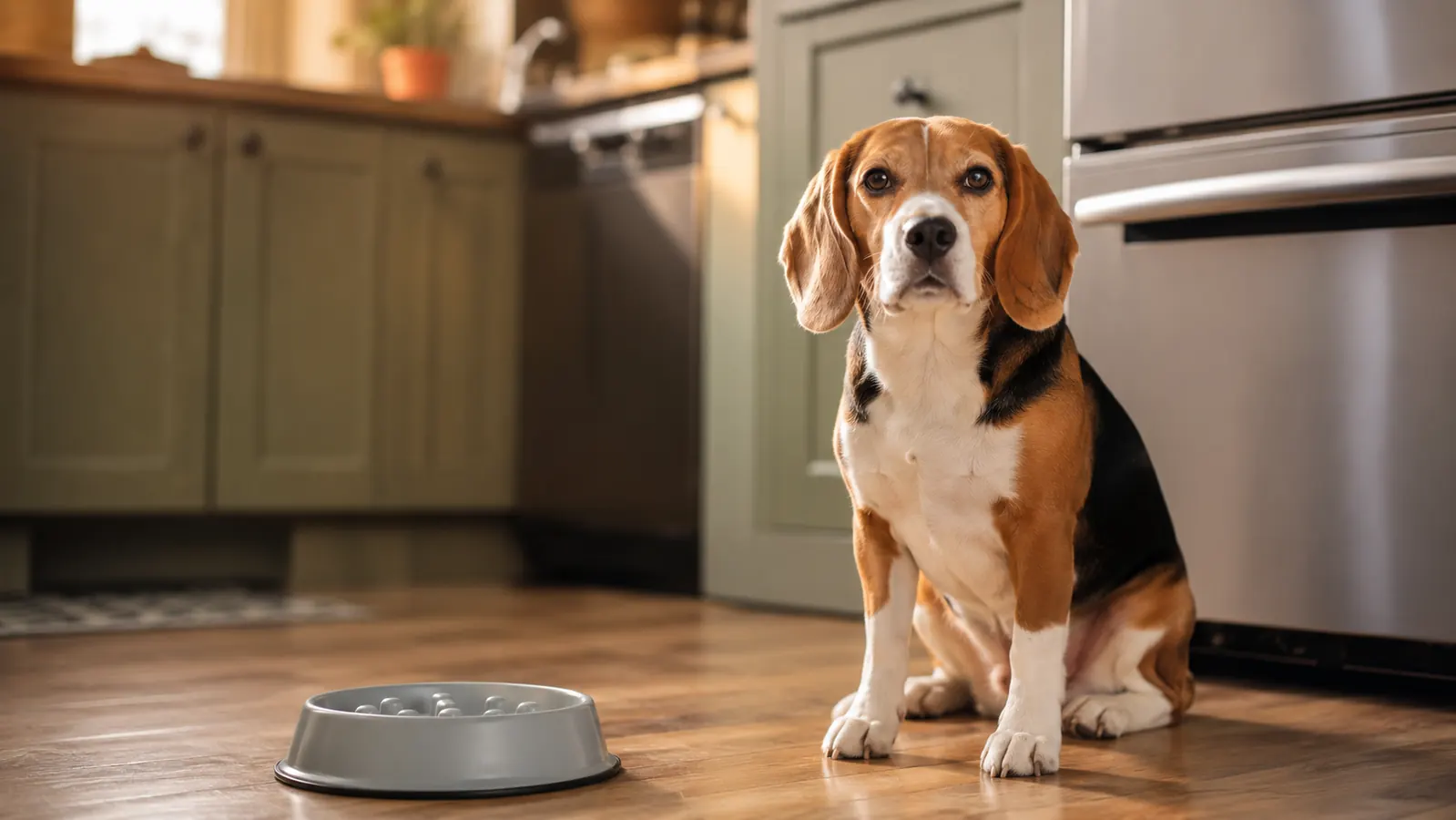
The Outward Hound Fun Feeder is the right bowl if your dog finishes meals in under a minute, shows post-meal bloating or gas, regurgitates food shortly after eating, or gulps so fast they bring air up with every swallow. It is also a good fit for owners who want a mental enrichment element added to feeding without buying a separate puzzle toy. Beagles, Labs, Goldens, and any breed with a strong food drive will engage with this immediately. Smaller breeds on the medium size (10 to 40 pounds eating 1 to 2 cups per meal) are the ideal fit for the size I tested. If your dog eats more than 2 cups at a sitting, go directly to the large.
Who Should Skip It
If your dog is a slow eater already, a slow feeder bowl will not add anything meaningful and may frustrate a dog who does not understand why their food is suddenly harder to reach. Dogs with mobility issues in the neck or snout, or flat-faced breeds like French Bulldogs and Pugs, may struggle with the depth of the maze channels. If you feed raw or wet food exclusively, the cleaning effort goes up significantly. And if you need something your dog cannot eventually pick up and carry, the lightweight plastic construction of the Fun Feeder may not hold up to a dedicated chewer. If that is your dog, look at the stainless steel slow feeder options instead. For everyone else with a speed-eating dog, this is an easy first buy. Read more on why dogs eat fast in my breakdown of 10 reasons your dog eats too fast and how the fix depends on the cause.
If you want to compare this bowl against a licki mat for enrichment feeding, I cover that side by side in the slow feeder vs licki mat comparison. The two tools serve different needs, and knowing which fits your dog's eating style saves you from buying both just to find out.
Three months in, this is still the first thing I recommend to anyone with a dog who gulps food.
The Outward Hound Fun Feeder Slo Bowl costs under $10, ships with Prime, and has over 134,000 ratings at 4.6 stars. If your dog bloats, vomits after meals, or clears the bowl before you can blink, start here before trying anything more expensive.
Amazon Check Today's Price on Amazon →