
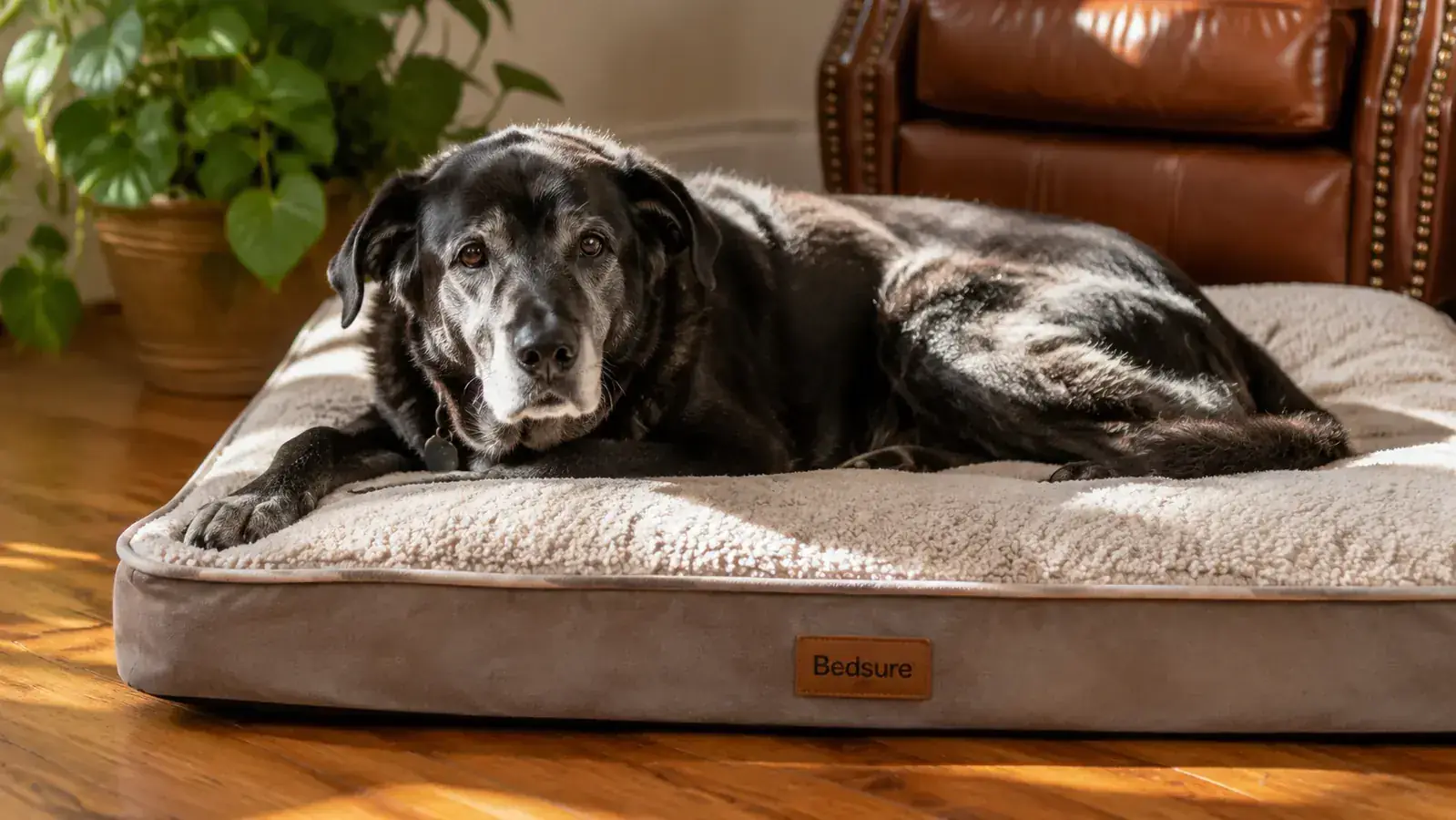
My shepherd mix, Bruno, is nine years old and weighs 74 pounds. For three years I kept buying him bigger, fluffier cushion beds, convinced the problem was size. He still slept on the tile floor. He still groaned every time he stood up. He still circled the bed four times and walked away. It was not a size problem. It was a support problem. Once I swapped to a proper memory foam orthopedic bed, the tile floor became a last resort instead of his first choice. If any of these 10 signs sound familiar, your dog is telling you the same thing Bruno was telling me.
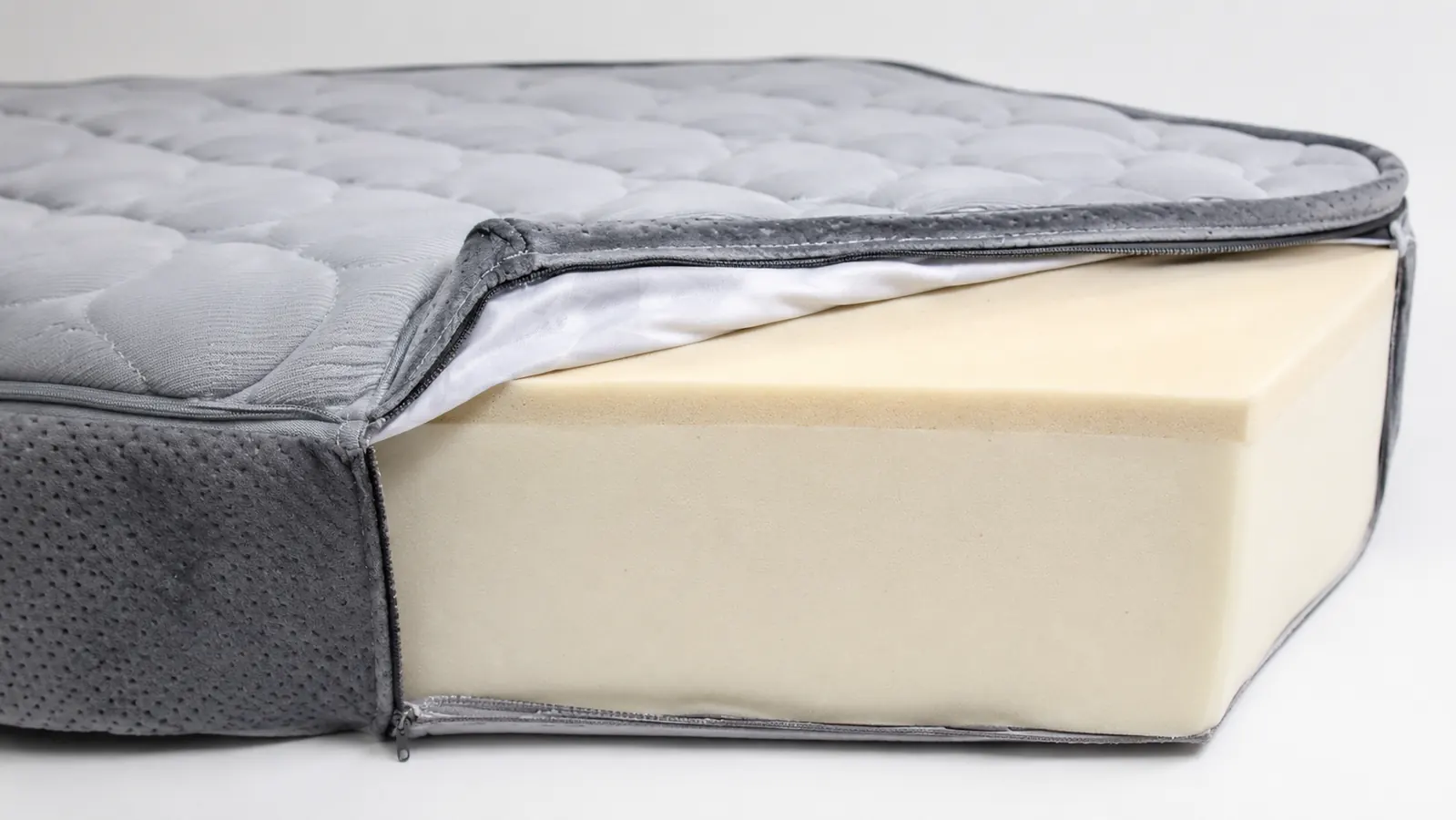
The EHEYCIGA Orthopedic Dog Bed is what ended up in our living room. It is a 44x32-inch, 4.5-star rated bed with over 21,000 reviews, built on dense memory foam with a waterproof liner and a washable cover. I will reference it throughout because it is what I know, and because after testing it for four months I can speak to it honestly. Each sign below also explains why it fixes the specific problem.
Does your dog sleep on the floor next to a perfectly good bed? Here is why.
The EHEYCIGA Orthopedic Dog Bed has over 21,000 reviews from owners of aging, large, and joint-troubled dogs. Dense memory foam, waterproof liner, removable washable cover. If the floor keeps winning, this is the upgrade that changes that.
Amazon Check Today's Price on Amazon →They Groan or Grunt When Standing Up
A dog that vocalizes when rising is not being dramatic. That grunt is a pain signal. Hard floors and flat cushions offer no pressure relief, so joints absorb the full impact of a dog lowering and raising their body weight. Memory foam distributes that pressure evenly across the whole body, which means less strain when they push themselves up. Bruno's morning grunts dropped off within two weeks of switching. Not gone, but noticeably quieter and less frequent.
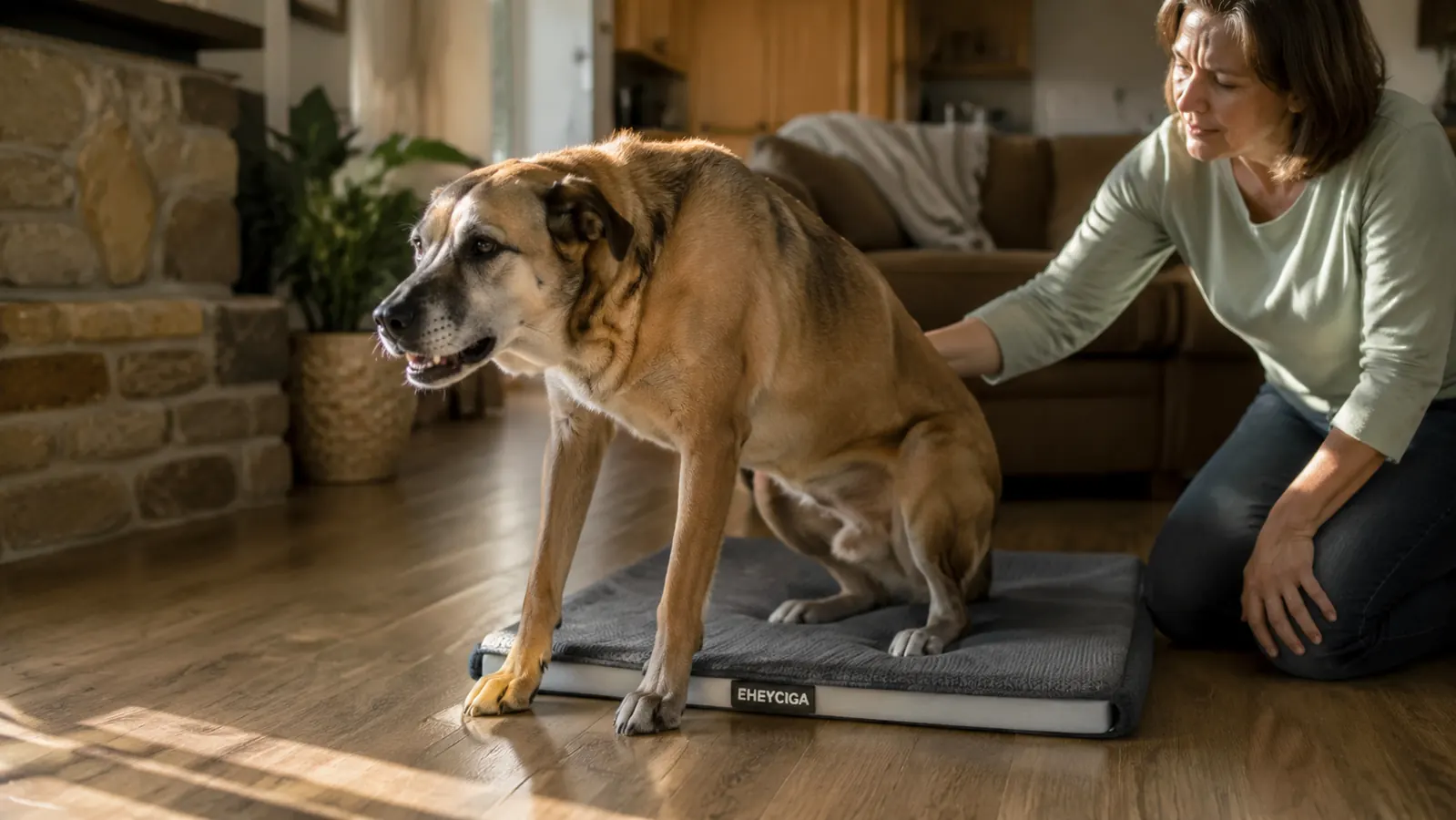
They Sleep on the Floor Instead of Their Bed
This one confused me the longest. Why would a dog reject a soft bed for cold tile? Because an overstuffed fiberfill cushion compresses under their weight and stops providing support within minutes. The floor at least stays firm and predictable. Memory foam does not compress and collapse. It cradles. Bruno chose the tile for years. He has not slept on it since week one with the orthopedic bed.
They Circle the Bed Multiple Times Before Lying Down
Dogs circle to test a surface. If a dog makes two or three passes and then settles, that is normal nesting behavior. If they make six passes and then give up, they are not finding what they need. The surface is not passing the test. An orthopedic bed with enough real estate and a firm, consistent foam base usually shortens the circling significantly. The EHEYCIGA is 44 by 32 inches, which gives large dogs room to turn without hitting the edge.
Their Elbows or Hips Have Bald Patches or Calluses
Pressure calluses form when a dog repeatedly rests bony points against hard surfaces. They are most common on elbows and hips, especially in large or short-coated breeds. If you notice hairless, thickened patches on these areas, your dog is spending significant time on surfaces that are not protecting those joints. Memory foam eliminates the pressure points that cause calluses. The waterproof liner in the EHEYCIGA is a practical plus here, since callused skin sometimes weeps.
They Are Stiff or Slow First Thing in the Morning
Morning stiffness that loosens up after a few minutes of walking is a hallmark of early or moderate joint issues. The stiffness comes from a night spent in positions that kept joints under sustained compression. A good orthopedic bed keeps the spine aligned and lets muscles and tendons rest without being torqued or compressed. I cannot promise a bed cures stiffness, but the right surface can meaningfully reduce how much recovery time a dog needs after sleep.
Bruno chose cold tile over three different cushion beds. He has not touched the tile since I put down the orthopedic. The floor only wins when the bed loses.
They Are a Large or Giant Breed, Even If Young and Healthy
A 90-pound Rottweiler at age three does not need to show joint symptoms before you think about orthopedic support. Larger breeds carry more weight per square inch of joint surface, and they sink deeper into standard foam. That bottoming out is the same as sleeping on the floor. Memory foam dense enough for large dogs, like what EHEYCIGA uses, does not bottom out under the dog's weight.
They Are Seven Years or Older
Seven is the threshold where most large breeds start to feel accumulated wear on their joints. Medium breeds follow around eight or nine. At that point, whatever surface they sleep on matters more than it did when they were two. Think of it the way older humans think about mattresses: the cheap option stops being fine. My vet mentioned sleep surface quality during Bruno's annual exam when he turned eight, and that conversation is what eventually got me here.
They Have a Diagnosed Condition Like Hip Dysplasia, Arthritis, or IVDD
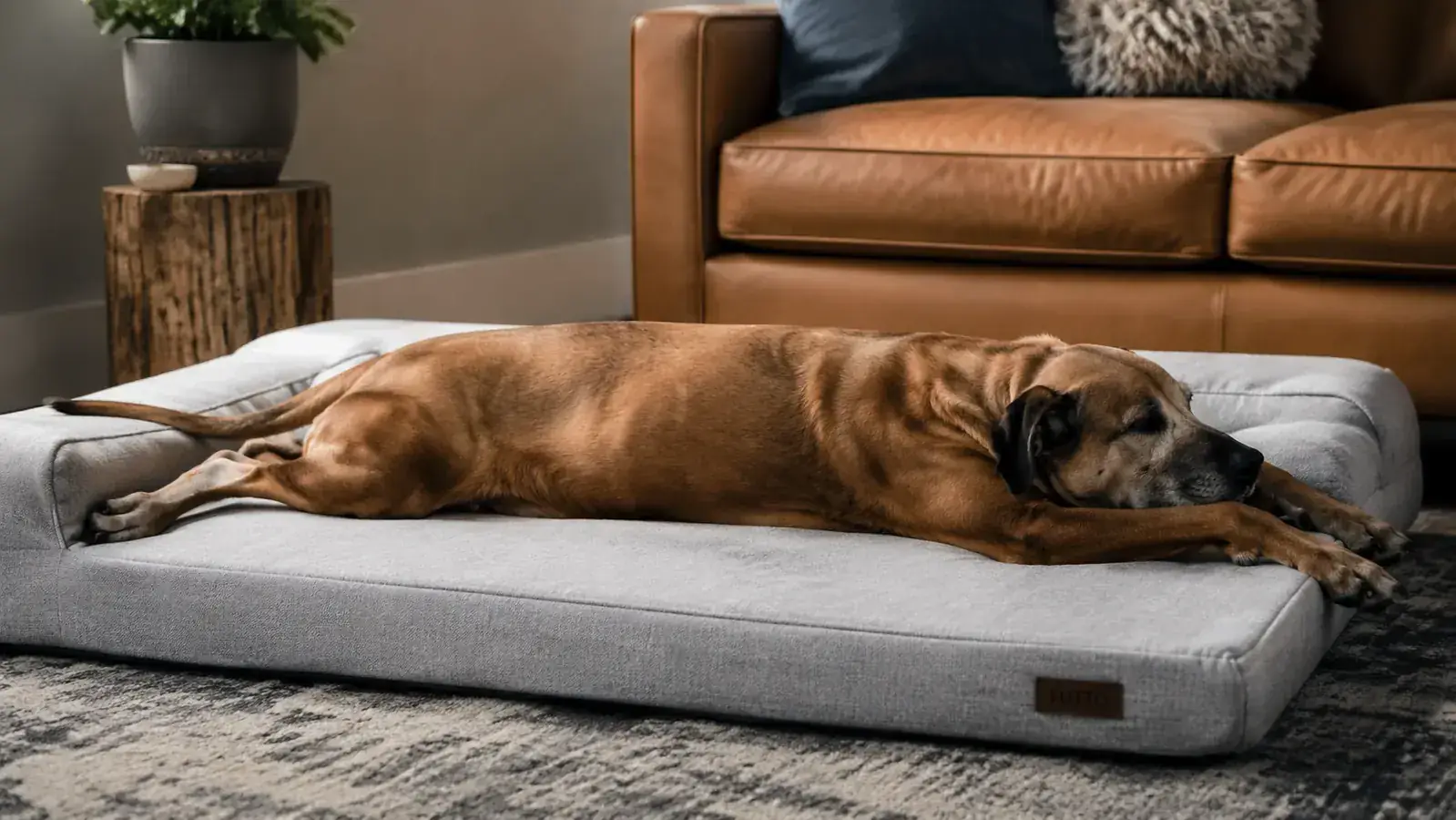
If your vet has used any of those terms, an orthopedic bed is not optional at that point. It is part of the management plan. The EHEYCIGA's memory foam distributes weight across the entire body contact area, reducing load on specific joints. The removable, machine-washable cover matters here too, because dogs with mobility issues sometimes have accidents, and a bed you cannot wash properly will not survive long-term use.
They Sleep in Tight Curls Even on Warm Nights
Dogs curl when they are cold, which is fine in winter. But a dog that curls tightly on warm nights is often trying to reduce the surface area touching a hard or unsupportive surface. It is a compensation posture. A properly supported dog will sprawl and stretch. When Bruno started sleeping fully extended on his side instead of balled up, I noticed within a week and connected it directly to the new bed.
Their Current Bed Has Flattened and You Have Already Fluffed It Once
If you have hand-fluffed or redistributed the filling in a cushion bed more than once, you already know the filling is breaking down. Once fiberfill or shredded foam packs down, it does not recover. You are essentially giving your dog a fabric-covered floor. Memory foam holds its shape much longer because it is a solid core, not loose fill. The EHEYCIGA is built to stay functional, not to get fluffed every few weeks.
What I'd Skip
I would skip any bed marketed as orthopedic that does not list foam density or thickness. That word gets used on products that are just thick stuffed cushions with no actual memory foam inside. I would also skip bolster beds for dogs with serious mobility issues: the raised edges look cozy but can be hard to step over for a dog with stiff hips. The EHEYCIGA is flat-entry, which matters more than it sounds when your dog is struggling to lie down without negotiating an obstacle. And I would skip any bed without a removable, machine-washable cover. You will need to wash it, more than you think.
If three or more of these signs fit your dog, the bed is the most direct fix you can make this week.
The EHEYCIGA Orthopedic Dog Bed is 44x32 inches of dense memory foam with a waterproof liner and a washable cover. Rated 4.5 stars by more than 21,000 owners. Check the current price on Amazon and see if it ships to you today.
Amazon Check Today's Price on Amazon →