
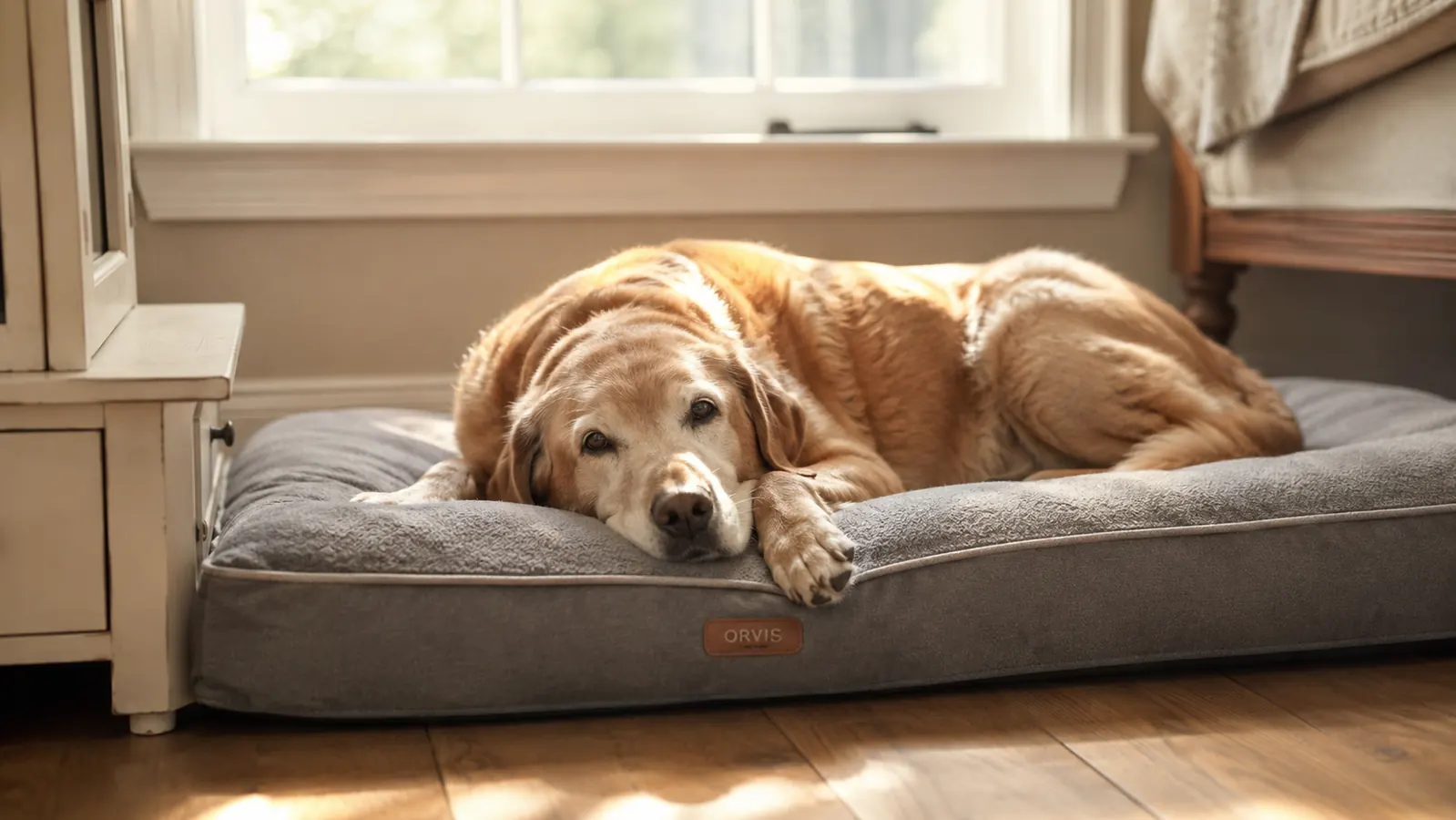
If your dog is getting older, moving stiff in the mornings, or just sleeping more than they used to, you have probably wondered whether spending more on a proper orthopedic bed is actually worth it. I had the same question after my Lab mix, Biscuit, turned 10 and started groaning every time he got up off his old polyfill cushion. That cushion was not cheap when I bought it. But watching him struggle off it every morning made it clear that "comfortable-looking" and "actually supportive" are two different things.
The short answer: yes, memory foam makes a real, visible difference for dogs who need joint support. The EHEYCIGA orthopedic bed is the one I landed on after trying three options, and it is the one I recommend for large dogs and seniors. This comparison lays out exactly what you get for the extra cost and where a standard polyfill bed still makes sense.
| Orthopedic Dog Bed | Regular Dog Bed | |
|---|---|---|
| Fill Material | 4-inch solid memory foam base | Polyester fiberfill (hollow fiber or shredded) |
| Support Over Time | Retains shape; foam recovers after each use | Compresses flat within weeks; no recovery |
| Waterproofing | Waterproof inner liner protects foam core | No waterproof layer; fill soaks through |
| Cover Washability | Removable, machine-washable outer cover | Most covers removable; some are whole-unit wash |
| Size (XL) | 44 x 32 inches, 4-inch foam depth | Varies widely; often 36 x 27 or smaller at same price |
| Ideal For | Large, senior, or joint-troubled dogs | Young, healthy, small-to-medium dogs |
| Price Range | Mid-range; check today's price on Amazon | Budget to mid-range; wide variation |
| Entry / Exit Ease | Low-profile sides; easy for stiff dogs to step on | Bolster sides common; can be hard for arthritic dogs |
| Odor Retention | Foam can hold odor if inner liner is breached; liner prevents this | Polyfill airs out quickly; easier to fully launder |
Biscuit stopped groaning off the floor. This is the bed that did it.
The EHEYCIGA orthopedic memory foam bed holds its shape night after night, has a waterproof liner so accidents do not ruin the foam, and ships in an XL size that actually fits large dogs. Check the current price on Amazon before the next restock gap.
Amazon Check Today's Price on Amazon →Where the EHEYCIGA Orthopedic Bed Wins
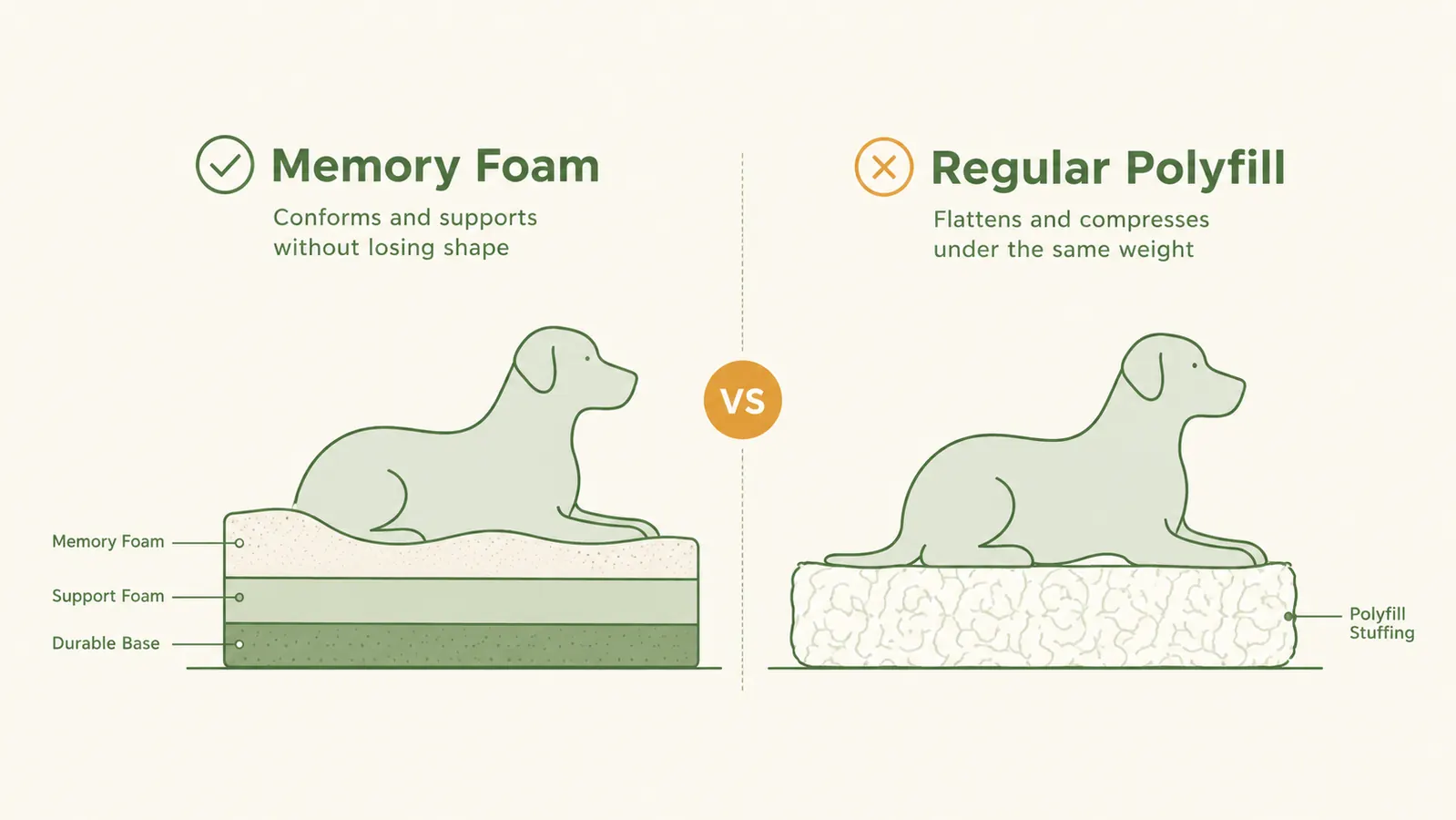
The biggest thing memory foam gets right is what happens under the dog's weight. Polyfill compresses. It pushes to the sides and leaves the dog's hips and elbows resting on whatever is underneath, which is usually a hard floor. Memory foam distributes weight evenly across the contact surface, which takes pressure off bony joints and reduces the micro-adjustments a dog has to make all night to stay comfortable. For a dog with early hip dysplasia or arthritis, that matters every single time they lie down.
The EHEYCIGA bed uses a 4-inch foam core, which is thick enough to provide genuine support for dogs up to and above 100 pounds. I put Biscuit on it at 74 pounds and the foam did not bottom out at all. Equally important: the waterproof inner liner. Polyfill beds that get wet (from a spill, incontinence, or a post-bath dog) are essentially ruined, because the fill clumps and the moisture never fully leaves. The EHEYCIGA's liner keeps the foam dry even when the surface cover is soaked. That is a real functional difference, not a marketing feature.
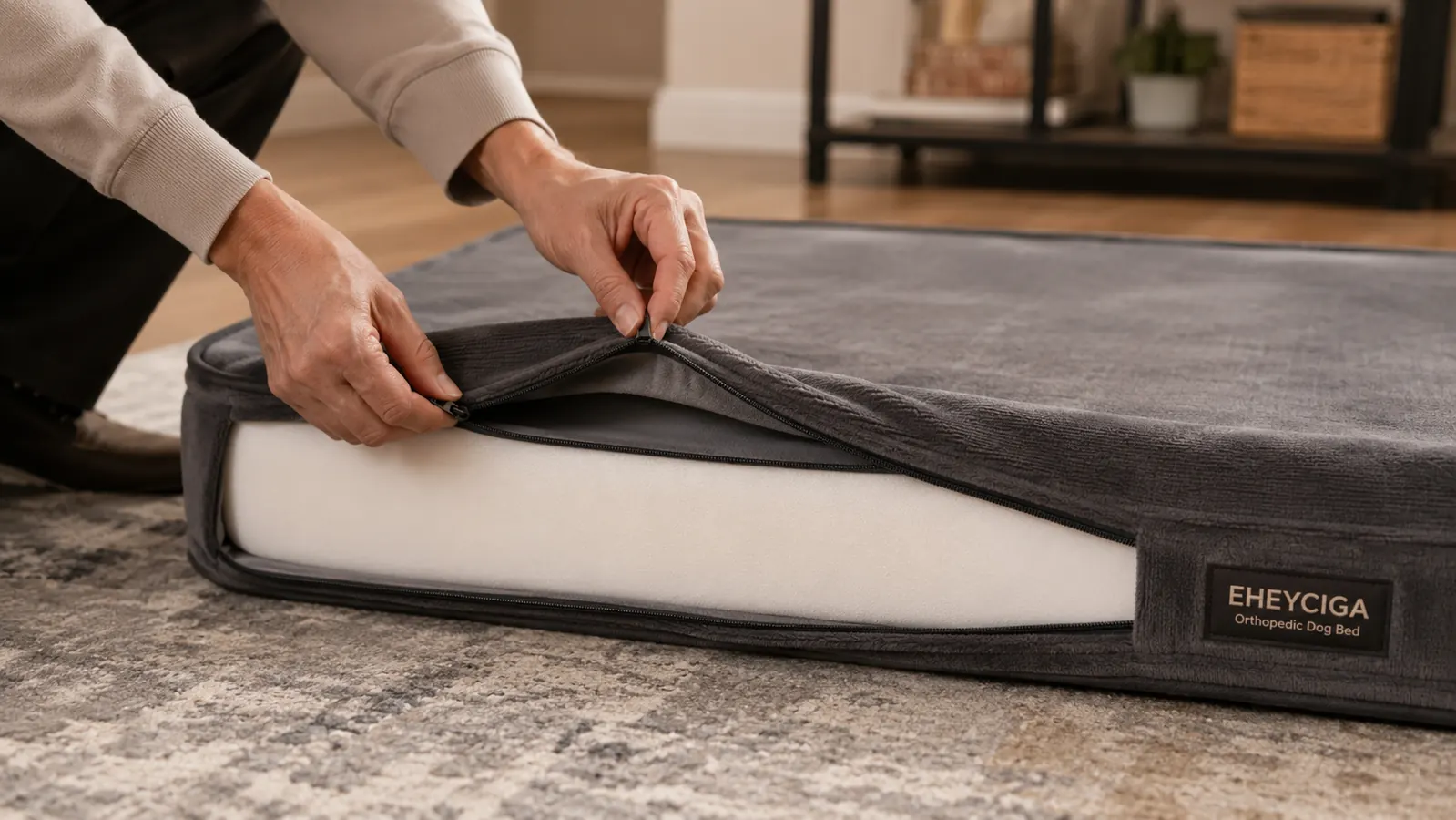
The cover itself is soft, holds up after repeated washing without pilling, and zips off easily. I wash Biscuit's cover every two weeks. After four months of that, it still looks good and the zipper has not caught or separated. The XL size at 44 by 32 inches is also genuinely large. A lot of beds marketed as XL are 36 by 27, which is not big enough for a dog that likes to stretch out.
After four months on the EHEYCIGA, Biscuit stopped groaning when he got up. That is the only measurement that matters to me.
Where a Regular Polyfill Bed Still Makes Sense
Not every dog needs memory foam. If you have a young, healthy dog under five years old who does not show any joint sensitivity, a standard polyfill bed gets the job done. Young dogs generate their own joint-cushioning naturally, and they tend to move around so much during sleep that the static support of memory foam matters less anyway. Polyfill beds also tend to be lighter and easier to toss in a standard washing machine as a complete unit, which some people prefer for weekly cleaning routines.
For crate-trained dogs who sleep in an airline crate or a wire crate with a tray, a flat polyfill mat fits the space better than a thick foam bed. Memory foam beds are not designed to compress into a crate, and forcing one can damage the foam structure. In those cases, a polyfill cushion is genuinely the better tool.
The Support Difference Is Not Just Marketing
There is a simple test you can run with any dog bed. Press your fist firmly into the center and hold it for ten seconds. With a polyfill bed, when you lift your fist, the stuffing stays compressed. With quality memory foam, the foam slowly rises back to full height. That recovery is what keeps a dog supported throughout the night as they shift positions, rather than gradually sinking into a flat pancake by 3 AM.
The reason this matters more as dogs age is that older dogs spend more time lying in one position. A young dog moves around, redistributing pressure naturally. A senior dog with stiff joints tends to stay put, which means sustained pressure on the same hip or elbow for hours. Memory foam spreads that pressure. Polyfill concentrates it. Over months and years, the difference shows up in mobility, willingness to lie down, and how quickly a dog settles after exercise.
Durability and Maintenance: Honest Numbers
Polyfill beds need to be replaced more often. Most dog owners I talk to replace standard cushion beds every 6 to 12 months because the fill has compacted to the point of being functionally useless. A decent memory foam bed, maintained properly, should last 2 to 3 years before the foam loses meaningful density. That changes the cost math considerably over a dog's life.
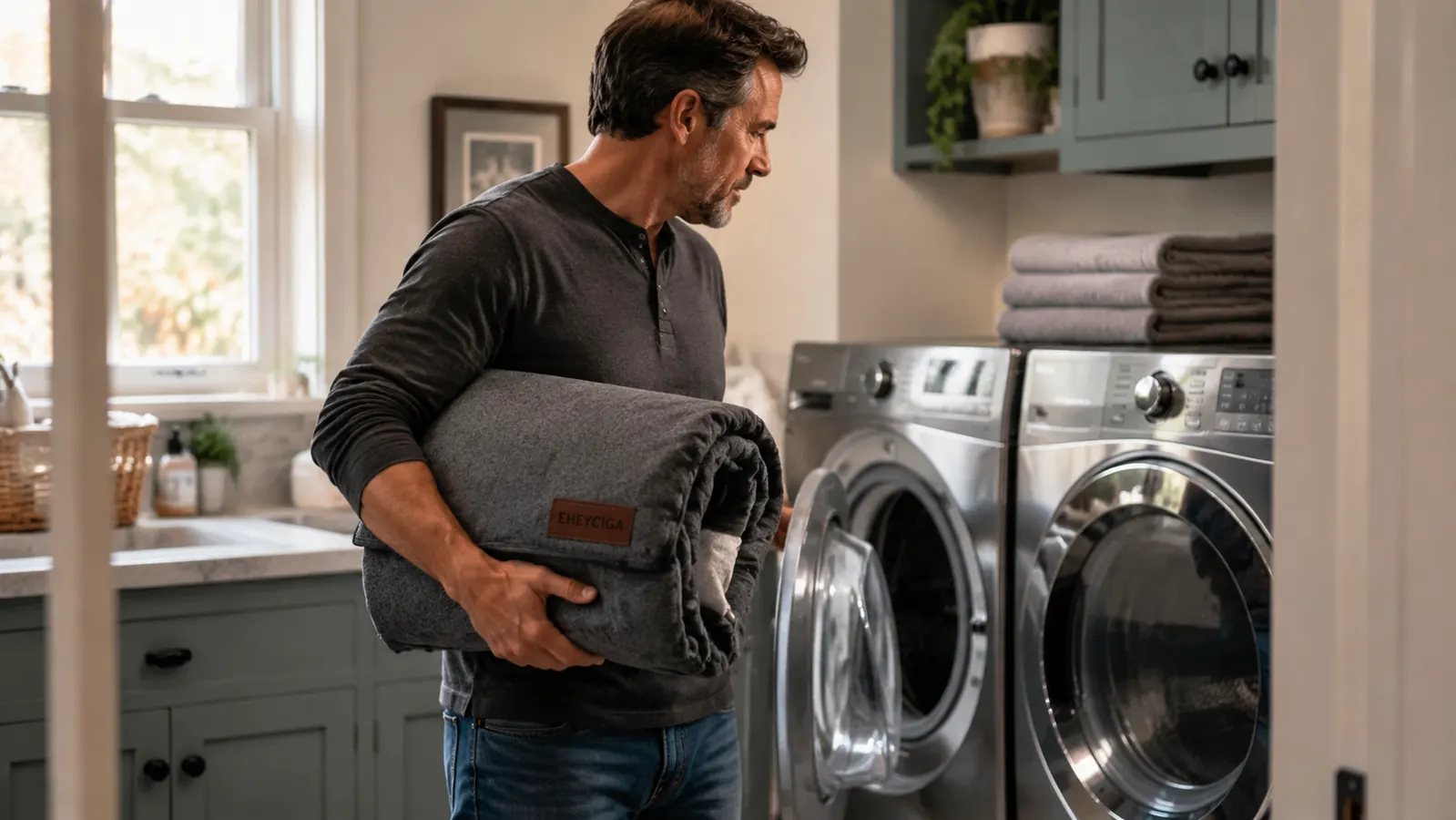
On the maintenance side, the EHEYCIGA cover is machine washable and dries without shrinking, which I confirmed over four months of biweekly washes. The one maintenance caution worth knowing: if the waterproof liner ever gets breached and the foam gets soaked, you cannot fully wash memory foam. You can blot and air-dry, but a fully saturated foam core takes days to dry and may not recover its structure. The good news is the liner is there precisely to prevent this. As long as it is intact, the foam stays dry.
Who Should Buy Which
Buy the EHEYCIGA orthopedic bed if your dog is 7 years or older, weighs more than 40 pounds, shows any stiffness getting up in the morning, has been diagnosed with hip dysplasia or arthritis, or if their current bed has visibly compressed flat. These dogs are not getting real support from polyfill, and the memory foam change is one of the highest-impact things you can do for their daily comfort short of medication.
Stick with a standard polyfill bed if your dog is under 5 years old, has no joint issues, uses a crate where a thick foam bed will not fit, or you simply need a washable backup for a guest area or a car. For those situations, a polyfill cushion is the right tool and there is no need to spend more.
For more detail on what to look for when choosing between bed types, including foam density ratings and size guides, see our full guide on how to pick the right orthopedic dog bed. And if you want the full six-month field test before deciding, the EHEYCIGA long-term review covers every detail including wash count, foam recovery, and how Biscuit actually uses it.
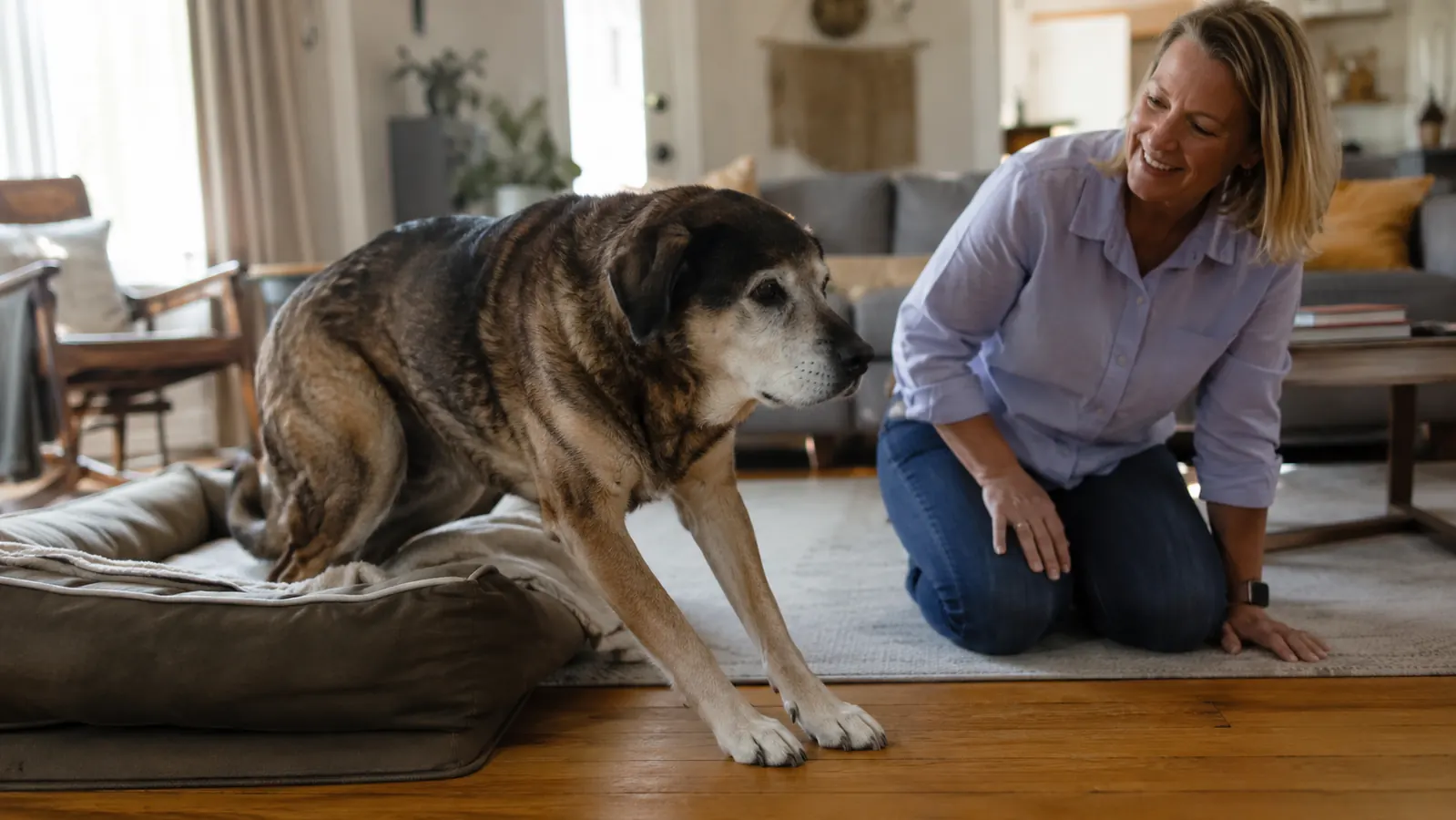
If your dog groans getting up in the morning, the bed is probably the problem.
The EHEYCIGA orthopedic memory foam bed is the most practical fix I have found for senior and large dogs who need real joint support. Waterproof liner, washable cover, and thick enough foam that it does not bottom out under a 70-pound dog. Worth checking current availability on Amazon.
Amazon Check Today's Price on Amazon →