
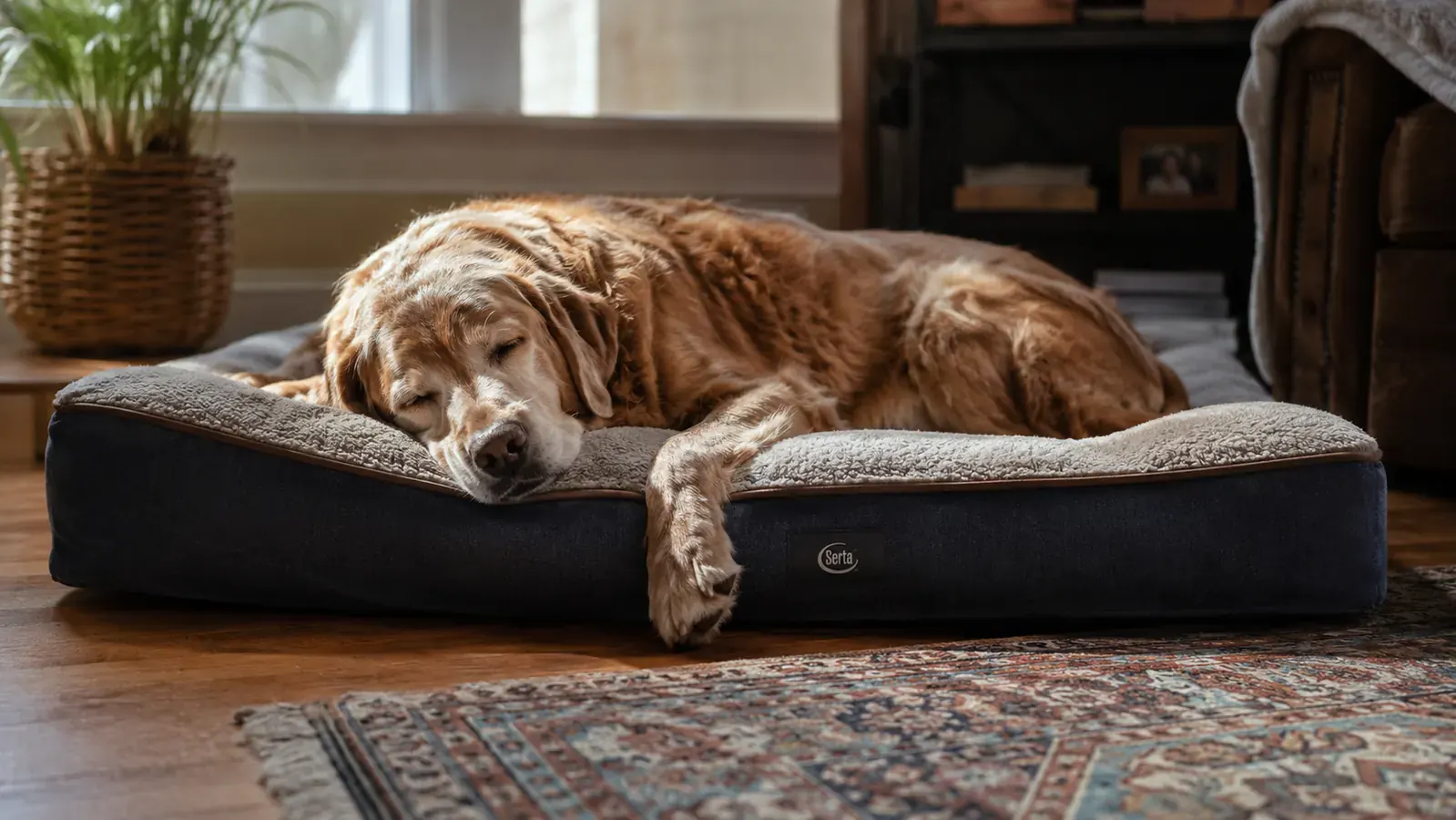
Most people pick an orthopedic dog bed the wrong way. They see a photo of a fluffy, pillow-top bed on Amazon, notice it has 4 stars, and click buy. Two months later the foam is flat, the cover smells like wet dog no matter how many times you wash it, and their Lab is back to sleeping on the kitchen tile. The bed is in the corner, ignored.
Here is the thing: a good orthopedic dog bed is not hard to find, but you have to know what to look for. Foam density, cover washability, actual measured fit, waterproofing, and edge support are the five factors that separate a bed your dog will use every night from one that ends up in a garage sale pile. This guide walks you through each one, step by step, so you buy once and get it right. The EHEYCIGA orthopedic dog bed is the pick I come back to for most dogs, and I'll show you exactly why at each step.
Your dog's joints do not get a do-over. Make sure the bed is actually holding them up.
The EHEYCIGA orthopedic dog bed uses high-density memory foam with a waterproof inner liner and a removable washable cover. It comes in a 44x32 inch size that fits most large and extra-large breeds. Over 21,000 owners have reviewed it. See today's price and size options before you start comparing.
Amazon Check Today's Price on Amazon →Step 1: Measure Your Dog, Not the Bed Box
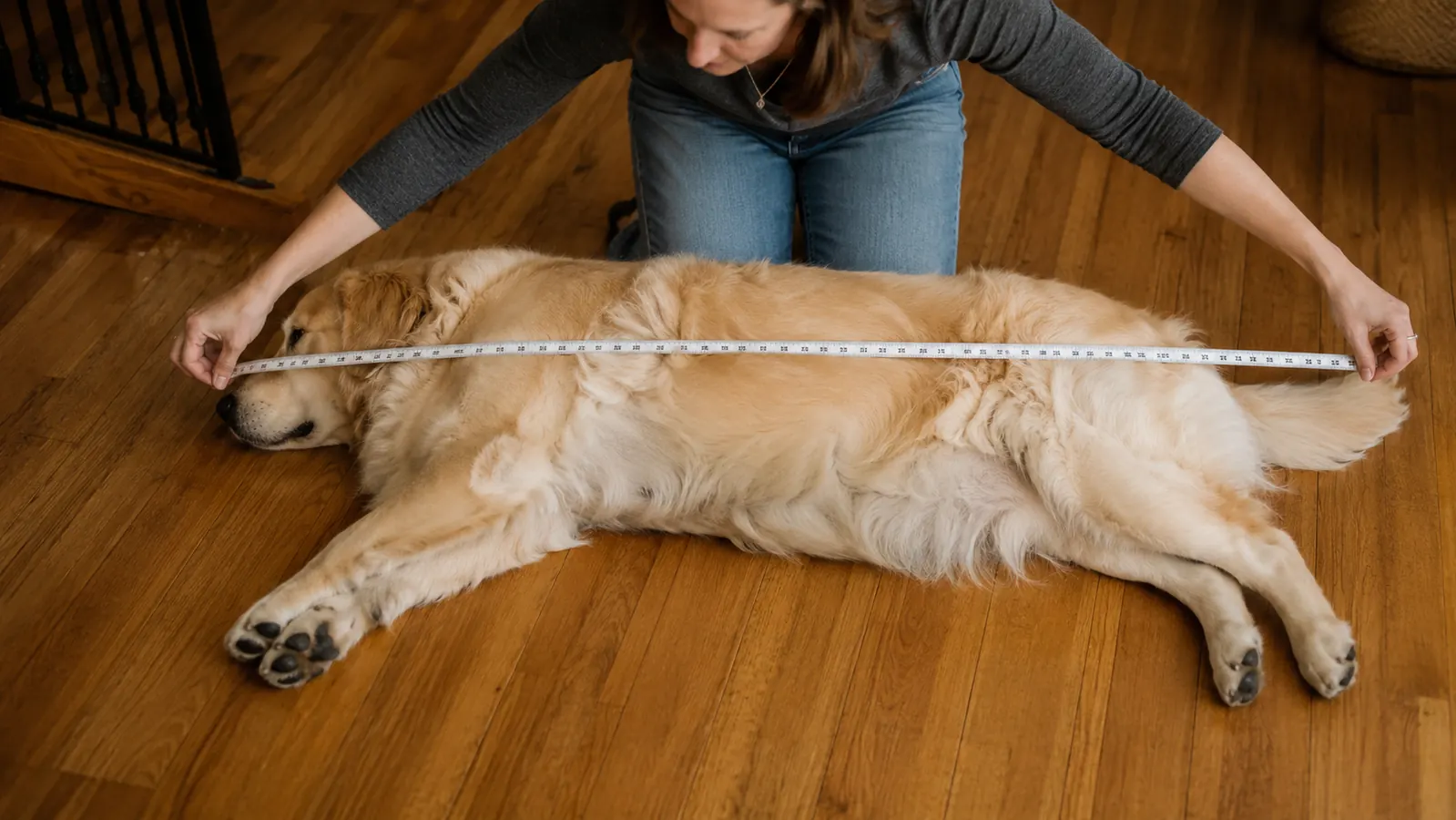
The single most common buying mistake is grabbing a size based on breed label alone. A 70-pound Lab and a 70-pound Greyhound do not need the same bed. Greyhounds are built long and lean, Labs are broader and tend to sprawl sideways. The number on the breed chart does not tell you how your specific dog actually sleeps.
Get a fabric measuring tape and do this when your dog is relaxed. Measure them from the tip of their nose to the base of their tail while they are lying in their natural sleeping position. Then add 6 to 8 inches to that number. That is your minimum bed length. Do the same across their widest point if they sleep on their side. A dog that curls tight may fit a 36-inch bed just fine. A dog that flops out like a starfish may need 44 inches even at 60 pounds.
The EHEYCIGA bed at 44x32 inches covers most large and extra-large dogs without being wasteful on floor space. But the point of this step is to know your dog's actual stretched-out measurement before you trust any size chart. If your dog consistently sleeps with their legs extended, size up. If they curl, you have more flexibility.
Step 2: Check Foam Type and Density, Not Just Thickness
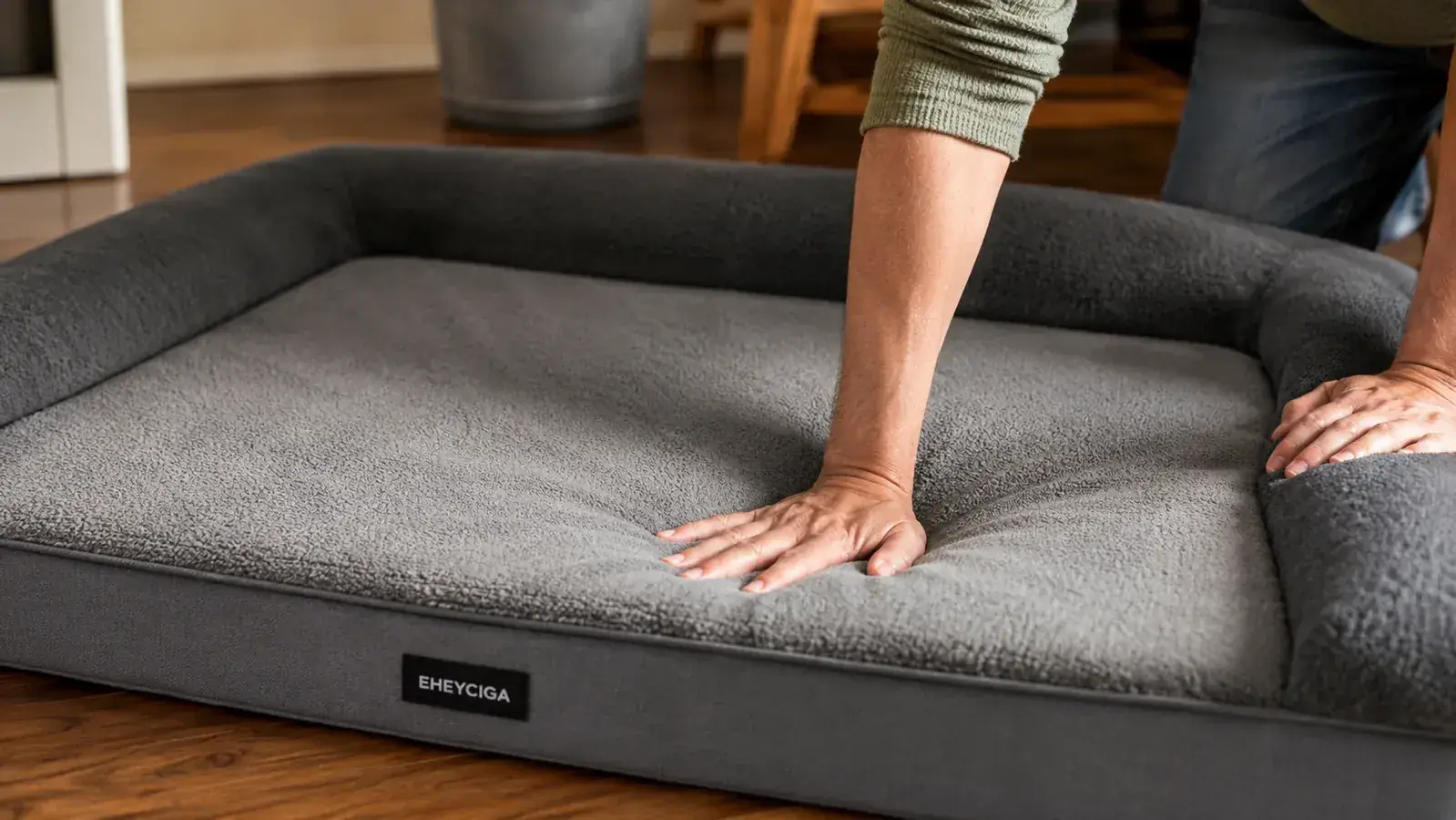
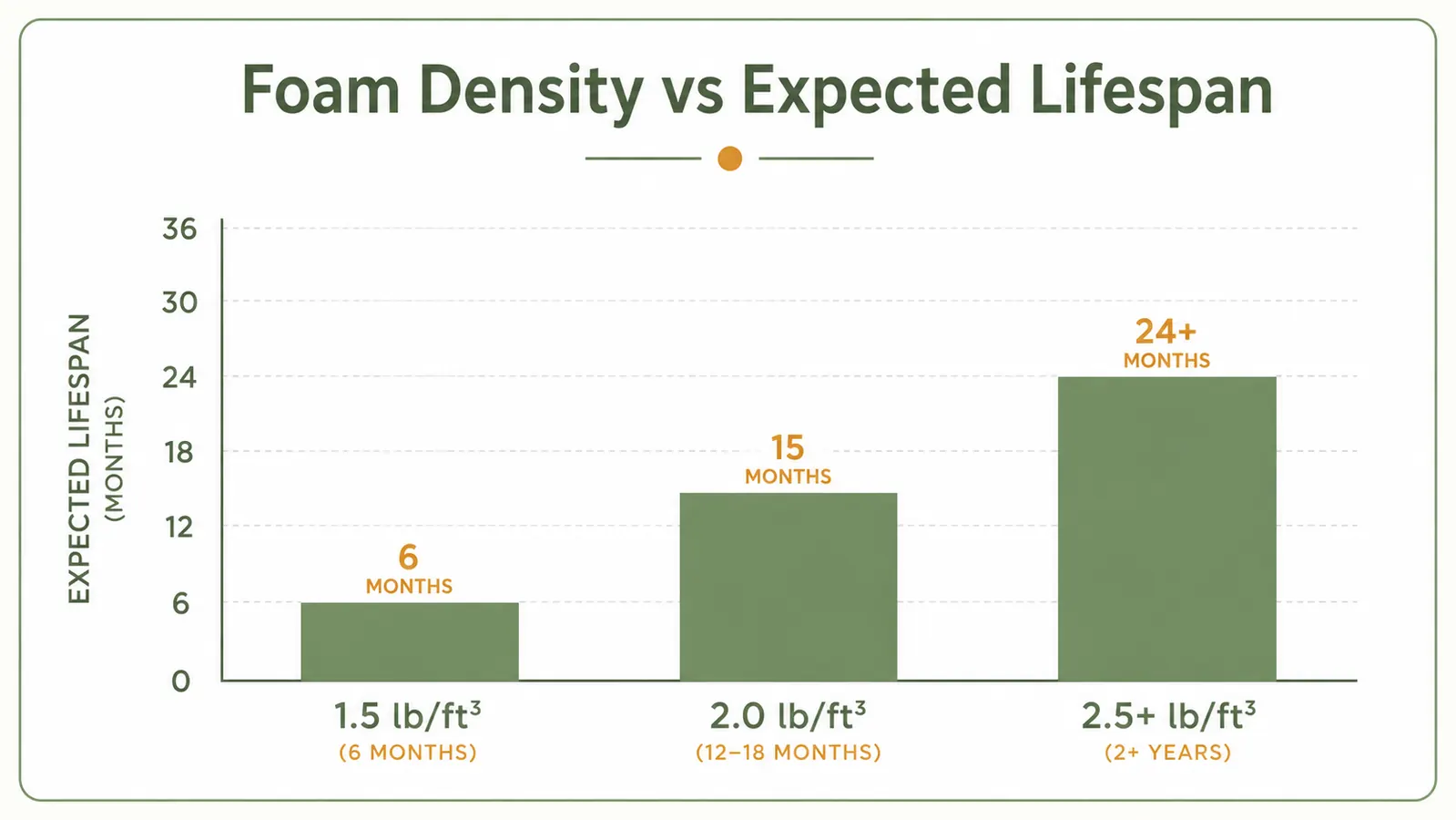
Thickness is the number most listings lead with because it photographs well. A 4-inch foam base looks impressive in a product shot. But thickness without density is meaningless. A 4-inch foam core at 1.5 pounds per cubic foot will compress to almost nothing under a 70-pound dog inside three months. A 3-inch core at 2.5 pounds per cubic foot will hold its shape for years.
Memory foam and egg-crate foam behave differently. Memory foam conforms slowly to body contours, which is what actually relieves pressure on hips, elbows, and shoulders. Egg-crate foam (the wavy cut foam) does not conform the same way and is usually a cost-cutting move. For a senior dog, a dog with arthritis, or any breed prone to joint problems like Labs, Shepherds, Rottweilers, or Great Danes, you want solid memory foam, not a foam topper over a hollow interior.
When evaluating listings, look for foam density listed in the specs (not just inches). Anything at or above 2.0 lb/ft3 is workable. Anything below that is a gamble. The EHEYCIGA uses memory foam with a density level that holds shape after months of daily use, which is one of the reasons it keeps showing up in conversations about beds that last.
Step 3: Evaluate the Cover and Washability Before You Buy
You will wash this cover. A lot. Dogs drool. They track in mud. They have accidents, especially older dogs and puppies. A cover that sounds machine-washable but takes 24 hours to air-dry, shrinks, or loses its zipper after six washes is not a washable cover in any practical sense. You need to know the specifics before you buy.
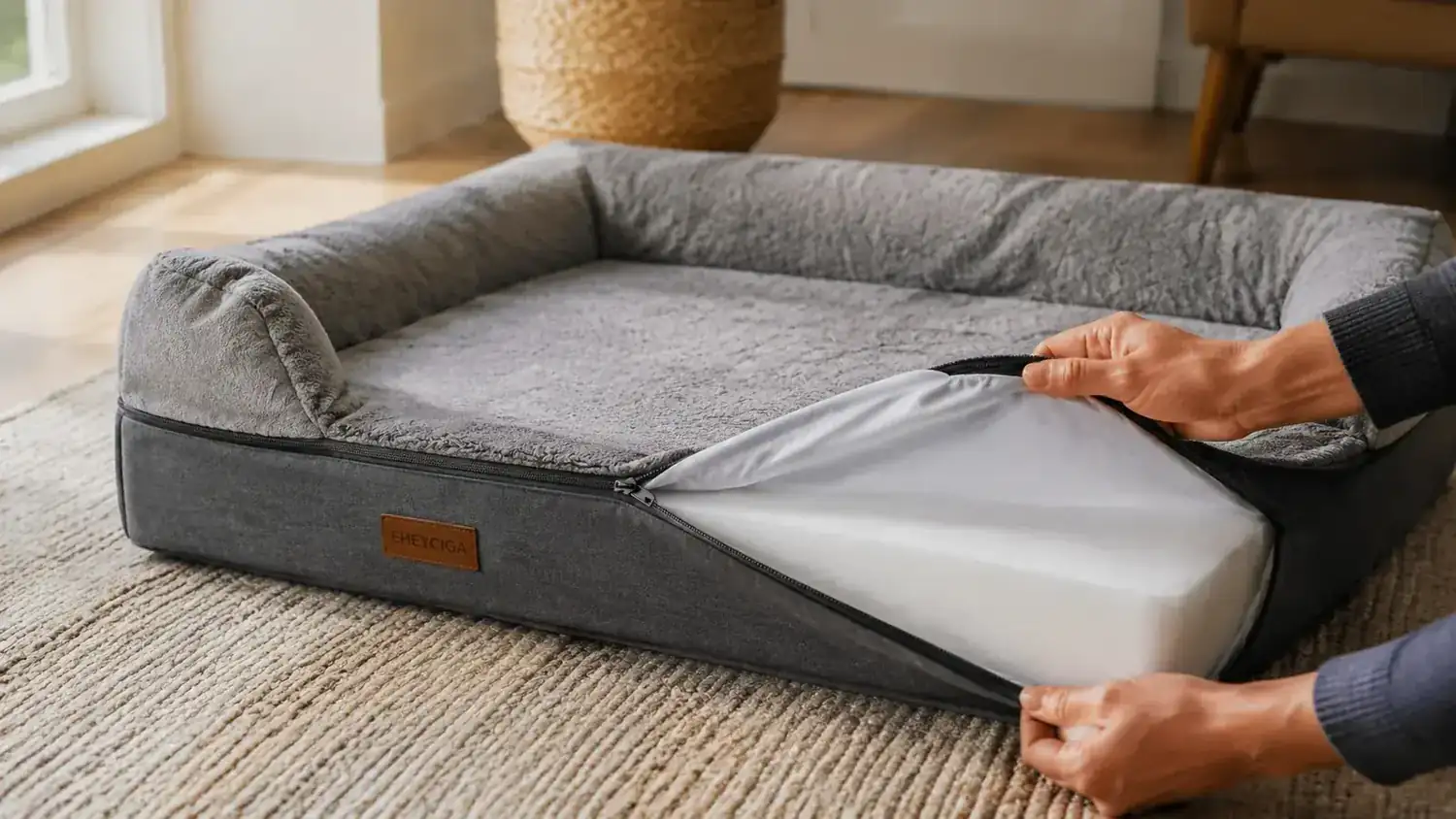
Check for a few things: Is the cover fully removable via a zipper that runs around at least three sides? Is there a separate inner liner that stays on the foam if the outer cover is in the wash? Can the outer cover go in a standard home washer and dryer, or does it require hand washing only? Listings that just say 'washable cover' without specifying these details are hiding something.
The EHEYCIGA cover zips fully off and is machine washable. There is a separate waterproof inner liner that protects the foam while the cover is being cleaned. That matters because it means the bed stays usable during wash cycles. You are not stuck waiting for everything to dry before your dog can sleep. This two-layer setup (removable outer cover plus a waterproof inner liner) is the configuration to look for in any bed you consider.
Step 4: Confirm Waterproofing at the Foam Level, Not Just the Fabric Surface
Water resistance at the cover fabric level is fine for light spills. It is not enough for dogs with incontinence, puppies in training, or any dog who has ever had an accident overnight. Once urine reaches the foam core, you cannot clean it out. The ammonia binds to the foam at a molecular level. No enzyme cleaner reverses that. The foam has to be replaced or the whole bed goes in the trash.
Real waterproofing means there is a barrier between the outer cover and the foam that prevents liquid from ever reaching the foam. Look for listings that describe a waterproof liner or inner cover separately from the outer fabric. Some beds have a TPU-coated inner liner, some use a vinyl-backed fabric layer. Either works. What does not work is a single outer cover described as 'water-resistant' with no inner barrier layer.
The EHEYCIGA includes a waterproof inner liner as a separate layer from the removable outer cover. This is the spec that makes the bed genuinely safe for senior dogs who may have occasional nighttime accidents. If you have a puppy or a dog on diuretics or with kidney issues, this feature is not optional. It is what keeps the foam alive past year one.
Step 5: Check Edge Support for Dogs Who Struggle to Get Up
Many dogs, particularly seniors and large breeds, use the edge of the bed as a push-off point when getting up. They plant a paw on the rim and lever themselves upright. A bed with soft, unsupported edges collapses under that weight and makes getting up harder, not easier. For a dog with hip dysplasia or arthritis, that extra resistance matters every single time they rise.
Look at the foam construction around the perimeter. Raised bolster edges on three sides give a dog something to lean into and can also serve as a head rest for dogs who like to prop their chin up. A flat pad with no edge structure requires the dog to push off from the floor around the bed, which defeats much of the joint-support purpose. Bolsters do not have to be huge, but they should feel firm when pressed, not empty or floppy.
The EHEYCIGA orthopedic bed uses a flat rectangular design, which works well for dogs who spread fully out or who dislike feeling enclosed. If your dog specifically needs bolster support for getting up, pair this bed with a low-rise non-slip mat under one edge to create a stable push-off surface. For dogs who just need firm flat support for sleeping, the rectangular design is often preferable to a bolster style because there are no raised sides cutting into their leg circulation when they sprawl.
What Else Helps
The bed is the foundation, but a few other things make a real difference for dogs with joint issues. Placement matters more than most people think. Put the bed away from cold drafts and off cold hard floors if possible. Cold air tightens muscles and makes joint pain worse overnight. A corner position with a wall on two sides also gives dogs a sense of security, which can help anxious dogs actually commit to sleeping there instead of pacing.
A non-slip rug or mat underneath the bed is worth adding if you have hardwood or tile floors. Orthopedic beds are thick and can shift slightly when a heavy dog climbs on. A bed that slides when they step onto it is a fall risk for a senior dog. Some beds have a non-slip bottom built in. Check the listing before you assume. If yours does not, a cheap yoga mat cut to size handles it.
If your dog is already on a joint supplement like glucosamine or fish oil, a quality bed is the other half of that equation. The supplement helps the joint tissue, the bed reduces the stress load placed on those joints during sleep. The two work together. Neither replaces the other. If you have not talked to your vet about supplements for a dog showing stiffness or mobility changes, that conversation is worth having.
For more on whether memory foam specifically is worth the upgrade over a standard cushion bed, the side-by-side breakdown in the orthopedic vs regular dog bed comparison goes into real detail on that question. And if you want to know how the EHEYCIGA holds up after six months of nightly use from a senior Lab, the long-term review covers the foam resilience, cover durability, and the honest cons you should know before buying.
A bed your dog will not sleep on is just an expensive floor mat. Matching the foam density and the actual measured size to your dog makes the difference between a piece of gear they use every night and one that collects dust.
Ready to stop guessing? The EHEYCIGA checks every box this guide covers.
Solid memory foam, a waterproof inner liner, a machine-washable outer cover, and a 44x32 inch footprint that fits most large breeds. It is one of the most-reviewed orthopedic dog beds on Amazon for a reason. Check today's price and availability.
Amazon Check Today's Price on Amazon →