
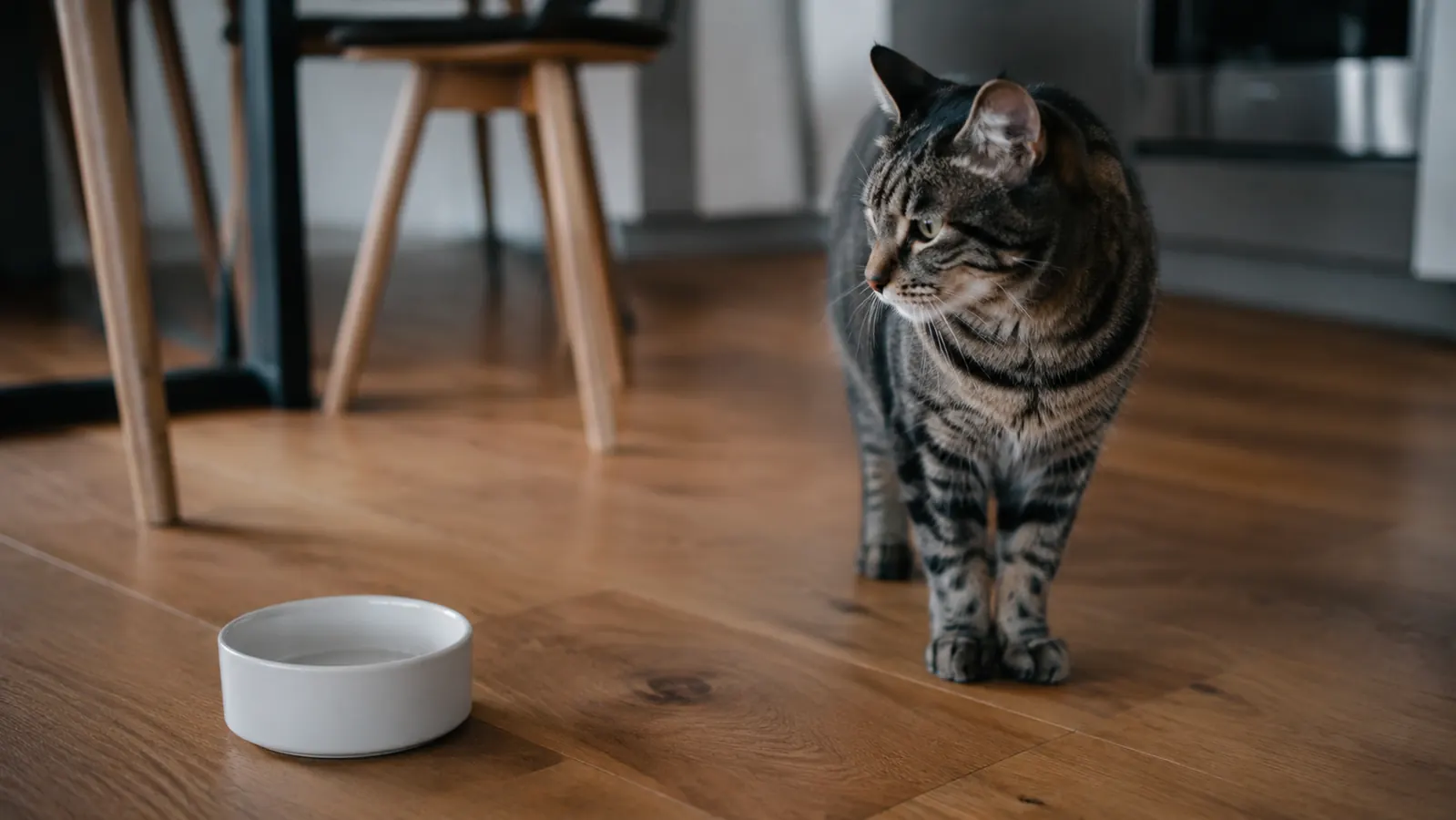
I did not think much about how much water my cat Pico was drinking until her vet pointed out that her urinary tract looked irritated and asked me a simple question: does she drink from a bowl or a fountain? The answer was a bowl, and the diagnosis was essentially "she is not drinking enough." Cats evolved as desert hunters who pulled most of their moisture from prey, not standing water. A still bowl is not particularly appealing to them, which means chronic mild dehydration is more common in house cats than most owners realize. I put together this list because I wish someone had flagged these signs for me before Pico's health became an issue.
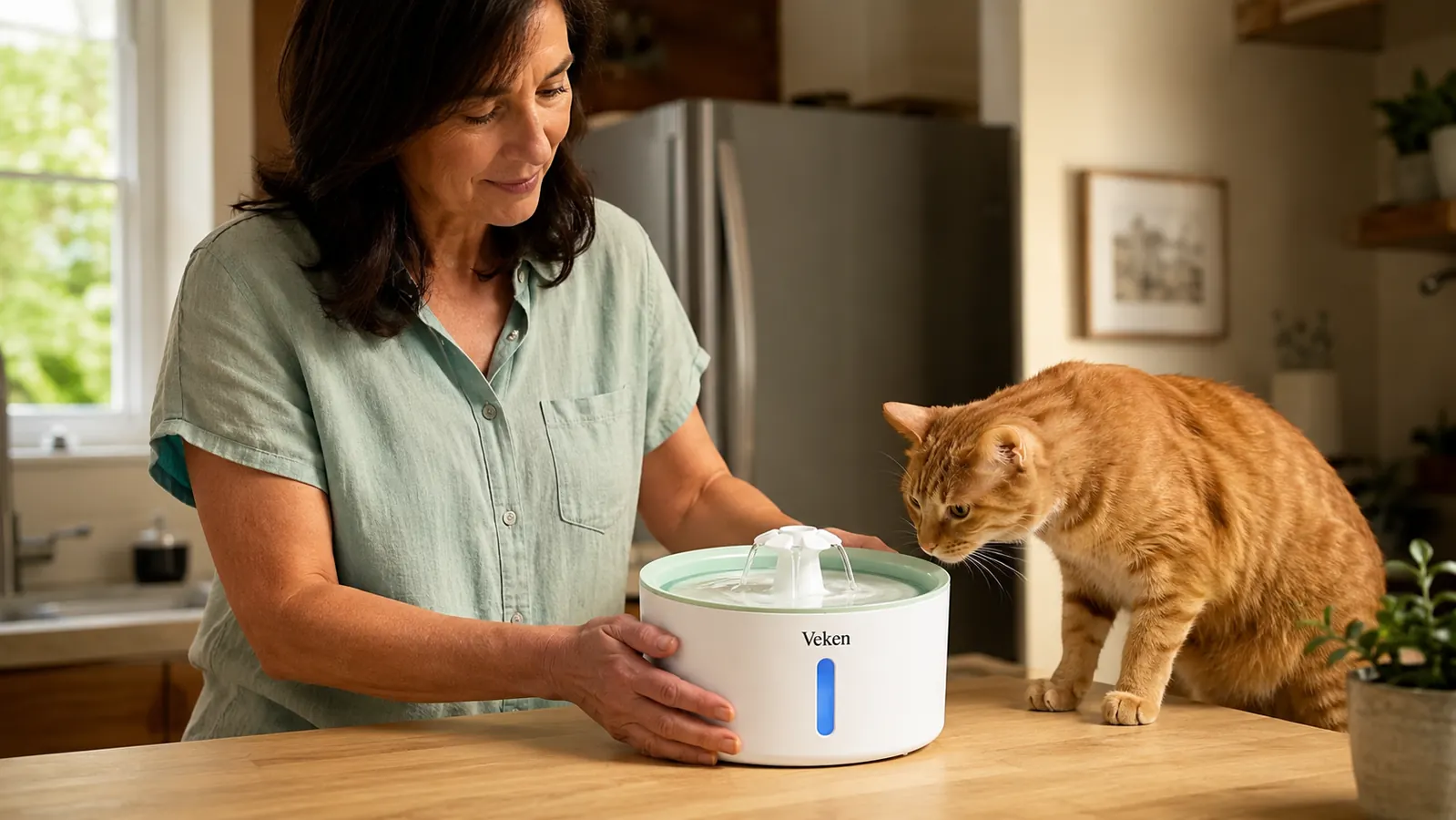
The fix that made the biggest difference for Pico was switching to the Veken 95oz Pet Fountain. Running water triggers a cat's instinct to drink, and she went from barely touching her bowl to visiting the fountain six or seven times a day. But before I get into the solution, here are the 10 signs I missed in Pico and that are worth watching for in your own cat.
Is your cat ignoring her water bowl? This fountain has 49,000 reviews and may be the simplest fix.
The Veken 95oz Pet Fountain uses gentle circulation to keep water fresh and oxygenated. Cats prefer moving water by instinct. Most owners report their cat starts drinking noticeably more within a day or two of switching.
Amazon Check Today's Price on Amazon →She Drinks Noticeably Less Than an Ounce or Two Per Pound of Body Weight Per Day
A healthy cat needs roughly 3.5 to 4.5 ounces of water per five pounds of body weight daily. A 10-pound cat should be taking in around 7 to 9 ounces. If you have ever timed how long your cat spends at the bowl, you probably already suspect she is falling well short. Still, standing water is a big part of the problem. Moving water from a fountain like the Veken stays oxygenated and tastes fresher, which consistently gets cats drinking more without any training or tricks.
Her Skin Does Not Snap Back Quickly When You Tent It
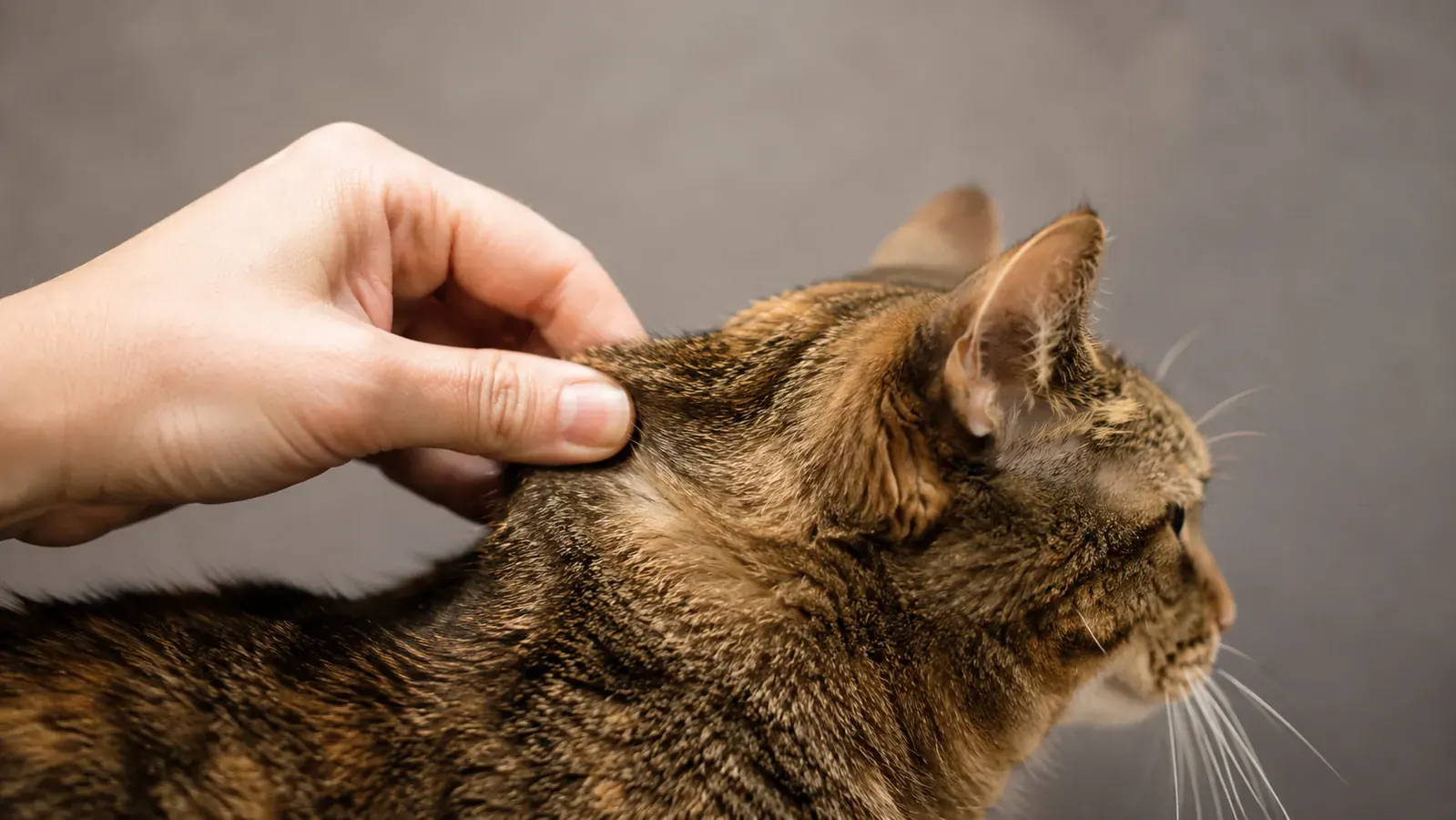
Gently pinch the loose skin at the back of your cat's neck, lift it slightly, then let go. A well-hydrated cat's skin springs back immediately. If it holds a peak for even a second before settling, that is a textbook dehydration indicator. This test takes five seconds and is something any owner can do at home. If you see a slow return, the first thing worth doing is upgrading her water source before anything else.
Her Gums Look Dry or Tacky Instead of Slick and Pink
Run a clean fingertip along your cat's gum line. Healthy, hydrated gums feel slippery and look a healthy bubble-gum pink. Gums that feel dry or sticky to the touch, or look pale or dusky, signal that her body is not circulating enough fluid. This is the kind of sign that shows up after dehydration has been going on for a while, which makes it more urgent, not less. If you see it, call your vet and get a proper water source in front of her the same day.
She Is Urinating Less Often or Her Litter Box Output Has Shrunk
Most healthy adult cats urinate two to four times per day. If you are noticing fewer clumps in the box, or smaller ones, low water intake is one of the first things to rule out. Concentrated urine puts real strain on the kidneys over time and is a primary driver of urinary tract infections and crystals in cats. The Veken fountain holds 95 ounces of water, enough for multiple cats to share, and its triple-layer filter setup keeps the water clean enough that cats actually want to drink from it.
She Seems Lethargic or Less Interested in Play Than Usual
A cat who is mildly dehydrated conserves energy the same way a mildly dehydrated person does. She sleeps more, plays less, and generally does not act like herself. The tricky part is that this can look like normal aging or just "a quiet day," which means it often gets written off. If the lethargy is unexplained and your cat's diet has not changed, low water intake is worth addressing before assuming something more serious is going on.
Pico went from barely touching her bowl once a day to visiting the fountain six or seven times. Her next vet visit came back clean. One change, real result.
Her Eyes Look Sunken or Dull Rather Than Bright and Clear
A well-hydrated cat has bright, alert eyes that catch light naturally. When a cat is consistently under-hydrated, the eyes can take on a slightly sunken appearance and the coat around them may look dull or a little hollow. This is more noticeable in senior cats and in shorthairs where the eye area is less obscured by fur. It is also one of the clearest visual cues that something systemic has been off for a while, not just today.
Her Coat Looks Dull, Dry, or Has More Static Than Usual
Hydration shows up in fur. Cats who drink enough have coats that lay flat, feel soft, and have a natural sheen. A chronically under-hydrated cat starts showing it in the coat before most owners think to connect the dots. Dry, frizzy, dull-looking fur is often pinned on diet or grooming, but if you have already addressed those things, the water situation is the next variable to change.
She Drinks From the Faucet or Drips Every Time She Gets the Chance
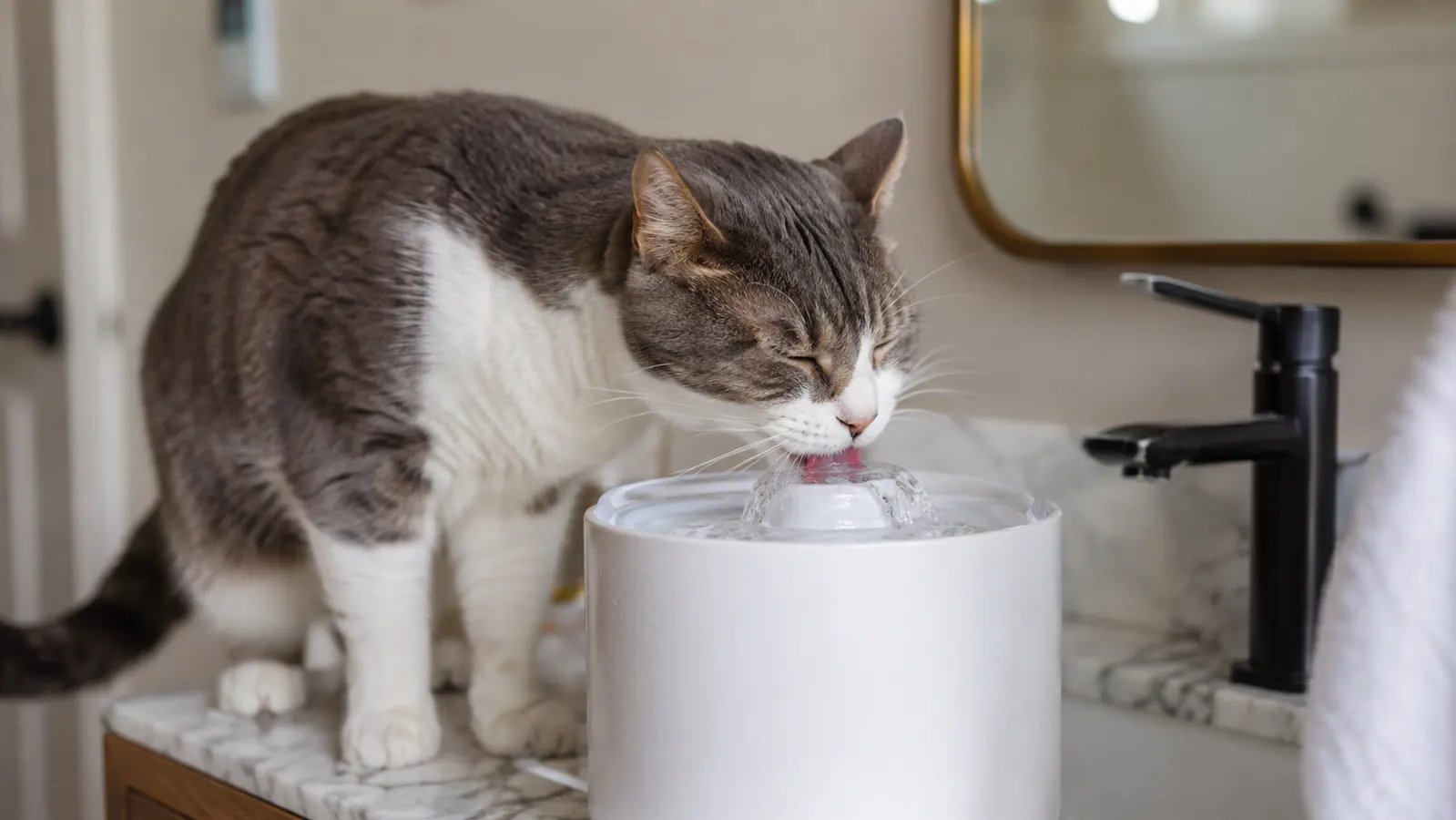
This one is counterintuitive, but it is a real sign. A cat who rushes to drink from a running faucet or laps at condensation on a glass is telling you that she finds the taste or movement of still bowl water unappealing. She is thirsty but not satisfying that thirst through the bowl. Cats' attraction to running water is instinctive and goes back to their wild instinct to seek out fresh, moving sources over stagnant pools. A fountain directly addresses that preference. Pico stopped pestering me at the bathroom sink within 48 hours of the Veken going in.
She Has a History of UTIs or Urinary Crystals
If your vet has already flagged urinary issues even once, low water intake is almost certainly a contributing factor. Concentrated urine is the environment where crystals form and bacteria multiply. The single most effective non-prescription intervention most vets recommend is increasing daily water intake. A fountain is the easiest way to do that consistently, without relying on wet food alone or constantly refreshing the bowl. The Veken runs quietly and continuously, so the water stays circulated and appealing around the clock.
Her Water Bowl Looks the Same at Night as It Did That Morning
This is the simplest diagnostic you have. Fill the bowl to the same level each morning and check it each night. If a 10-pound cat is leaving eight ounces sitting there untouched, she is not drinking what she needs. Most owners who switch from a bowl to the Veken fountain report this particular problem disappears quickly. The combination of gentle circulation, a 95oz capacity so the water does not feel stagnant or low, and the triple-layer carbon filter that removes taste-altering impurities gives cats a water source they actually want to use.
What I Would Skip
I tried a few things before the fountain that did not move the needle for Pico. Adding flavor drops to the bowl helped for about two days before she got bored of them. Moving the bowl to a different room bought me maybe one extra drink per day. Ice cubes in the water made her more curious but did not solve the consistency problem. These workarounds treat the symptom, not the cause. The cause is that still, warm, odorless bowl water does not appeal to a cat's hunting instincts. A fountain that provides moving, filtered, room-temperature water addresses the actual reason cats avoid drinking in the first place. That is why I stopped chasing hacks and just got the Veken.
Still water in a bowl is the human solution to cat thirst. Moving water is the cat solution.
If your cat is showing even two or three of these signs, a fountain is the lowest-effort fix with the highest payoff.
The Veken 95oz Pet Fountain is quiet, holds a full day's worth of water for most cats, comes with replacement filters, and has over 49,000 reviews from real pet owners. It is what I run for Pico and what I recommend to anyone who asks me about this problem.
Amazon Check Today's Price on Amazon →