
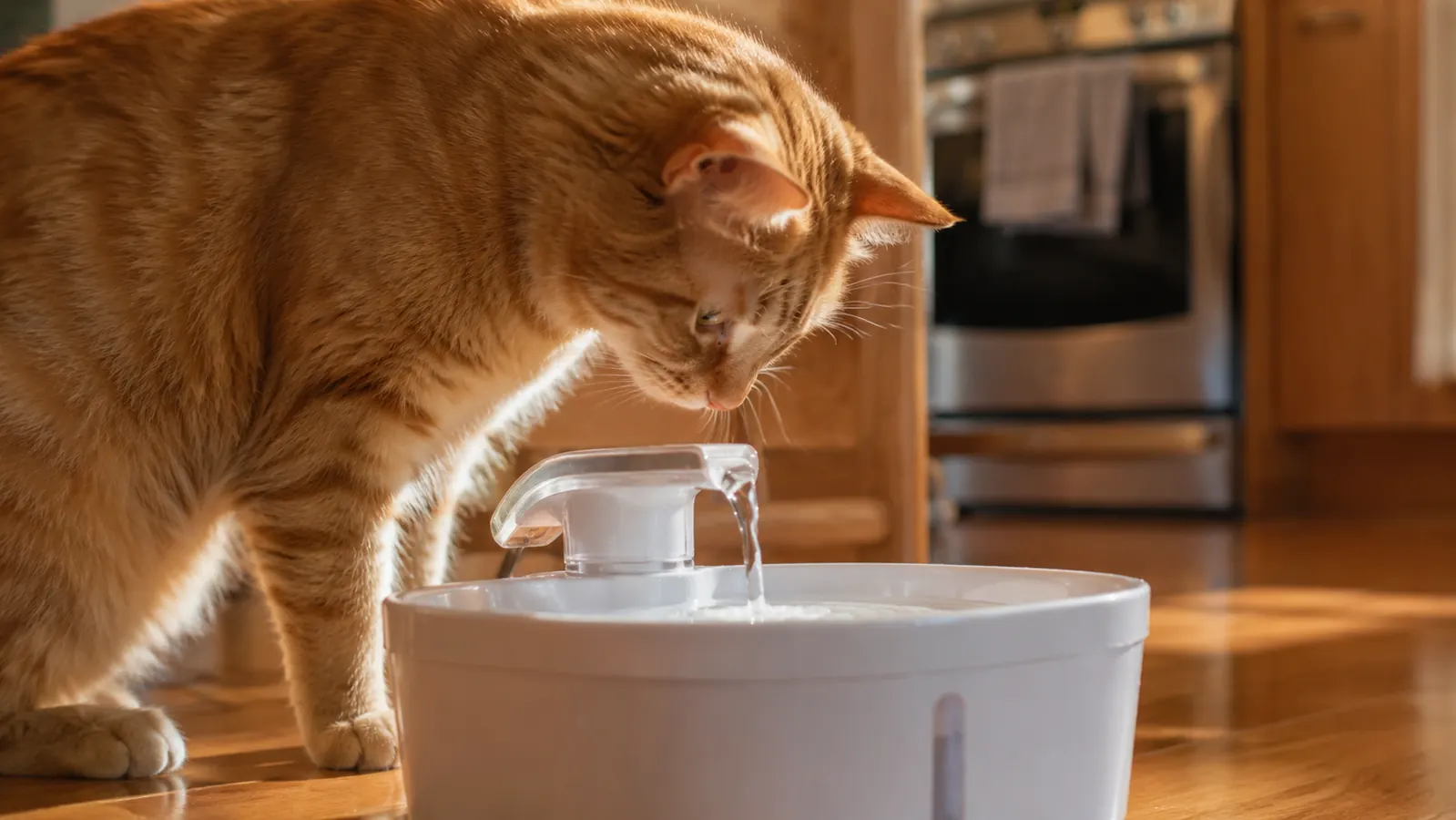
I did not think much of it at first, and I certainly did not think a pet fountain would end up being the fix. Biscuit, my seven-year-old orange tabby, had always been a light drinker. I refilled his ceramic bowl every morning, he'd take a few polite sips, and that was about the extent of his relationship with water. I figured that was just cat behavior. Some cats drink more, some drink less. I left it alone.
Then last November he started making frequent, uncomfortable trips to his litter box and coming out without doing much. Two days later I was at the vet with a stressed-out cat in a carrier, bracing myself. The diagnosis was a mild urinary tract infection, common in male cats, and the underlying cause was something I had not considered: chronic low-level dehydration. His kidneys and bladder were not getting enough water to flush waste through properly. The vet said it clearly. 'He needs to drink significantly more. Most cats won't do that from a still bowl.'
That sentence stopped me. I had been filling that ceramic bowl every single day for seven years and never once questioned whether it was working. Apparently it was not. Cats evolved as desert hunters. Their thirst drive is low. In the wild they get most of their water from the prey they eat. Put a bowl of standing water in front of them and their instincts say: still water is stagnant water, and stagnant water is not safe to drink. The instinct is not wrong. It is just inconvenient when your cat lives in a climate-controlled apartment and you are handing him dry kibble twice a day.
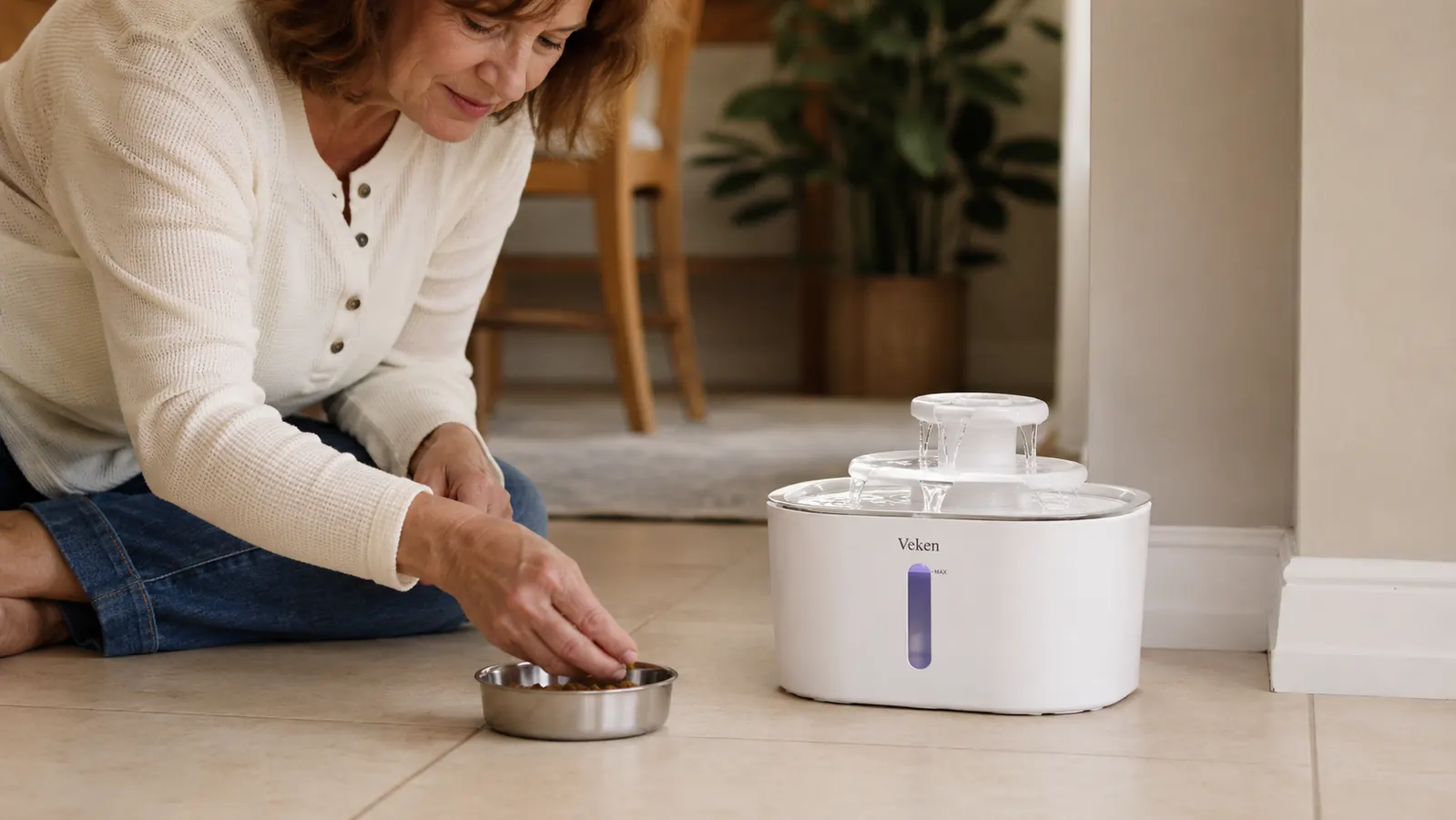
The vet recommended a circulating pet fountain. Moving water, she explained, triggers that same instinct in reverse. The sound and the flow signal fresh, safe water. Cats investigate. Cats drink. She said she recommends them routinely for cats prone to urinary issues, especially males over five. I drove home from that appointment and ordered the Veken 95oz Pet Fountain that same afternoon. It arrived two days later.
Still water, to a cat's instincts, is stagnant water. A fountain changes that signal completely. Within four days Biscuit was drinking from it on his own without any encouragement from me.
Your cat's bowl might be the problem. A fountain that keeps water moving could change their drinking habits within days.
The Veken 95oz Pet Fountain holds 2.8 liters, runs quietly enough to sleep next to, and comes with three replacement filters. It has over 49,000 reviews on Amazon and costs less than one vet copay.
Amazon Check Today's Price on Amazon →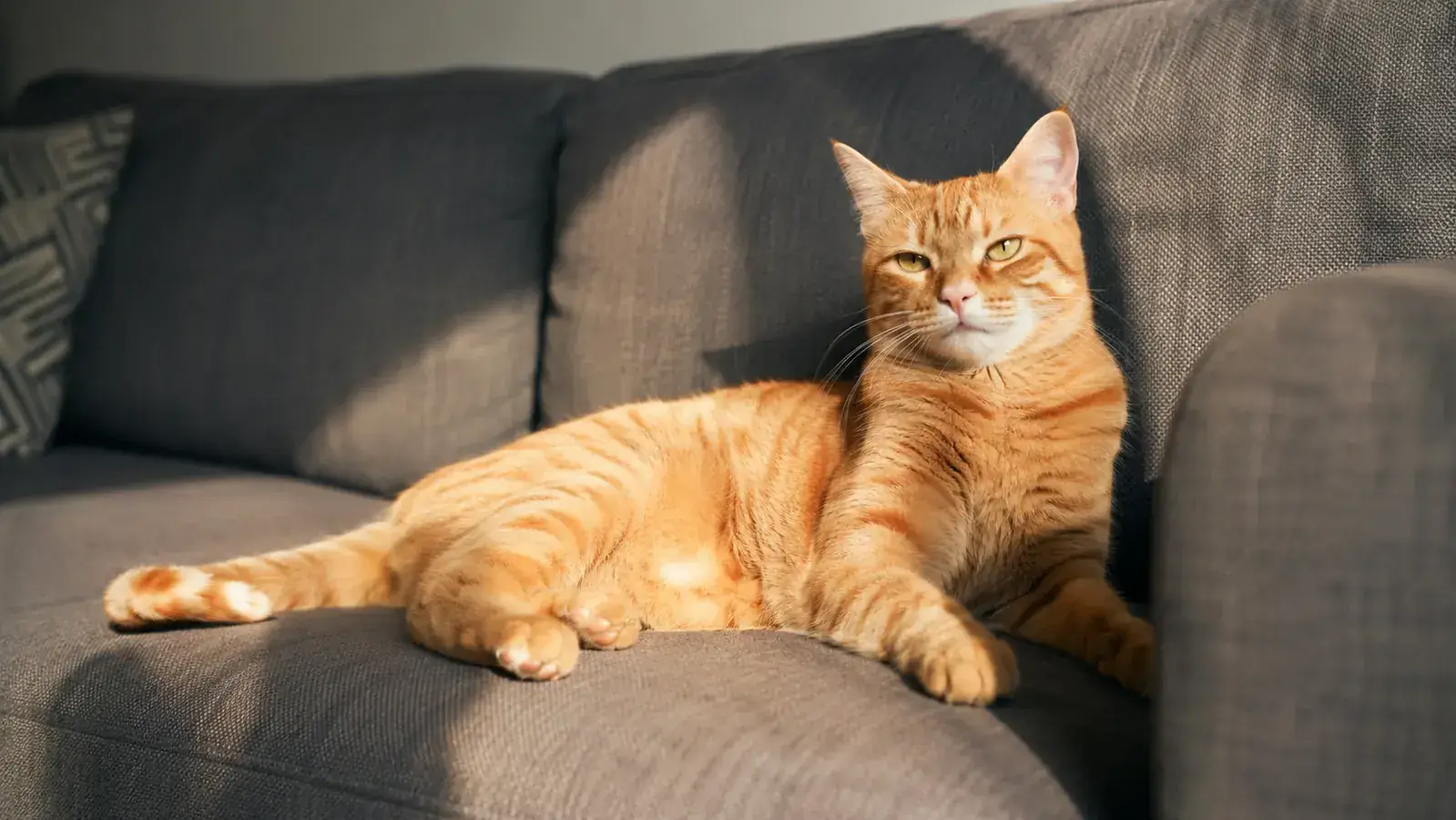
Setup took about twelve minutes. I rinsed the pieces, dropped in the carbon filter, filled it to the fill line, and plugged it in. The pump is quiet, more of a low hum than anything that would wake you up. The water flows in a gentle stream from a raised tier down into the basin, and there is enough surface movement that the whole bowl looks alive. I set it on the kitchen floor about three feet from where his old bowl used to be.
Biscuit ignored it for about forty-five minutes. He circled it twice, sniffed the edge, walked away. I was starting to wonder if this was going to be one of those purchases. Then I heard the sound of him drinking. I looked over and he was standing at the fountain with his head down, drinking steadily for what felt like a full thirty seconds. Longer than I had ever seen him drink from his bowl in seven years. I did not react. I just watched.
By day four he was going to the fountain on his own without any prompting. By the end of the first week I was refilling the 2.8-liter reservoir noticeably more often than I ever refilled his ceramic bowl. That was the confirmation I needed. He was actually drinking. Meaningful amounts, not just a polite sip. Two weeks after the vet visit I brought him back for a follow-up. His urinary tract had cleared. The vet checked his hydration markers and called them normal. She asked what I had changed. I told her. She nodded and said that is exactly what she expected.
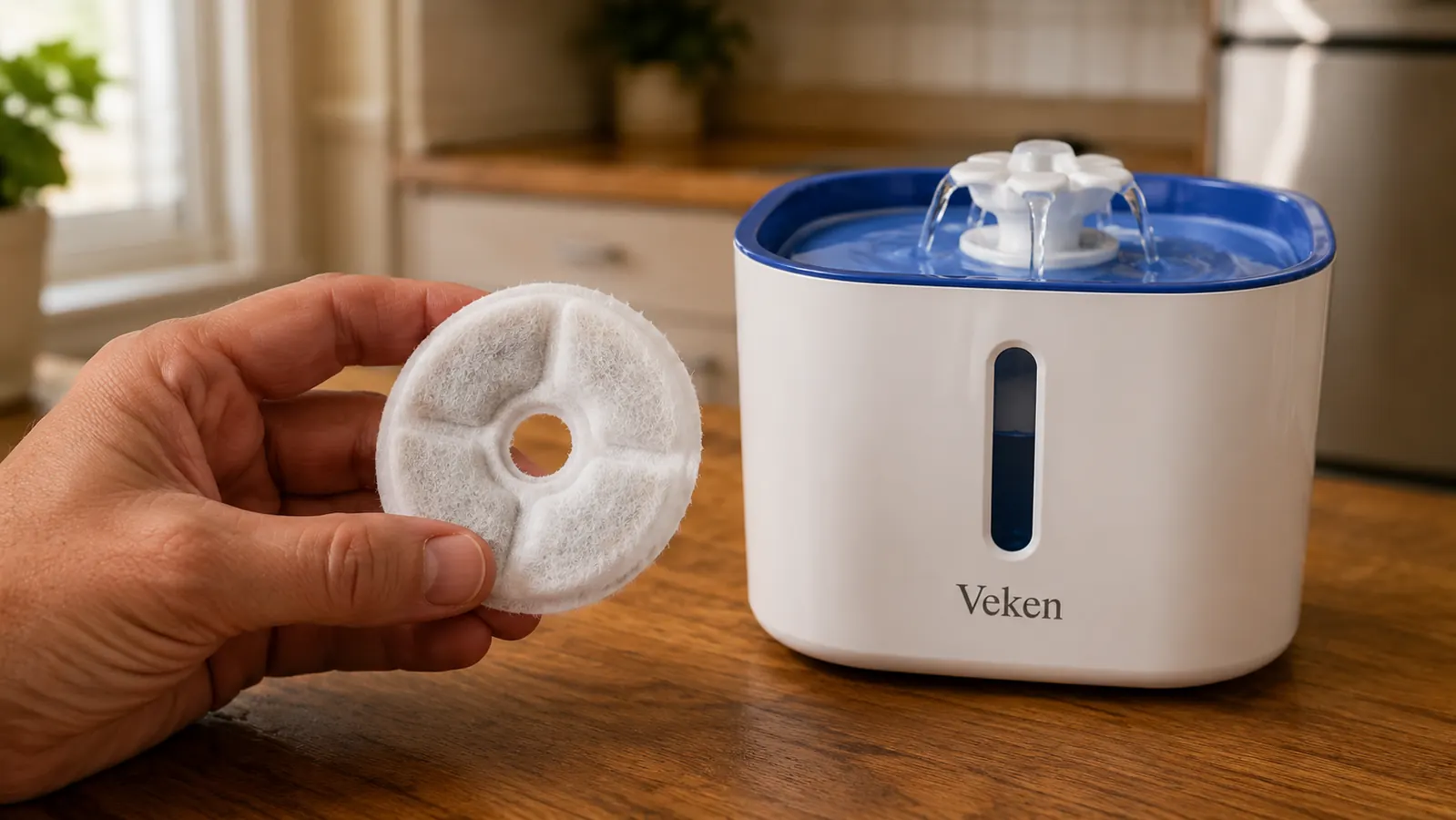
I have had the Veken running for about seven months now. The filter needs changing every three to four weeks, and replacements are inexpensive and easy to find. The pump has been quiet and needs nothing beyond an occasional rinse of the basin. The flow adjusts on a small dial, so I run mine at about two-thirds speed and it is barely audible from the next room. Biscuit has had no UTI recurrence since switching. Whether that is the fountain, diet, or luck I cannot say for certain, but I am not inclined to go back to the bowl.
What I'd Tell You If We Were Sitting at My Kitchen Table
Here is the honest version. If your cat is healthy and drinking regularly from a standard bowl, you probably do not need to change anything. But if your vet has mentioned urinary issues, kidney concerns, or dehydration, or if you have noticed your cat barely touches the water bowl, a fountain is not a gimmick. It is addressing a real behavioral quirk that is baked into how cats work. You are not buying a luxury item. You are buying something that matches how your cat's instincts actually function.
The Veken is what I would tell you to start with. It holds enough water that you are not refilling it every day, the filters do their job, and it runs quietly enough to put anywhere. I have seen stainless fountains that cost three times as much. Maybe they are better, but for the problem I had, this one solved it. That is the bar I care about. If your cat is showing any of the 10 signs of not drinking enough water, I would not wait too long to act. A UTI in a male cat can escalate faster than you expect. I learned that the hard way. You do not have to.
If your cat drinks less than you think they should, the bowl might be the thing standing in the way.
The Veken 95oz fountain is what I switched to after my vet flagged chronic dehydration in my cat. It changed his drinking habits within days and has run without issues for seven months. Worth checking out before your next vet visit turns into a bigger problem.
Amazon Check Today's Price on Amazon →