

Cats evolved in dry desert environments, which means their bodies were built to pull moisture from prey rather than seek out a water dish. That biology hasn't changed, even though the modern house cat now eats dry kibble with 10% moisture instead of a mouse with 70%. The result is a chronic, low-grade water deficit that most owners don't notice until a vet flags concentrated urine, a urinary tract infection, or early kidney disease. If your cat's water bowl sits full most of the day, she probably isn't drinking nearly enough.
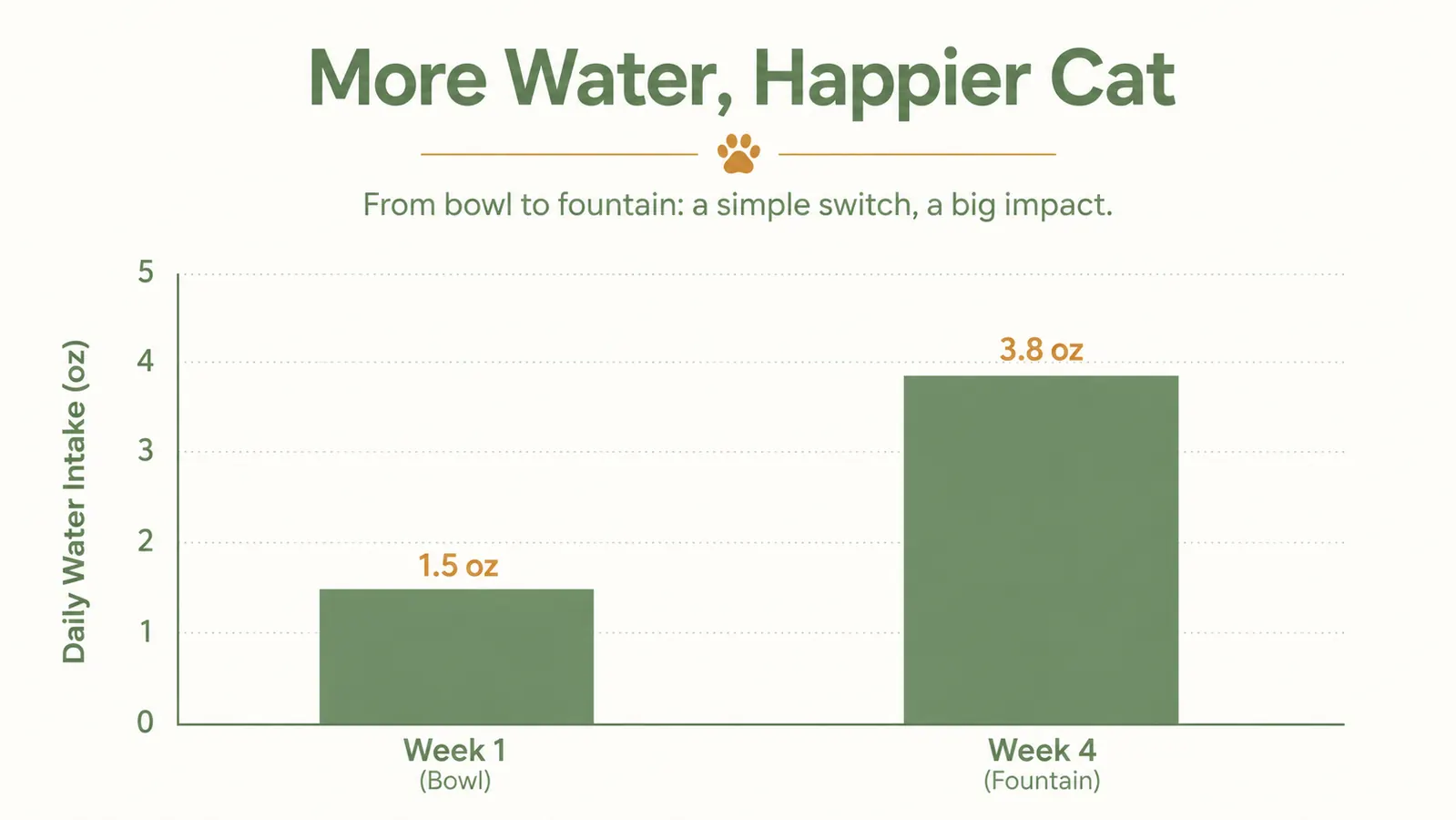
The good news is that increasing a cat's daily water intake is a solvable problem. It doesn't require prescription food or expensive supplements. What it does require is understanding what triggers a cat's drinking instinct and adjusting her environment accordingly. I've tested these strategies on my two cats, Biscuit (a 6-year-old domestic shorthair, 9.4 lbs) and Fig (a 4-year-old tortoiseshell, 8.1 lbs), and tracked the difference in bowl levels over four weeks. Here is what actually worked.
If your cat ignores standing water, moving water is the fix most vets recommend first
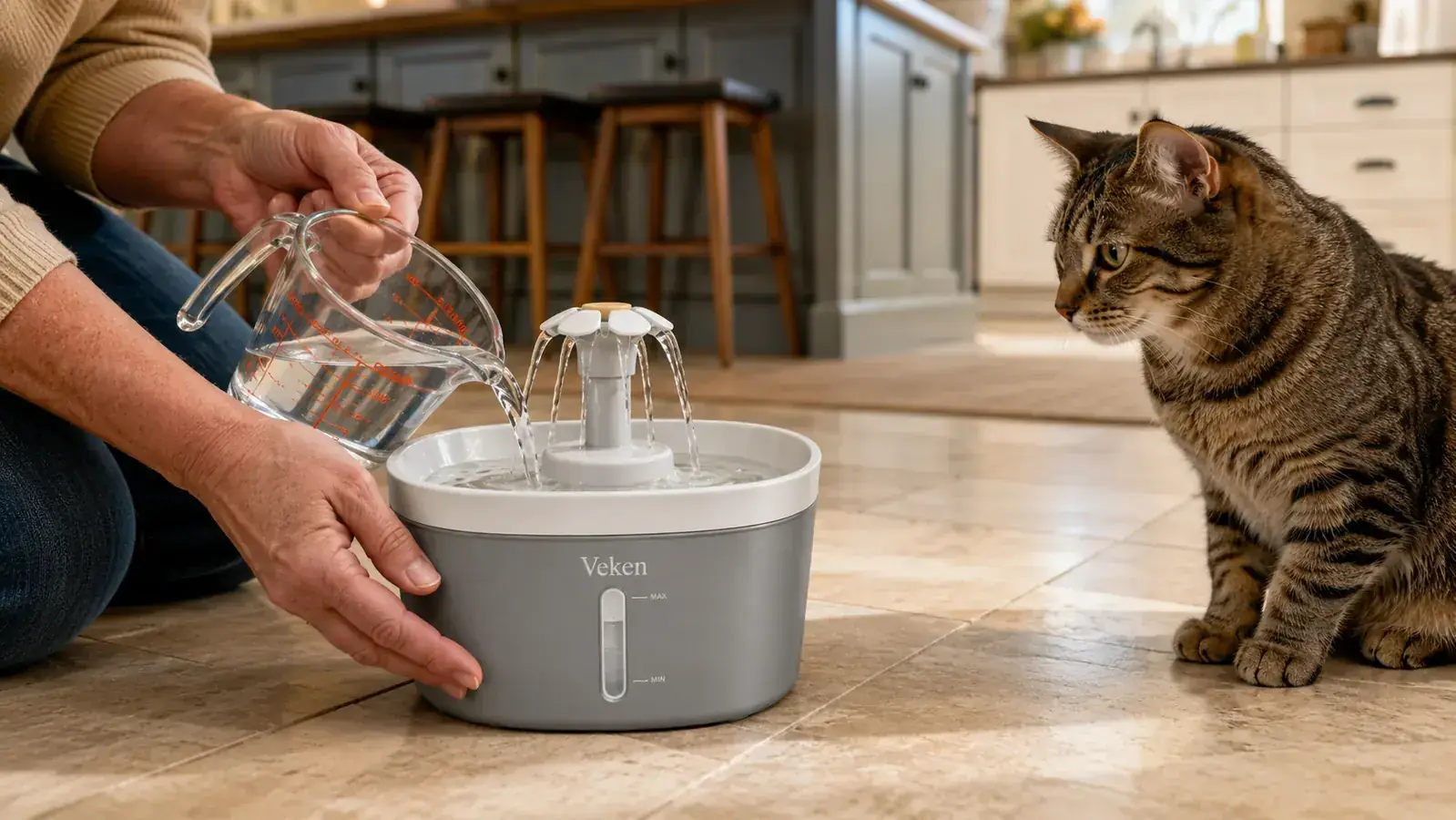
The Veken 95oz Pet Fountain keeps water circulating so it stays fresh and oxygenated -- the two things that make cats stop ignoring a bowl. Rated 4.3 stars across nearly 50,000 reviews. Check current price on Amazon before your next vet bill beats you to it.
Amazon Check Today's Price on Amazon →Step 1: Switch From a Standing Bowl to a Circulating Fountain
This is the single highest-leverage change you can make, and it's where I'd start before trying anything else. Cats instinctively distrust still water. In the wild, standing water is more likely to be stagnant and contaminated than a moving stream. That hardwired wariness doesn't disappear just because the water is sitting in a clean ceramic bowl two feet from the couch.
A circulating pet fountain solves this at the source. The pump keeps water moving, which does two things: it oxygenates the water (making it taste noticeably fresher) and it creates the sound and visual motion that triggers a cat's prey-chasing instincts. After I set up the Veken 95oz fountain for Biscuit and Fig, both cats were sniffing the stream within the first hour. By day three, Fig was visiting it more than the old ceramic bowl ever registered in a week.
The Veken fountain holds 95 ounces -- about 2.8 liters -- which is large enough for two cats to go three or four days between refills. It comes with three replacement filters (a carbon layer to pull odors and a foam pre-filter to catch debris), and the pump is quiet enough that I don't notice it running from the next room. You can read a more detailed breakdown in my full Veken Pet Fountain Review if you want the long-term numbers, but the short version is: moving water is the starting point for every other strategy on this list.
Step 2: Move the Water Source Away From the Food Bowl
Most people keep the food bowl and water bowl side by side because it's tidy. Cats don't care about tidy. In the wild, a cat would never eat and drink at the same spot -- the prey animal decomposing next to the water source is a contamination risk. That instinct is still active, which means placing water right next to food actually suppresses drinking behavior for many cats.
The fix is simple: move the water source to a different room or at least to the opposite side of the space. I moved the Veken fountain from beside the food station to the far end of the hallway, about 15 feet away. Within two days, both cats were making deliberate trips to the fountain between meals. It felt like a separate activity rather than a footnote to eating.
If you have a multi-level home, try putting one water source per floor. Cats, especially older ones with joint stiffness, will often skip drinking rather than climb stairs for it. Accessibility matters more than you'd expect.
Step 3: Add Moisture to Meals With Wet Food or Water Toppers
Even if you aren't ready to switch fully to wet food, adding moisture at mealtime is one of the most effective ways to close the hydration gap. A 3-ounce can of wet food contains roughly 2.5 ounces of water. For a cat who needs about 3.5 to 4.5 ounces of water daily (the typical range for a 9-pound cat), a single can of wet food at breakfast gets her most of the way there before the day even starts.
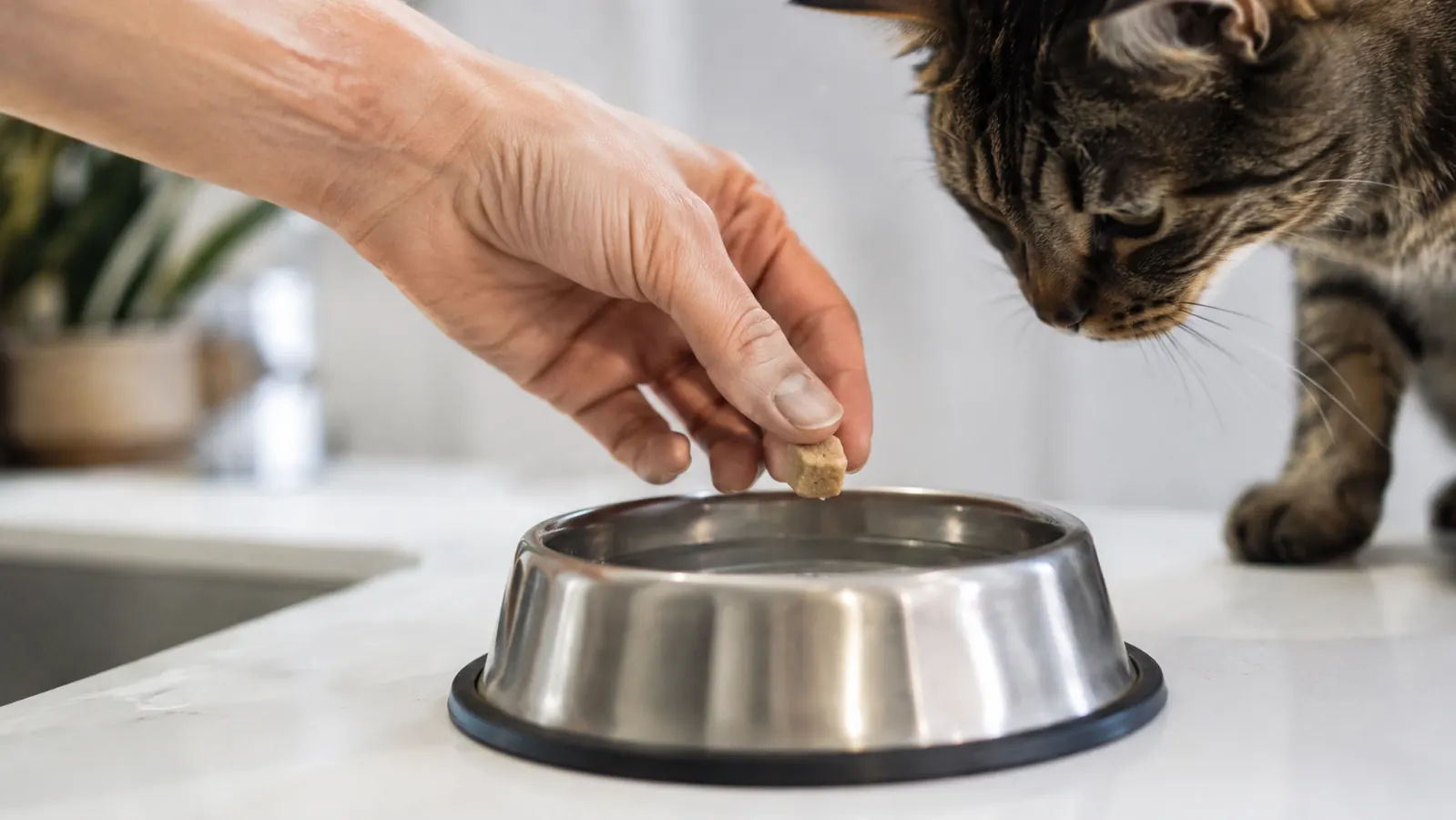
If your cat is committed to dry food and rejects wet, try water toppers instead. A water topper is a few tablespoons of low-sodium chicken or tuna broth added to the kibble. It softens the food, adds flavor, and brings moisture into the meal without requiring a full diet change. I use a small splash of plain canned-tuna water over Biscuit's kibble two or three times a week. She clears the bowl faster than usual and then typically visits the fountain shortly after.
A 3-ounce can of wet food contains roughly 2.5 ounces of water. For most cats, that single meal covers half their daily hydration target before the water bowl even enters the picture.
Step 4: Keep the Water Source Scrupulously Clean
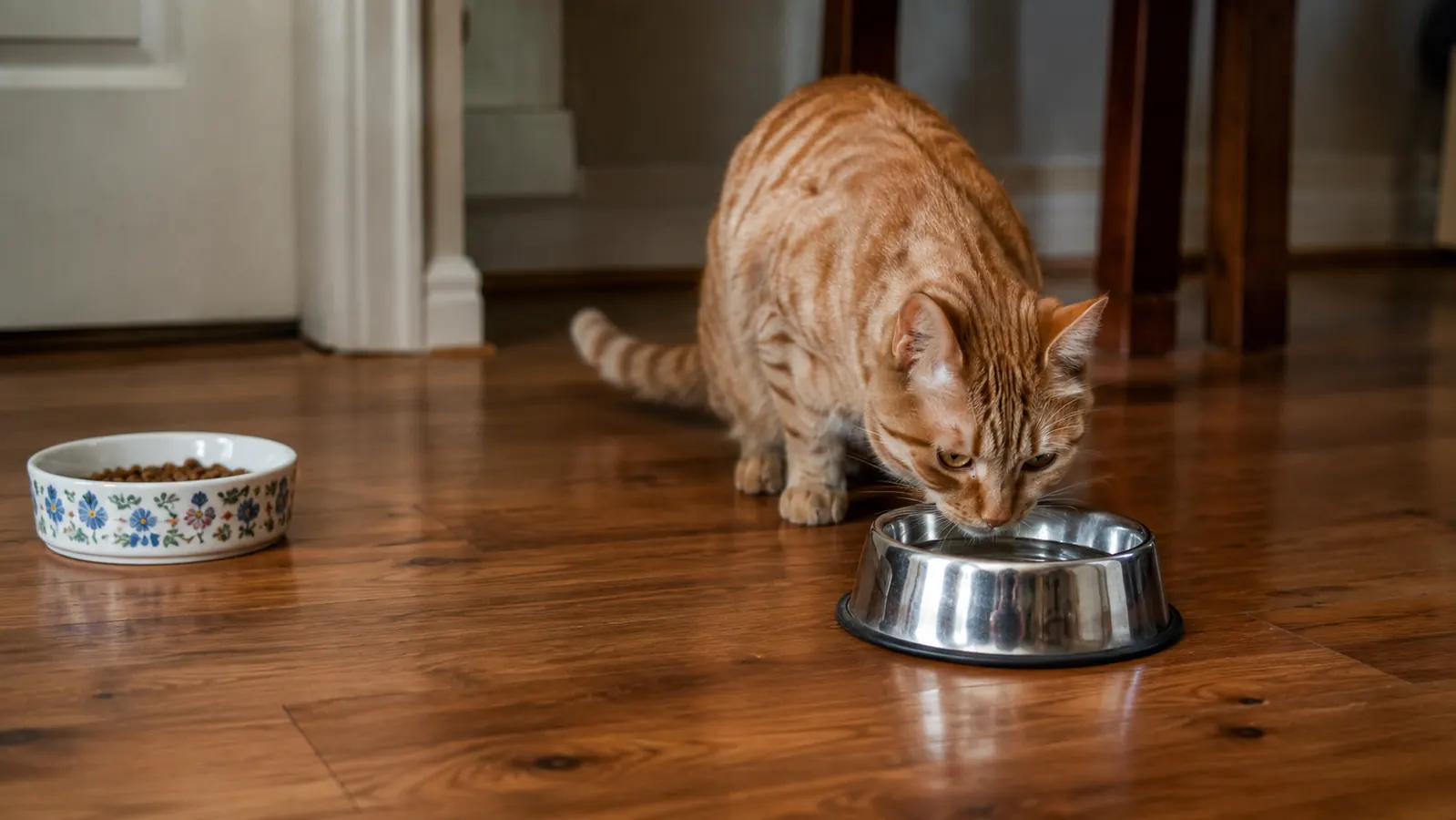
Cats have a far more sensitive sense of smell than we do. A water bowl that smells like old plastic, soap residue, or day-old saliva is a bowl a cat will walk past. This is why some cats prefer drinking from a dripping faucet or a glass of water you just poured for yourself -- those sources smell neutral and fresh.
For a standard bowl, that means rinsing and refilling daily, and scrubbing the bowl with a brush (not just a rinse) every two or three days. For a fountain, it means full disassembly and cleaning every one to two weeks, plus replacing the carbon filter on schedule -- roughly every three to four weeks depending on how many cats use it.
The Veken fountain disassembles into five parts that all go in the top rack of a dishwasher, which makes the cleaning routine fast enough to actually stick to. I set a recurring calendar reminder for every 12 days. Before I did that, I'd let it slide to three weeks, and both cats started visiting the fountain less. The correlation was immediate and obvious once I noticed it.
Step 5: Use Bowl Material and Shape to Your Advantage
If a fountain isn't in your immediate budget, bowl choice matters more than most people realize. Plastic bowls hold bacteria in surface scratches and often carry a faint chemical smell that cats detect and reject. Stainless steel and ceramic are the better options -- they're non-porous, odor-neutral, and easy to clean thoroughly. Most cats drink more readily from stainless than from plastic, especially if the plastic bowl is more than a few months old.
Bowl shape also matters. Cats with longer whiskers can experience whisker fatigue from drinking out of deep or narrow bowls. Their whiskers touch the sides with every sip, which is uncomfortable enough that some cats will cut a drinking session short. A wide, shallow bowl -- wide enough that the whiskers don't brush the rim -- removes that friction. Look for a bowl with a diameter of at least 5 to 6 inches and sides no taller than 2 inches.
You can also try chilling the water slightly. Some cats prefer cold water and will drink more of it. A few ice cubes dropped in during summer months is enough to test whether your cat has a temperature preference. It costs nothing to find out.
What Else Helps
Beyond the five core steps, a few smaller adjustments can nudge intake higher. First, multiple water stations beat a single central one. Place sources in the spots where your cat naturally spends time -- beside the favorite sleeping perch, near the window she watches birds from, at the base of the cat tree. The less effort it takes to get a drink, the more often she'll take one.
Second, watch for any medications or health changes that increase dehydration risk. Hyperthyroidism, diabetes, and kidney disease all increase water loss. If you've made the environmental changes above and your cat's intake still seems low, a vet checkup is the right next move. Bloodwork can catch chronic kidney disease years before symptoms appear, and early management makes a real difference in long-term outcomes.
Third, if you're comparing a fountain to a regular bowl for a cat who's on the fence, the difference in voluntary water intake is consistent enough that most vets now recommend fountains outright for cats with a UTI history or early kidney numbers. You can see the full side-by-side data in the Pet Fountain vs Ceramic Bowl comparison if you want the numbers before committing.
The fountain that turned two bowl-ignoring cats into regular drinkers
The Veken 95oz Pet Fountain is quiet, easy to clean, and large enough for two cats between refills. Nearly 50,000 Amazon reviewers agree it's worth keeping plugged in. Check what it's going for today -- it's one of the more affordable changes you can make with an outsized effect on kidney health.
Amazon Check Today's Price on Amazon →