
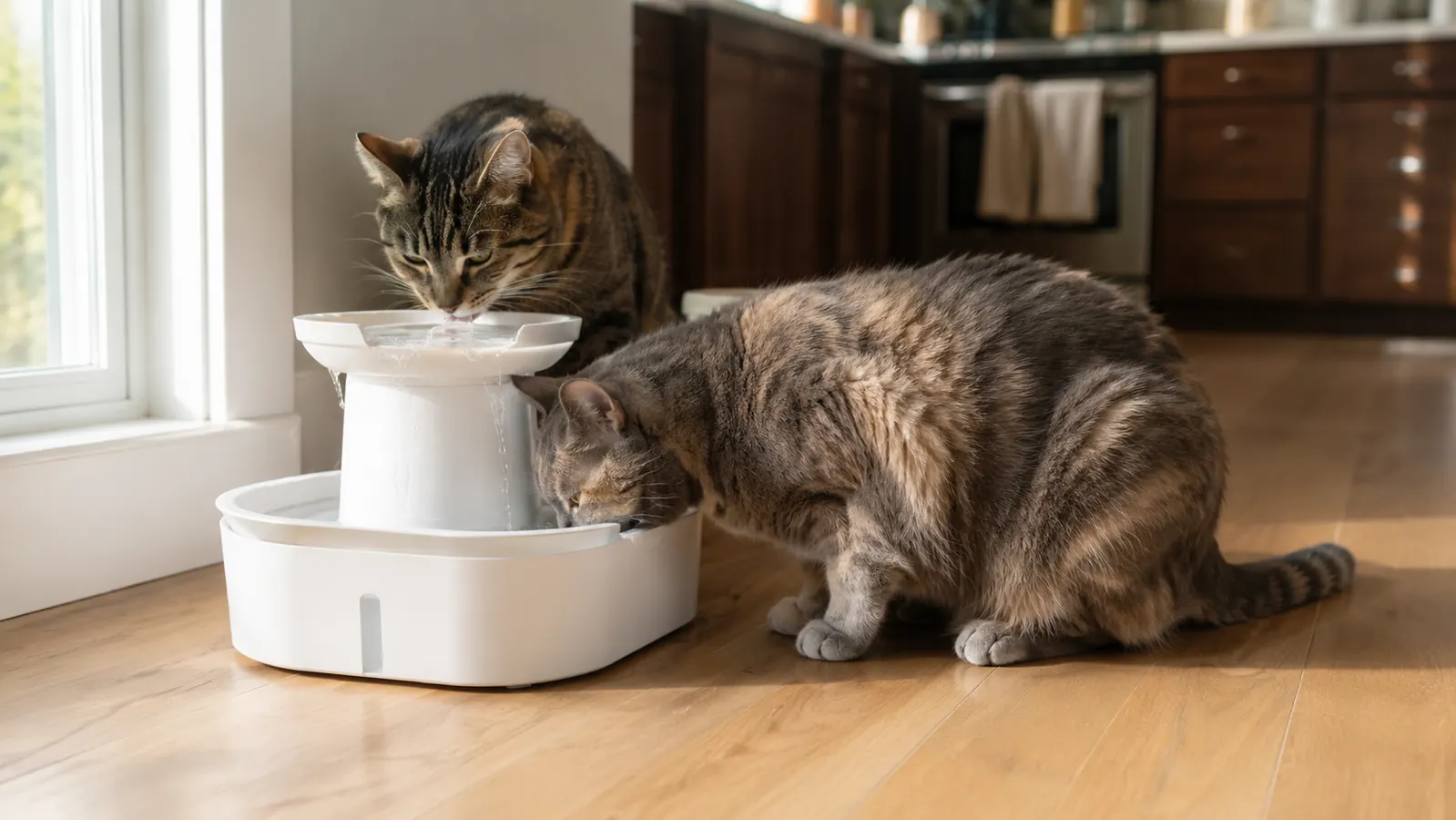
My cat Biscuit had a urinary scare last spring. The vet did not mince words: she was chronically under-drinking, and a standing water bowl was not helping. Biscuit would walk past it twelve times a day without stopping. My other cat, Noodle, drank just enough to stay out of trouble. I knew I needed a fountain, but I also knew most reviews are written by people who tested something for two weeks and called it done. So I committed to 90 days with the Veken 95oz Pet Fountain, logged every cleaning session, noted every problem, and tracked whether the cats actually used it consistently. What follows is the unfiltered report.
I want to be direct about the framing of this review. This is not a rundown of features you can read off the product listing. This is the maintenance reality, the annoyances that only show up after week four, and the situations where this fountain earns its keep versus the ones where it quietly lets you down. If you want a sunny overview, this is not that. If you want to know what you are actually getting into before you spend your money, keep reading.
The Quick Verdict
A capable, affordable fountain that genuinely improves cat hydration, but the cleaning workload is higher than the marketing suggests and you need to commit to a real maintenance schedule to keep it running well.
Amazon Check Today's Price →If your cat drinks barely anything from a standing bowl, this fountain will change that.
The Veken 95oz fountain keeps water moving and filtered. Two cats, one fountain, 90 days, and Biscuit has not had a hydration issue since. Check today's price before it changes.
Amazon Check Today's Price on Amazon →How I Ran This Test
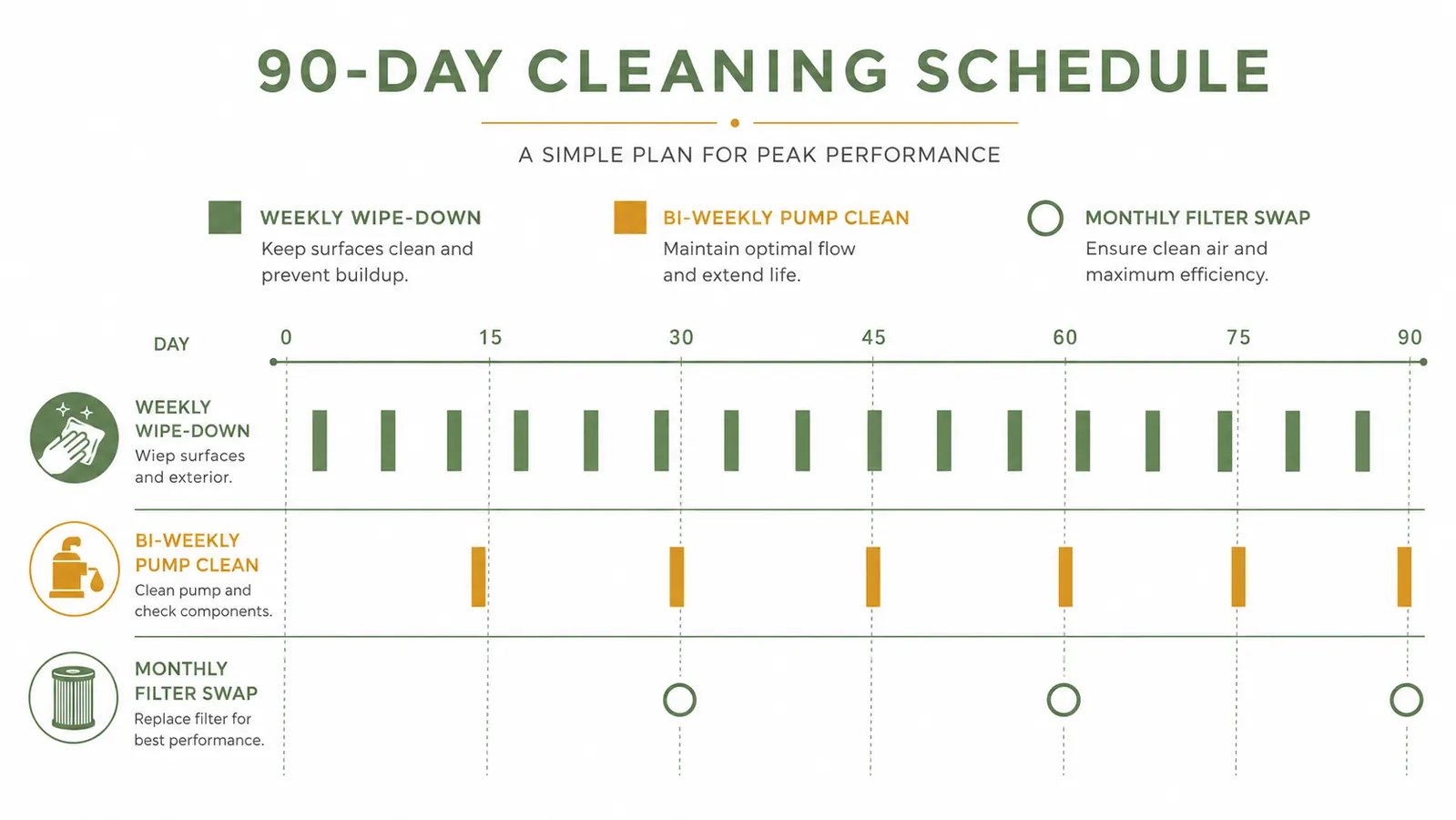
I set the fountain up on day one in the kitchen, where both cats spend most of their day. I ran it continuously, never turning it off at night. I kept a simple log: date, what I cleaned, what I noticed, whether both cats drank. I did not baby it. I refilled it when the water level dropped, swapped filters on the schedule Veken recommends, and cleaned the pump every two weeks. On the days I got lazy about it, I wrote that down too. The goal was to see how the fountain performed under normal household conditions, not under ideal laboratory ones.
Biscuit is a six-year-old tortoiseshell, 9.2 lbs, with a history of bladder crystals. Noodle is a four-year-old orange tabby, 11 lbs, healthy baseline. Both cats were used to a ceramic bowl before this test. I did not force the transition. I simply placed the fountain next to the old bowl for the first week and let them discover it on their own terms.
The Cleaning Reality Nobody Puts in Their Amazon Listing
Here is the thing about pet fountains that the product photos never communicate: they get dirty faster than you expect, and the pump is where it really happens. By week two, I pulled the pump housing apart and found a faint film of biofilm coating the inside of the impeller chamber. Not dramatic, not a health crisis, but definitely something you need to address. I cleaned it with the small brush that comes in the box and warm water, and it was fine. But if you skip that step for a month, the buildup becomes visible and the flow rate drops noticeably.
The pump disassembly is not hard, but it is fiddly. There is a small cap that twists off, and inside is an impeller with a tiny magnetic shaft that you need to clean around carefully without losing it down the drain. I lost it once on week five. It is small enough to disappear into a sink trap. I recovered it, but I now clean the pump over a bowl rather than directly over a sink drain. That is a practical piece of information the manual does not mention.
The filter situation is worth its own discussion. Veken says to replace filters every two to four weeks depending on water quality and the number of pets. I have moderately hard tap water and two cats. At week three, my filter had turned a dingy grey-brown at the bottom. At week four it was obvious. I pushed it to five weeks once as a test, and by the end of that week the water had a faint mineral smell. So for a two-cat household with average tap water, plan on a filter change every three to four weeks, not the optimistic end of that range. Budget accordingly.
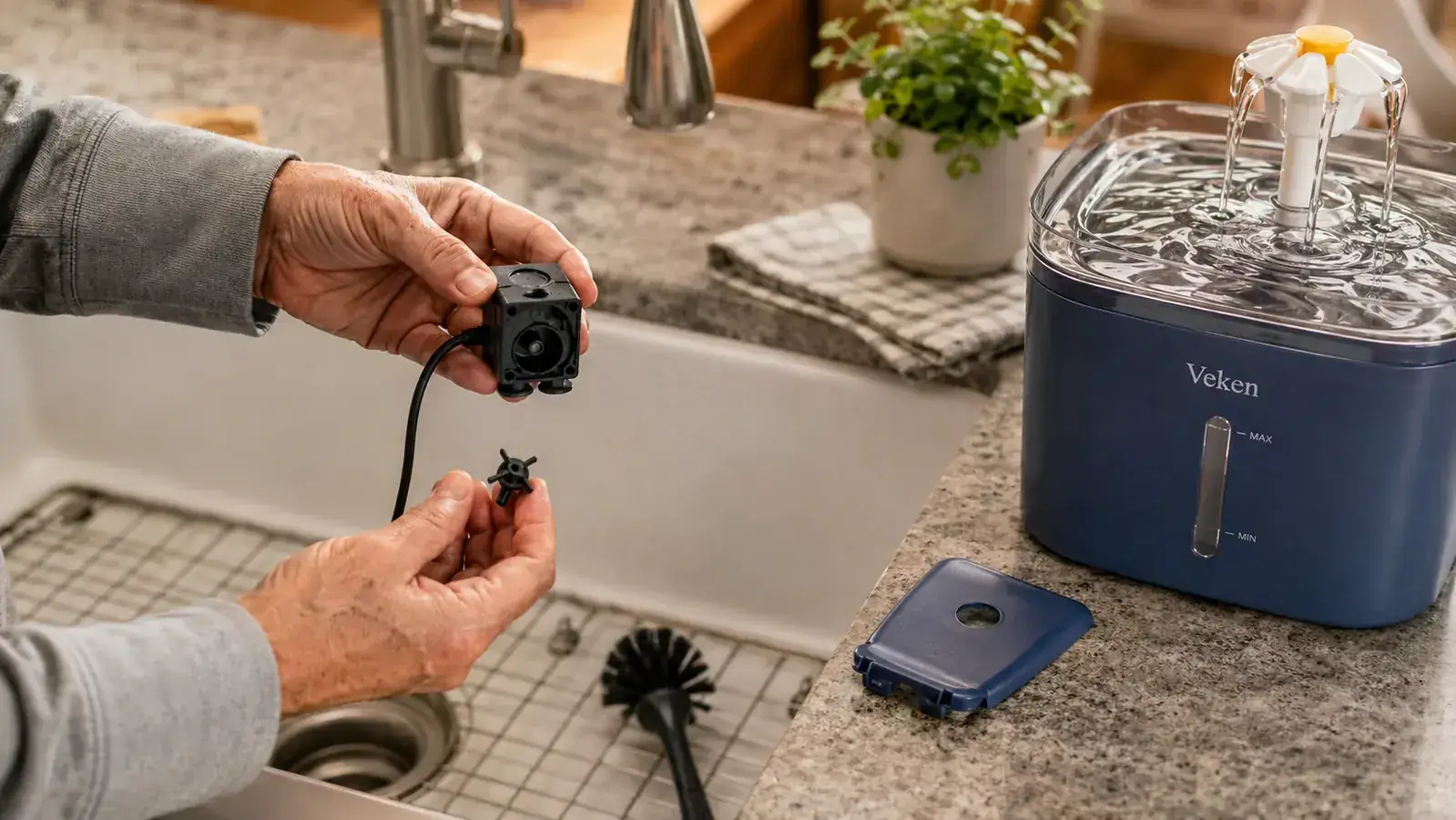
I lost the pump impeller shaft down the sink on week five. Clean the pump over a bowl, not over the drain. The manual does not tell you this.
Noise at Night: What Actually Happens When the Water Level Drops
The Veken fountain runs quietly when it is full. That part of the marketing is accurate. When the water level sits in the upper half of the 95oz reservoir, the pump hum is barely audible from across the room and completely inaudible from a closed bedroom. However, when the water level drops below roughly a quarter full, the pump starts drawing air intermittently and makes a low, intermittent gurgling noise. My cats drink a combined 12 to 14 oz per day, plus some evaporation, so the fountain dropped low enough to gurgle on nights I forgot to refill it. It is not a crisis noise, but it is distinctive enough to wake a light sleeper. Top it off every morning and you will never hear it.
One more thing on noise: if the pump is not seated properly in the base after cleaning, it vibrates against the housing and produces a rattling hum that is far more annoying than the normal operating sound. This happened to me twice after reassembly. You have to press the pump down firmly and feel it click into the base slot. Once it is seated right, the vibration stops. It took me a second disassembly cycle to understand what was happening.
Did the Cats Actually Use It Consistently?
Yes, and this is where the fountain earns back the goodwill I spent complaining about maintenance. Biscuit went from avoiding still water to drinking from the fountain multiple times a day within eight days. By day ten I removed the ceramic bowl entirely. She never looked for it. Noodle was slower to adopt, still using the bowl occasionally through week two, but by week three he was drinking exclusively from the fountain. I cannot measure exact intake volumes at home, but at Biscuit's 90-day vet follow-up, her urine specific gravity was in the normal hydration range for the first time in two years. That outcome matters to me more than any feature list.
The stream mode draws cats in. Biscuit in particular is attracted to the top-stream flow, which she will bat at occasionally before drinking from it. This is normal cat behavior around moving water and it means the fountain is doing its job. The flower-shaped top piece is the part she drinks from most often. Noodle prefers the lower tray. The fact that both flow modes are available at once is genuinely useful in a multi-cat household.

Build Quality After 90 Days: What Held Up and What Did Not
The plastic housing shows no cracking, discoloration, or warping after three months of continuous use and regular washing. The white finish stays white. The seam where the reservoir snaps into the base has not developed any play or leaking. For a fountain in this price range, the structural durability is genuinely good.
The flower-shaped top piece is the one component I watch carefully. It is a separate piece that slots into the pump output, and on one occasion it popped off during a cleaning session and I had to snap it back on. It does not lock in with any sort of audible click, it just sits in place under slight tension. If you have a cat who bats at it hard, check that it is properly seated after any particularly enthusiastic play session.
The power cord is on the short side at roughly 5 feet. I have seen other reviewers mention needing an extension cord to reach their chosen kitchen outlet. I got lucky with my outlet placement, but this is worth measuring before you commit to a spot.
What the Alternative Looks Like
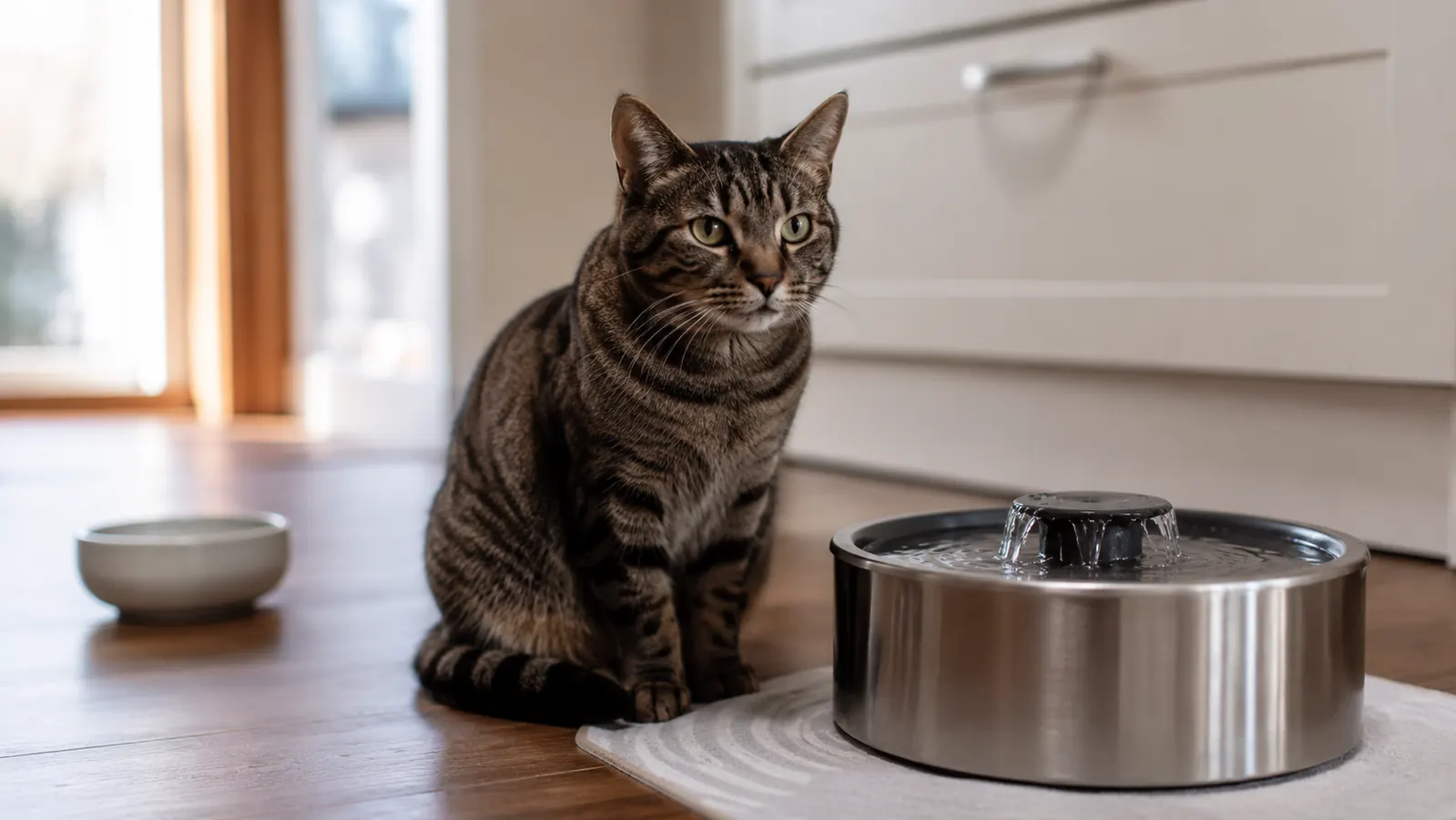
Before the Veken, I tried a cheaper no-name fountain that cost about half as much. The pump died on day 31. I also considered the stainless steel options that run $45 to $60, which have better longevity but smaller capacities and the same maintenance requirements. The Veken sits in a middle tier where the price is low enough that if something eventually fails, replacement does not feel catastrophic. I am aware that three months is not three years, and I cannot speak to long-term motor lifespan. What I can say is that at 90 days it shows no signs of degradation. If you want the full year-over-year performance picture, our longer-term review covers that ground.
What the Veken does better than most alternatives at its price is the reservoir capacity. 95 ounces means I top it off once a day rather than twice. For a two-cat household, that matters. Smaller fountains in the $15 to $18 range typically hold 50 to 70 ounces and run low overnight.
What I Liked
- Cats adopted it quickly, usually within one to two weeks
- Two simultaneous flow modes suit both cautious and confident drinkers
- 95oz capacity is large enough for two cats on a single daily top-off
- Quiet during normal operation when water level is maintained
- Build quality holds up well through repeated disassembly and cleaning
- Filters are affordable and widely available as third-party replacements
Where It Falls Short
- Pump impeller is small and easy to lose if you clean over a sink drain
- Filter lifespan in hard-water or multi-pet homes is closer to three weeks than four
- Water level must stay above a quarter tank or the pump audibly gurgles at night
- Flower top piece does not lock in place, just sits under tension
- Power cord length (about 5 feet) may require an extension cord depending on outlet placement
- Biofilm builds up in the pump housing by week two without proactive cleaning
Who This Is For
The Veken fountain is the right call for cat owners whose pets are chronically under-drinking from a still bowl, especially cats with a history of UTIs, bladder crystals, or kidney concerns where hydration is actively managed. It is also a strong fit if you have two cats and need a fountain large enough to handle both without constant refilling. The price point makes it a low-risk first fountain for someone who has never owned one. If you want to understand whether a fountain actually works before committing to a $60 stainless model, start here.
Who Should Skip It
If you are not willing to clean a pump every two weeks, this fountain will disappoint you. The maintenance schedule is real and non-negotiable if you want the water to stay clean and the flow to stay strong. Owners who want a set-it-and-forget-it solution for a month at a time should look at stainless steel fountains with larger filter surface areas. Also, if your cat is noise-sensitive or anxious around new sounds, the initial motor hum may take some getting used to, especially for cats that have only ever known silent bowls. Most cats adapt in a few days, but some do not.
The cats are using it every day. The maintenance is manageable. At today's price, it earns its spot on the floor.
If your cat ignores still water, the Veken fountain is a practical fix at a price that does not require a long deliberation. Check the current price on Amazon and see if any coupons are running.
Amazon Check Today's Price on Amazon →